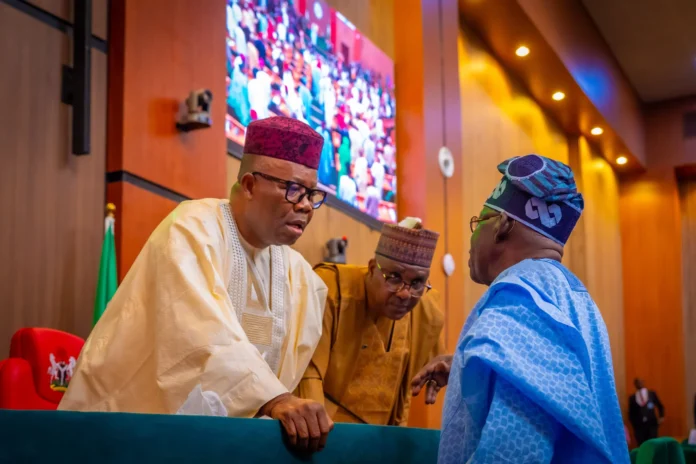

ABUJA, NIGERIA — In the theater of Nigerian democracy, the Red Chamber of the National Assembly was designed to be the ultimate fortress of checks and balances—a co-equal branch of government meant to fiercely scrutinize the executive. Yet, under the stewardship of Senate President Godswill Akpabio, the 10th Senate is increasingly viewed by legal practitioners, opposition figures, and civil society as something entirely different: the legislative arm of the presidential villa.
From fast-tracked multi-billion dollar loans to the controversial blocking of high-profile corruption probes, the Akpabio-led Senate has established a record of compliance that critics argue compromises the constitutional separation of powers.
The Bill of Indictment: A Pattern of Compliance
For legal analysts like Ekene Aninze, Esq., the Senate’s recent track record is not a series of isolated legislative compromises, but a structural pattern of prioritizing executive convenience over constitutional oversight.
┌───────────────────────────────────────────────────────────────────────────┐
│                    THE AKPADIO SENATE COMPLIANCE TRACK                    │
├─────────────────────────┬─────────────────────────────────────────────────┤
│ THE CONTROVERSY         │ THE SENATE'S ACTION                             │
├─────────────────────────┼─────────────────────────────────────────────────┤
│ PFIPC "Fake Agency"     │ Blocked motions for an independent legislative  │
│ Budget Scandal          │ inquiry twice, citing active court arraignments.│
├─────────────────────────┼─────────────────────────────────────────────────┤
│ Rivers State Crisis     │ Approved a six-month State of Emergency via a   │
│                         │ simple voice vote after a closed-door session.  │
├─────────────────────────┼─────────────────────────────────────────────────┤
│ External Debt Requests  │ Fast-tracked a $516 million Deutsche Bank loan  │
│                         │ and processed major credit lines in hours.      │
└─────────────────────────┴─────────────────────────────────────────────────┘
1. The PFIPC Paradox: Shielding Aso Rock Insiders?
The most glaring flashpoint in this legislative friction is the handling of the Presidential Foreign Intervention Promotion Council (PFIPC) scandal. When allegations surfaced that Prince Adeniyi Adeyemi had paid hundreds of millions in bribes to secure the agency’s directorship, opposition lawmakers pushed for a deep parliamentary probe.
Twice, the Akpabio-led Senate rejected the motion for an independent inquiry. The official alibi was that because law enforcement had already arrested the suspect, the matter was sub judice.
However, this legislative block left a critical question completely unanswered: If the PFIPC was merely a “fake, non-existent agency” run by a lone fraudster, how did it successfully secure a ₦1.302 billion allocation in the 2026 National Budget passed by this very Senate? By shutting down the probe, the Senate effectively protected the executive from explaining how the budget was compromised.
2. Governance by Decibels: The Rivers Emergency Voice Vote
The Senate’s handling of the political gridlock in Rivers State further alarmed constitutional lawyers. Following severe political infighting, the executive sought to proclaim a State of Emergency, suspending elected officials.
Instead of a transparent, recorded division of the house where the voting record of every individual Senator is documented for history, the leadership opted for expediency. Coming out of a private executive session, the emergency proclamation was passed using a simple voice vote.
Constitutional experts quickly challenged the legality of the move, noting that a mandatory two-thirds majority cannot be verified by the collective volume of shouting “Aye” or “Nay,” turning a weighty constitutional tool into a procedural shortcut.
3. The Loan Accelerator
Under past assemblies, massive external borrowing requests were subjected to weeks of committee hearings, debt-sustainability debates, and strict line-item scrutiny. Today, the process moves at lightning speed.
The chamber cleared the $516.3 million syndicated facility from Deutsche Bank for the Sokoto-Badagry Superhighway with minimal friction. While the leadership maintains that critical infrastructure development cannot wait for bureaucratic delays, opposition leaders have warned that the Senate is allowing the executive to compound the national debt without transparent, long-term repayment plans.
The Rubber-Stamp Dilemma
“The legislature is not an extension of the executive’s administrative staff. When a parliament routinely uses executive sessions, voice votes, and lightning-fast approvals to clear controversial policies, the system of checks and balances breaks down completely.”
The defense from the Senate leadership has consistently been one of national stability. Pro-government lawmakers argue that the friction of past assemblies—which often ground governance to a halt—stifled Nigeria’s development. In their view, total cooperation with President Bola Tinubu is a patriotic duty necessary for smooth governance.
However, critics argue that harmony should not come at the expense of accountability. When a Senate routinely approves executive appointments without thorough screening and waves through ambiguous electoral guidelines, the guardrails of democracy begin to erode.
As the political landscape shifts toward the next electoral cycle, the 10th Senate faces a defining legacy. For its supporters, it remains an efficient engine of executive execution. For its critics, it stands as a pathetic example of a co-equal branch of government that gave up its gavel to please the presidency.