

MINNA — A horrific wave of communal violence has rocked Tegina, a prominent town in the Rafi Local Government Area of Niger State, leaving at least 48 people dead, several homes burned, and entire communities displaced.
The bloody confrontation, which erupted early Wednesday morning, July 1, 2026, involves a brutal clash between herders from the ethnic Fulani group and local agrarian families belonging to the Kamuku ethnic tribe. The violence marks a catastrophic escalation of a brewing localized dispute, highlighting the failure of early mediation structures in the state.
The Wednesday Morning Massacre
According to local accounts, the violence reached a tipping point when machete-wielding herders launched a coordinated ambush on a Kamuku settlement on the outskirts of Tegina. The attackers reportedly targeted an extended Kamuku family line, hacking and burning victims within their homes.
- The Initial Body Count: At least 42 agricultural villagers—predominantly women, children, and elderly individuals who were unable to flee—were killed in the first wave of the attack.
- Destruction of Livelihoods: In a scorched-earth campaign, the attackers set fire to residential structures, grain silos, and parked vehicles.
- The Retaliatory Strike: As news of the massacre spread, armed members of the Kamuku group launched an immediate counter-offensive, killing six herders at a nearby plantation.
Graphic images and footage from the scenes have circulated among local reporters, showing bodies severely burned or mutilated by machete blows. Ibrahim Musa, a resident who survived the carnage, reported that hundreds of displaced villagers are currently flooding into the Tegina town center to escape the perimeter of the conflict.

The Root Causes: How a Senator’s Donation Triggered Bloodshed
While farmer-herder conflicts in the Middle Belt are historically driven by land use, water access, and crop destruction, intelligence sources reveal that this specific tragedy was directly triggered by the distribution of a monetary political donation.
| Conflict Factor | Operational Details |
|---|---|
| The Trigger | A cash donation intended for the community made by Senator Sani Musa (representing the Niger East District). |
| The Catalyst | The funds were distributed via a prominent local Fulani leader, Muhammed Shehu. |
| The Escalation | Shehu was later found murdered, his body dumped near a post operated by a local vigilante group dominated by Kamuku youths. |
| The Flashpoint | Herders accused the Kamuku vigilantes of assassinating Shehu to steal the money, prompting an explicit directive to attack individuals of Kamuku extraction on sight. |
State Security Forces Move In
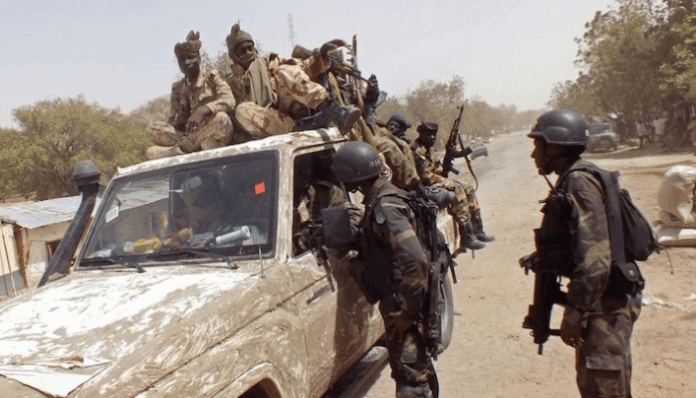
The Niger State Police Command has officially confirmed the deadly incident. Speaking from the command headquarters, police spokesperson Wasiu Abiodun stated that joint security deployments have been dispatched to Tegina and surrounding communities to prevent further retaliatory attacks.
Abiodun noted that tactical teams are currently compiling comprehensive casualty figures and evaluating the level of property damage. However, community headers warn that unless the state government rapidly addresses the structural issue of ethnic vigilante operations and establishes an unbiased panel to investigate the murders of both the Fulani leader and the Kamuku villagers, the truce will remain highly fragile.