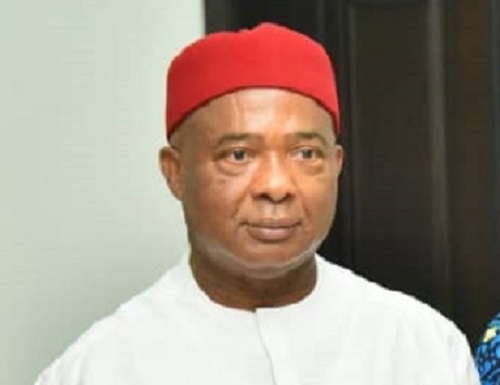
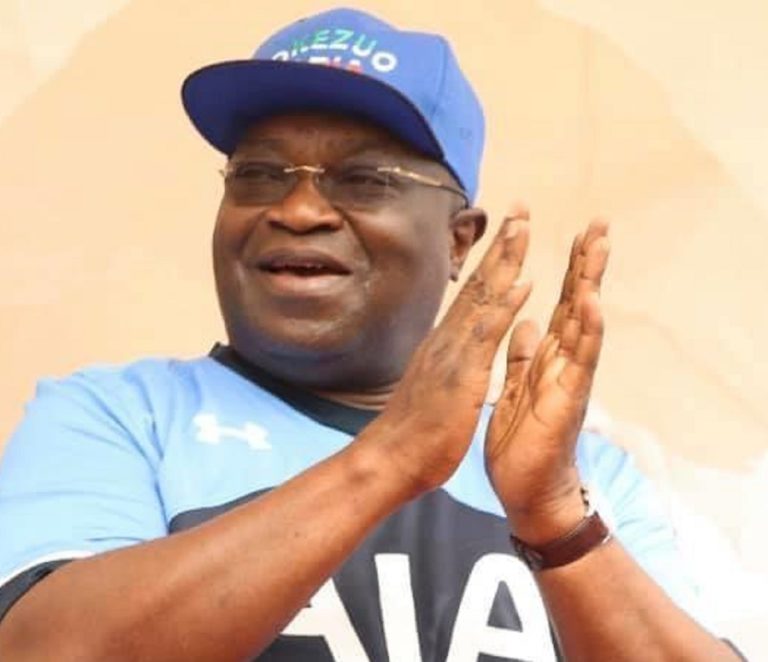
The Imo state chapter of the All Progressive Congress, APC, has advised the National Secretary of the Peoples Democratic Party, PDP, Senator Samuel Anyanwu, to retain his position as the National Scribe of the opposition party, rather than contesting for the Imo state governorship election.
The ruling party, in a press release signed by its state Publicity Secretary, Cajetan Duke, on Friday, told the PDP sole aspirant that, “he will be losing both the National Secretary position and that of Imo governorship and remain politically irrelevant.”
The APC was reacting to a statement credited to Senator Samuel Anyanwu, where he urged Imo.people to vote massively for the PDP in the forthcoming November 11 Imo governorship election, describing the Uzodinma-led government as vicious and corrupt.
“Ordinarily, we would have ignored such shallow, loose and miserable comment, but coming from a man like Senator Samuel Anyanwu, whose unpalatable political antecedent is well-known to every Imolites, provotes an advisory response.
“It is indeed regrettable and unfortunate that such a deliberate and deleterious falsehood could be credited to Senator Samuel Anyanwu, who through his political actions and inctions before events of the past few days, had always shared the conviction that Uzodinma’s recovery of his stolen mandate from Rt. Hon. Emeka Ihedioha was the best thing to have happened to Imo people.
“Nothing could be more laughable and ridiculous than Senator Samuel Anyanwu, who to the knowledge of every discerning Imolite and Nigeria at large, was himself the biggest misfortune and disaster that happened to the opposition party in Imo state, to now then around and begin preaching for the unity of a house he destroyed its foundation irredeemably.
“It is comical and quite delusional for Senator Samuel Anynwu to describe the APC-led Shared Prosperity administration of Distinguished Senator Hope Uzodinma as, “vicious and corrupt”. A government that has zero tolerance for self-aggrandisement and inordinate conservation of public wealth cannot be gainsaid.
“It is on this premise that we wish to advise the National Secretary of the now comatose PDP, one more time, to keep his eyes off Douglas House, and concentrate on the task before him in recovering and rebuilding the party, which he played a significant role in bringing to its ruins.
“All serious-minded Imolites, including those who left a dishonour ticket for him, are aware that there is no vacancy in Imo Government House until 2027. Imolites are not in a hurry to horror recruit another person in place a top scoring utility player, like Governor Uzodinma, who has through diligent prosecution of the 3R agenda of the Shared Prosperity administration, endeared himself to the people of Imo across boards.
“It will be costly and self-inflicted injury that our brother, Senator Samuel Anyanwu, relinquishes his position in pursuit of an obviously unrealistic, unavailable and unrealisable position of Imo state. It does not require a soothsayer to know that PDP as presently constituted in Imo state does not have the capacity and capability to mobilise the Imo electorate as required to successfully defeat the APC.
“Samdaddy we know does not have character, integrity and public appeal to galvanize any meaningful solidarity to match the popularity, credibility and acceptability of Governor Hope Uzodinma.
“His one-man ‘Divine Mandate organisation’ would have worked for the reelection of Governor Hope Uzodinma had Ihedioha continued with the prosecution of that his failure-bound guber project.
“It however obvious that Samuel Anyanwu, is the biggest manacle on the wheels of the PDP journey to electoral fortune. Such a character is not deserving and worthy to lead our people, not as a governor.
“We therefore urge Senator Samuel Nnaemeka Anyanwu, to refrain forthwith, from making further utterances and mischievous but also utterly un-statesmanly.”
It would be recalled that a fellow aspirant of the Imo guber under the opposition party, Emeka Ihedioha, about a week ago, withdrew from the PDP guber primary slated for April 15, 2023, throwing the field open for the National Secretary, who had severally asked him, (Ihedioha) to step down, having been given two opportunities in the past.
Reacting to the claim, the National Secretary who spoke through his Media Aide, Ikenna Onuoha, said that APC has already paved way for the opposition party through its many years of maladministration both in the state as at the federal level.
He said, “i do not expect the ruling to start this early to wail when offcourse party primaries have not been held. Take to the bank, Senator Samuel Anyanwu, is the biggest headache of APC in the forthcoming governorship election in Imo state.
“And to say that APC government is vicious and insensitive is to say the obvious. Tell me, a government that lacks the capacity to protect lives and property, what other name qualifies such a government?
“We will engage them in all ramifications. We will dislodge their rigging tactics and render them powerless. Offcourse, you know that Samdaddy is not a man you will. wish away in the game of politics.
“The Governor himself was recently quoted as saying that the only opponent he Senator Samdaddy Anyanwu and the rest of them. We don’t want to start making mouth but when the time comes, they will know that a new Sherrif is in town.”
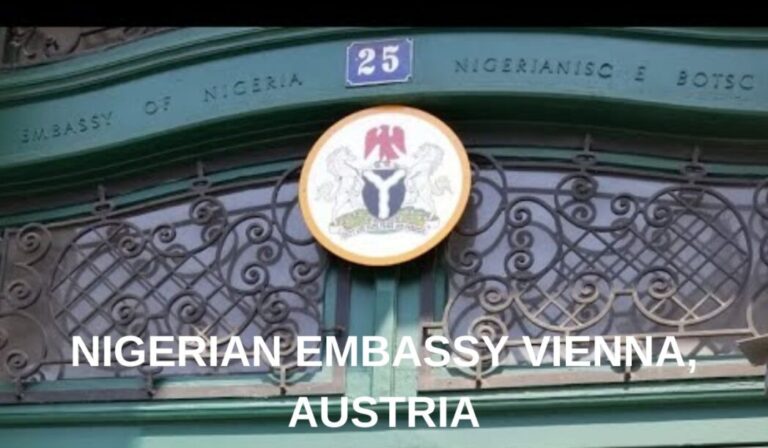
This piece you are about to read is a story that will come in series of not only how Ambassador S. D. Umar, the Nigerian Ambassador to Austria tried and is still trying to suppress Nigerians from speaking out against the neglect and the inhuman treatment they get at the Nigerian Embassy in Vienna, the complaint of extra charges of €50 and €30/€100 visa and passport application monies the embassy takes from applicants after having paid the stipulated amount online at the website of the Nigerian Immigration, and the embarrassment of converting a small portion of the waiting room of the embassy as a “Mama put” joint where under the embassy’s chairs serve as stores for coolers of Jollof rice etc. and accessories, but also a comprehensive story of how the whole saga started, the romance of NANCA and Ambassador S. D. Umar and the recruitment of the executives of the Nigerian ethnic nationals into the mission of defending the ambassador.
Perhaps, it is imperative to already inform all now that the NANCA Secretary Victor Oliha, NANCA President Dr Jude Okonkwo and all the Nigerian ethnic leaders in Austria – Ika Community Austria Mr Samson Ofiagbon, Esan Community Mr Stanley Gibson, Rivers State Community in Austria Mr Solomon Amieofori, Edo Community Mr Nosa Aifuwa, Egbe Omo Oduduwa Community Austria Mr Lanrewaju Fagbodun, and Igbo Community Austria Chris Ajuzie, a Knight – on behalf of their associations signed a biased document stating that Uzoma Ahamefule has been banned from attending any Nigerian gathering in Austria, for my just cause of writing that it is not a good image to sell food inside the hall of the Nigerian Embassy.
You will be bewildered to be informed that Ambassador S. D. Umar went as far as taking my name and the name of some other Nigerians to the Austrian police. Why did he do that? What offence did we commit? What did he tell the police that we did wrong? I was at the police and it was appalling. Thank God here is Austria. The story will also be detailed.
Fellow Nigerians, the whole episodes are like jokes, but they are realities. This is just the beginning of the shocking and revealing series of how Dr Okonkwo shamelessly told me that he was under pressure to write a rejoinder to the article I wrote condemning the selling of food inside the Nigerian Embassy hall that has completely nothing to do with him as a person or his office as a NANCA president. And his secretary Victor Oliha surprisingly too told me on telephone when he called that for NANCA to pronounce me banned from any Nigerian gatherings in Austria were an overstatement, and that he was not the one that had written the letter, despite having signed it.
In another outrageous development, Chris Ajuzie, the Igbo Chairman while answering questions on why he signed a document that banned an Igbo man (Uzoma Ahamefule) from attending Igbo meetings or any Nigerian gatherings without informing Ndigbo. He blatantly said that he had to sign because other ethnic national leaders signed. Unbelievable! His reason of signing was only because other ethnic leaders signed. Incredible! But what did Uzoma Ahamefule do wrong, that he must be banned, he did not ask? He can do anything to me while defending his friend, Ambassador S. D Umar.
Are NANCA and other ethnic nationals in Austria really representing the interest of Nigerians or the interest of the ambassador?
What is happening within the Nigerian community in Austria currently is something very unusual but interesting for all Nigerians to follow irrespective of their country of residence. Because to say that many Nigerians in Diaspora are just opportunists is an understatement.
Please share this article.
Uzoma Ahamefule, a concerned patriotic citizen and a refined African traditionalist, writes from Vienna, Austria.
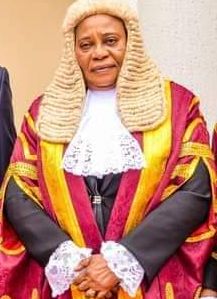
A very likeable Presiding Judge in the Nigeria Court of Appeal, Owerri Division, Justice Rita Nosakhare Pemu has narrated how she spent four hours in the kidnapper’s den.
Last year, Justice Pemu escaped heavily armed-kidnappers along Ihiala road in Anambra State.
The Chief judge who retired on March 6, 2023 after 45 years in judicial service, shared with encounter her four-hour ordeal in kidnappers’ den and how she managed to escape.
The retired jurist also shared one of the most challenging moments in her career when she had to flee the country after delivering judgement in an appeal involving the alleged killers of Kudirat Abiola; Major Hamza Al-Mustapha, Rabo Lawal and others.
According to her; “I am the kind of person that always prefers to fly because of the insecurity in the country and the nature of my job. So on that particular occasion, February 20, 2022, I flew in from Lagos to Benin and told my supporting staff to go ahead of me in two cars.
“My personal assistant, a housemaid and two drivers went ahead of me on the trip to Benin. One of the drivers was driving a Hilux and the other one was driving a minibus with Court of Appeal written on it. I told them to go ahead to Benin and we met when I flew into Benin. I finished what I had to do in Benin and decided to return to Owerri, Imo State.
“As we prepared for the trip, my PA was a bit rattled because ordinarily, before then, I would have told him to make my flight arrangements. But I didn’t tell him anything and he wasn’t sure what was going on. After a while, it dawned on him that I wanted to travel by road and that was exactly what I did.
“Simple dress saved the day.
On the day of the trip, there was this fine dress that I decided to wear but as I prepared for the trip, I just tossed the dress aside and decided to wear something simple.
“So I wore a very simple dress with a facial cap and a pair of slippers. I told my staff that I want to experience how it is to travel by road. They initially refused to allow me travel with them saying that the roads were bad and that the trip would not be comfortable for me.
“But of course I had already made up my mind to go with them by road. Instead of entering the Hilux which was my official car, I decided to join my staff in the minibus.
(Detour of danger)
“While on the trip, we got to a particular place and saw people doing a detour because there was an accident in front. So I gave the permission that we should follow other cars on the detour.
“As we came out from the detour onto the expressway, suddenly a Hilux Jeep with fierce looking men all dressed in black t-shirts with AK-47 rifles cornered us. They came out of their car and said we should all come out.
“They kept asking us where our boss was, but we didn’t respond. The free-flowing dress I wore obviously made me look like a maid, so they didn’t suspect that I was the boss.
(Hellish gunshots)
“They asked the minibus driver to show his identity card which he did. Immediately they started shooting sporadically in front of the car. We laid down on the terribly hot tarred road while they were shooting.
“Something in me kept me confident throughout that ordeal because every time I raised my head and looked at their faces, they would avoid my eyes. There were five of them. As the gunshots were rattling the air, I told my staff to start pleading the blood of Jesus and they obeyed me.
“They kept pleading the blood of Jesus and I told myself that even if we died in this experience, it would be better dying while pleading the blood of Jesus.
“So we were chorusing the blood of Jesus and waiting to be shot. After some minutes, I asked my maid, where the kidnappers were and she said they had gone away.
Marched into cave
“By the time I looked up, they were no longer there. As we got up, suddenly two of them returned and demanded to know why we got up. So we lay down again. They instructed us to march into a nearby cave.
“We got into the cave but surprisingly they didn’t follow us into the cave. They just left us there but we kept hearing gunshots everywhere. I took a quick decision and told my staff that we should just begin to run before stray bullets hit us inside the cave.
Race for life
“So we all began to run. I was far behind while my two staff that were obviouly younger were far ahead of me. I had a lot of bruises inside the bush while running. I have never ran such a race in my life.
“Eventually, we got into a small village and people who saw us were surprised that the kidnappers did not kill us. They quickly helped us and put us on two okadas.
“The okada man carrying me kept warning me to sit well to avoid him falling because I was just shaking on the okada. When we got to a point, we boarded a commercial tricycle popularly known as Keke Napep to Ihiala.
(Driver, Hilux still missing)
“When the kidnap drama was unfolding, the kidnappers told my driver to come down from the Hilux but he refused. We were all shouting that he should come down but he refused. So they shot at the Hilux.
“I don’t believe that they killed him because we saw him reversing the car. But up till today, the driver and my Hilux are still missing. That was all I knew until Police from Orlu came to pick us.
(Harvest of dead bodies)
“I saw a number of dead persons that day particularly a man I later learnt was a chief executive officer of a company located in Port Harcourt. A bus coming behind us was also shot and the driver was killed. I also learnt five persons inside the bus were killed.
“We were also told that many people were killed the following day in the same area. I got so disgusted in my spirit and felt the kidnappers could not be human beings with the way they killed people at will.
(Experience captured in book)
“I dedicated a chapter of the book I just launched, Evidence of Grace, to the experience. I titled that chapter: The efficacy of the Blood of Jesus. I had to title that chapter so because I am a beneficiary of the blood of Jesus. You can’t imagine the trauma of facing five fierce-looking men with AK-47 and still survive it.
“That incident lasted from about 11:30am to 3:00pm. That was my first time of entering an okada and that ride meant a lot for me. I told my staff to take me a picture while inside the Keke Napep that took us to Orlu.
“It was one of the greatest ordeals of my life and I am happy that I am alive to share the experience.
(Resumes work next day)
“I came back to work the day after the incident and lawyers who appeared in my court were all shouting. The day after the incident, they had to use hot water to massage my body because that was my first time of running such long distance in my life.
“I was literally flying like an Olympic athlete. Lawyers were shouting when I appeared in court the next day, and I continued sitting for three weeks at a stretch. When the lawyers keep demanding that I take time to rest, I told them that I preferred working so as to use it to forget the ordeal. When I am working, the experience takes backstage on my mind.
(Why I fled Nigeria)
” When I delivered the judgment in Major Hamza Al-Mustapha and others’ appeal in 2013, there was a general outcry that I had taken bribe and that I am girlfriend to one big man. The outcry was huge but it was only Femi Fani-Kayode that said the judgment was beautiful and advised people to go and read it.
“The pressure was so much that I had to run out of the country for six weeks. Luckily for me, by the time I came back, some newspapers had started serialising the judgement. It was a 75-page judgement and every day, the newspapers were serializing it.
“I can tell you that by the time people read the complete judgement, the outcry stopped and not a single word was heard again on the issue. People read it and saw my reasoning. When you are aggrieved, you go upstairs but when you are aggrieved with the decision upstairs, who do you now go to?
(Test of courage)
“We have to continue to do our job with courage and if you find that you have passed the test of courage then you will surely be regarded as virtuous.
“We must continue to be courageous and do the right things despite all odds and no matter whose ox is gored.”
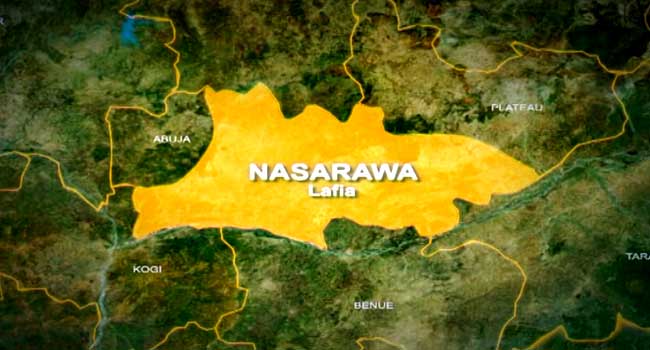
Police tactical operatives in Nassarawa state have intensified search over the kidnapping of a former Deputy governor of Nasarawa State, Professor Onje Gye-Wado.
The state Police Public Relations officer, DSP Ramhan Nansel, in a press release confirmed the abduction early on Friday, April 7, 2023.
He said Gye-Wado was whisked away Friday morning when gunmen broke into his residence in Gwagi village of Wamba Local government area of the state.
According to the police spokesman, a search has been initiated by a police tactical team in collaboration with other security personnel to rescue the victim unhurt.
The statement partly reads; “The Commissioner of Police, Nasarawa State Command, CP Maiyaki Baba has reassured the general public, especially the family of Prof Onje Gye-wado that an effort is ongoing to rescue the victim who was abducted by yet to be Identified hoodlums in the early hours of Friday, as Police tactical operatives have intensified search and rescue operation.
The Federal Capital Territory High Court has vacated an Exparte order freezing Abia State Government”s accounts with various financial institutions.
Justice Bello Kawu, after listening to arguments presented by Abia State Commissioner for Justice and Attorney General, Uche Ihediwa,SAN vacated the order.
Abia State , through its legal team had filed an application application urging the court to vacate the order because it made pursuant to a defective affidavit.
It is noted that such defect affected the entire proceedings.
The court also agreed it was in the interest of justice, public order and eace that the order be vacated.
The court theredore vacated the order and adjourned to 28th April, 2023 to hear the arguments of the Attorney General of Abia State on his second application which is challenging the jurisdiction of the court to entertain the matter in the first place.
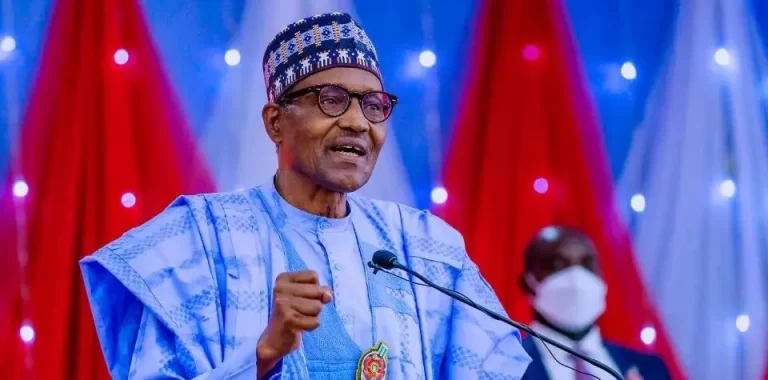
President Muhammadu Buhari, on Thursday said the 2023 elections have proved the growing strength of our democracy especially, the sophistication of the Nigerian voter when it comes to the choice of leaders.
Speaking when he received the newly-installed Emir of Dutse, Jigawa State Capital, Alhaji Muhammad Hamim Nuhu Sunusi at the State House in Abuja, President Buhari said the stunning outcome of 10 Governors failing to make it to the Senate meant that there is no longer a guaranteed route to power and the voter is truly the king when it comes to elections.
“It is a testament to the maturity of our democracy and to the amazing sophistication of the voter. What shocked me was that the ordinary citizen who is usually underrated has made the point of his political understanding of things.
Assumption is always that you are Governor for eight years and you go to the Senate to crown the career. No one should underrate the Nigerian voter anymore. Politics will be more difficult, henceforth,” the President said.
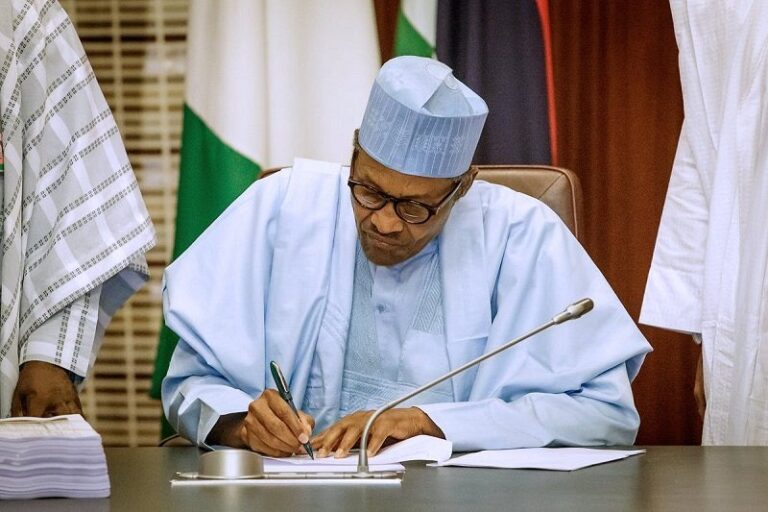
As the Nigerian government resolved to end fuel subsidy by June, hence it has begun moves to make the impact less stressful for the citizens through securing a World Bank Loan of N368.2b equivalent to $800 million in putting up a Comprehensive palliative Scheme for citizen’s, this was disclosed by President Muhammadu Buhari.
“Nigerian government under President Muhammadu Buhari has secured N368.2bn ($800 million) from the World Bank to put up a comprehensive palliative scheme for citizens, prior to the removal of fuel subsidy by June 2023”
Minister of Finance, Budget and National Planning, Zainab Ahmed, reiyerated this on Wednesday, shortly after the Federal Executive Council (FEC) meeting presided over by President Muhammadu Buhari.
According to Ahmed, the Nigerian government has resolved to end subsidy by June, hence it has begun moves to make the impact less stressful for the citizens
She noted that already there has been meaningful engagement with the newly established Presidential Transition Council (PTC) and the incoming administration, with the view to driving the palliative programme.
“We have secured a modest sum of $800 million from the World Bank to drive the palliative and we are targeting about 10 million households or 50 million vulnerable Nigerians in the first instance,” the minister stated while briefing State House correspondents.
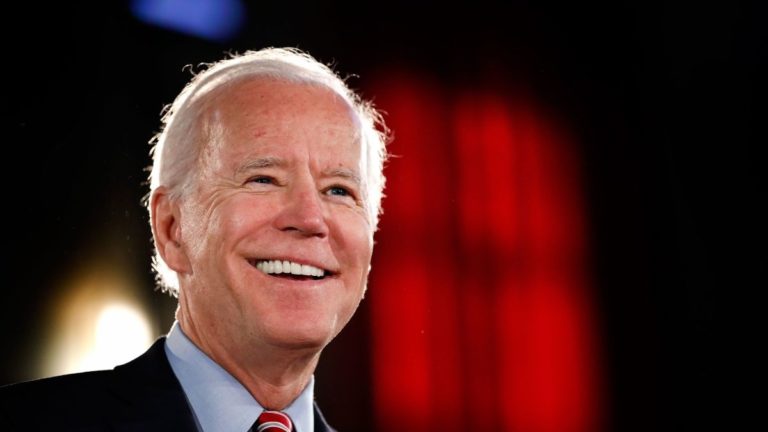
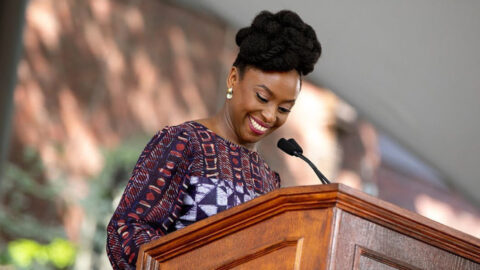
Nigerian born popular novelist, Chimamanda Adichie has written to the president of the United States Of America, Joe Biden concerning what she described as irregularities in the just concluded Nigeria presidential election.
Adiche’s open letter read;”Dear President Biden,
Something remarkable happened on the morning of February 25, the day of the Nigerian presidential election. Many Nigerians went out to vote holding in their hearts a new sense of trust. Cautious trust, but still trust. Since the end of military rule in 1999, Nigerians have had little confidence in elections. To vote in a presidential election was to brace yourself for the inevitable aftermath: fraud.
Chimamanda Adiche
Elections would be rigged because elections were always rigged; the question was how badly. Sometimes voting felt like an inconsequential gesture as predetermined “winners” were announced.
A law passed last year, the 2022 Electoral Act, changed everything. It gave legal backing to the electronic accreditation of voters and the electronic transmission of results, in a process determined by the Independent National Electoral Commission (INEC). The chair of the commission, Professor Mahmood Yakubu, assured Nigerians that votes would be counted in the presence of voters and recorded in a result sheet, and that a photo of the signed sheet would immediately be uploaded to a secure server. When rumors circulated about the commission not keeping its word, Yakubu firmly rebutted them.
In a speech at Chatham House in London (a favorite influence-burnishing haunt of Nigerian politicians), he reiterated that the public would be able to view “polling-unit results as soon as they are finalized on election day.”
Nigerians applauded him. If results were uploaded right after voting was concluded, then the ruling party, the All Progressives Congress (APC), which has been in power since 2015, would have no opportunity for manipulation. Technology would redeem Nigerian democracy. Results would no longer feature more votes than voters. Nigerians would no longer have their leaders chosen for them. Elections would, finally, capture the true voice of the people. And so trust and hope were born.
By the evening of February 25, 2023, that trust had dissipated. Election workers had arrived hours late, or without basic election materials. There were reports of violence, of a shooting at a polling unit, and of political operatives stealing or destroying ballot boxes. Some law-enforcement officers seemed to have colluded in voter intimidation; in Lagos, a policeman stood idly by as an APC spokesperson threatened members of a particular ethnic group who he believed would vote for the opposition.
Most egregious of all, the electoral commission reneged on its assurance to Nigerians. The presidential results were not uploaded in real time. Voters, understandably suspicious, reacted; videos from polling stations show voters shouting that results be uploaded right away. Many took cellphone photos of the result sheets. Curiously, many polling units were able to upload the results of the House and Senate elections, but not the presidential election. A relative who voted in Lagos told me, “We refused to leave the polling unit until the INEC staff uploaded the presidential result.
The poor guy kept trying and kept getting an ‘error’ message. There was no network problem. I had internet on my phone. My bank app was working. The Senate and House results were easily uploaded. So why couldn’t the presidential results be uploaded on the same system?” Some electoral workers in polling units claimed that they could not upload results because they didn’t have a password, an excuse that voters understood to be subterfuge. By the end of the day, it had become obvious that something was terribly amiss.
No one was surprised when, by the morning of the 26th, social media became flooded with evidence of irregularities. Result sheets were now slowly being uploaded on the INEC portal, and could be viewed by the public. Voters compared their cellphone photos with the uploaded photos and saw alterations: numbers crossed out and rewritten; some originally written in black ink had been rewritten in blue, some blunderingly whited-out with Tipp-Ex. The election had been not only rigged, but done in such a shoddy, shabby manner that it insulted the intelligence of Nigerians.
Nigerian democracy had long been a two-party structure—power alternating between the APC and the Peoples Democratic Party—until this year, when the Labour Party, led by Peter Obi, became a third force. Obi was different; he seemed honest and accessible, and his vision of anti-corruption and self-sufficiency gave rise to a movement of supporters who called themselves “Obi-dients.”
Unusually large, enthusiastic crowds turned up for his rallies. The APC considered him an upstart who could not win, because his small party lacked traditional structures. It is ironic that many images of altered result sheets showed votes overwhelmingly being transferred from the Labour Party to the APC.
As vote counting began at INEC, representatives of different political parties—except for the APC—protested. The results being counted, they said, did not reflect what they had documented at the polling units. There were too many discrepancies.
“There is no point progressing in error, Mr. Chairman. We are racing to nowhere,” one party spokesperson said to Yakubu. “Let us get it right before we proceed with the collation.” But the INEC chair, opaque-faced and lordly, refused. The counting continued swiftly until, at 4:10 a.m. on March 1, the ruling party’s candidate, Bola Tinubu, was announced as president-elect.
A subterranean silence reigned across the country. Few people celebrated. Many Nigerians were in shock. “Why,” my young cousin asked me, “did INEC not do what it said it would do?”
It seemed truly perplexing that, in the context of a closely contested election in a low-trust society, the electoral commission would ignore so many glaring red flags in its rush to announce a winner. (It had the power to pause vote counting, to investigate irregularities—as it would do in the governorship elections two weeks later.)
Rage is brewing, especially among young people. The discontent, the despair, the tension in the air have not been this palpable in years.
How surprising then to see the U.S. State Department congratulate Tinubu on March 1. “We understand that many Nigerians and some of the parties have expressed frustration about the manner in which the process was conducted and the shortcomings of technical elements that were used for the first time in a presidential election cycle,” the spokesperson said. And yet the process was described as a “competitive election” that “represents a new period for Nigerian politics and democracy.”
American intelligence surely cannot be so inept. A little homework and they would know what is manifestly obvious to me and so many others: The process was imperiled not by technical shortcomings but by deliberate manipulation.
An editorial in The Washington Post echoed the State Department in intent if not in affect. In an oddly infantilizing tone, as though intended to mollify the simpleminded, we are told that “officials have asserted that technical glitches, not sabotage, were the issue,” that “much good” came from the Nigerian elections, which are worth celebrating because, among other things, “no one has blocked highways, as happened in Brazil after Jair Bolsonaro lost his reelection bid.” We are also told that “it is encouraging, first, that the losing candidates are pursuing their claims through the courts,” though any casual observer of Nigerian politics would know that courts are the usual recourse after any election.
The editorial has the imaginative poverty so characteristic of international coverage of African issues—no reading of the country’s mood, no nuance or texture. But its intellectual laziness, unusual in such a rigorous newspaper, is astonishing. Since when does a respected paper unequivocally ascribe to benign malfunction something that may very well be malignant—just because government officials say so? There is a kind of cordial condescension in both the State Department’s and The Washington Post’s responses to the election. That the bar for what is acceptable has been so lowered can only be read as contempt.
I hope, President Biden, that you do not personally share this cordial condescension. You have spoken of the importance of a “global community for democracy,” and the need to stand up for “justice and the rule of law.” A global community for democracy cannot thrive in the face of apathy from its most powerful member. Why would the United States, which prioritizes the rule of law, endorse a president-elect who has emerged from an unlawful process?
Compromised is a ubiquitous word in Nigeria’s political landscape—it is used to mean “bribed” but also “corrupted,” more generally. “They have been compromised,” Nigerians will say, to explain so much that is wrong, from infrastructure failures to unpaid pensions. Many believe that the INEC chair has been “compromised,” but there is no evidence of the astronomical U.S.-dollar amounts he is rumored to have received from the president-elect. The extremely wealthy Tinubu is himself known to be an enthusiastic participant in the art of “compromising”; some Nigerians call him a “drug baron” because, in 1993, he forfeited to the United States government $460,000 of his income that a Chicago court determined to be proceeds from heroin trafficking. Tinubu has strongly denied all charges of corruption.
I hope it will not surprise you, President Biden, if I argue that the American response to the Nigerian election also bears the faint taint of that word, compromised, because it is so removed from the actual situation in Nigeria as to be disingenuous. Has the United States once again decided that what matters in Africa is not democracy but stability? (Perhaps you could tell British Prime Minister Rishi Sunak, who quickly congratulated Tinubu, that an illegitimate government in a country full of frustrated young people does not portend stability.) Or is it about that ever-effulgent nemesis China, as so much of U.S. foreign policy now invariably seems to be? The battle for influence in Africa will not be won by supporting the same undemocratic processes for which China is criticized.
This Nigerian election was supposed to be different, and the U.S. response cannot—must not—be business as usual. The Nigerian youth, long politically quiescent, have awoken. About 70 percent of Nigerians are under 30 and many voted for the first time in this election. Nigerian politicians exhibit a stupefying ability to tell barefaced lies, so to participate in political life has long required a suspension of conscience. But young people have had enough. They want transparency and truth; they want basic necessities, minimal corruption, competent political leaders, and an environment that can foster their generation’s potential.
This election is also about the continent. Nigeria is a symbolic crucible of Africa’s future, and a transparent election will rouse millions of other young Africans who are watching, and who long, too, for the substance and not the hollow form of democracy. If people have confidence in the democratic process, it engenders hope, and nothing is more essential to the human spirit than hope.
Today, election results are still being uploaded on the INEC server. Bizarrely, many contradict the results announced by INEC. The opposition parties are challenging the election in court. But there is reason to worry about whether they will get a fair ruling. INEC has not fully complied with court orders to release election materials. The credibility of the Nigerian Supreme Court has been strained by its recent judgments in political cases, or so-called judicial coronations, such as one in which the court declared the winner of the election for governor of Imo State a candidate who had come in fourth place.
Lawlessness has consequences. Every day Nigerians are coming out into the streets to protest the election. APC, uneasy about its soiled “victory,” is sounding shrill and desperate, as though still in campaign mode. It has accused the opposition party of treason, an unintelligent smear easily disproved but disquieting nonetheless, because false accusations are often used to justify malicious state actions.
I supported Peter Obi, the Labour Party candidate, and hoped he would win, as polls predicted, but I was prepared to accept any result, because we had been assured that technology would guard the sanctity of votes. The smoldering disillusionment felt by many Nigerians is not so much because their candidate did not win as because the election they had dared to trust was, in the end, so unacceptably and unforgivably flawed.
Congratulating its outcome, President Biden, tarnishes America’s self-proclaimed commitment to democracy. Please do not give the sheen of legitimacy to an illegitimate process. The United States should be what it says it is.
…Charges Security Agencies to Bring Perpetrators to Book
From Mba Nnenna – Abakaliki.
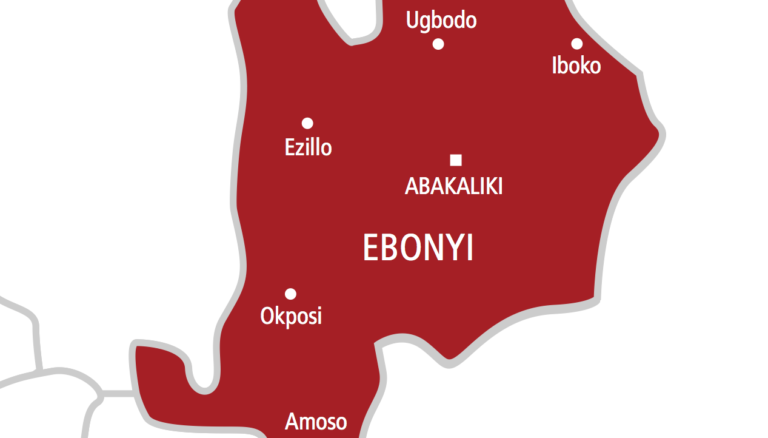
The Executive Chairman of Ebonyi Local Government Area, Barr. Prince Chinedu Uburu Wednesday condemned the unwarranted attack on the people of Ndiefi-Ishieke, Mbeke Community and appealed for calm as the matter is under investigation.
It was gathered that the attack which occurred in the early hours of 3:am last week Tuesday, displaced over 100 persons, 11 injured and several houses destroyed.
Speaking to journalists at his residence, Prince Uburu frowned at the incident and charged security agencies to ensure perpetrators are brought to book.
He described the incident as ungodly and calculated attempt to tarnish his good image, and called on the affected village to support government’s effort to bring lasting peace in the area.
“I got a report of land dispute from Ndiefi village and I was made to know that the matter was already in the court, and I told them that I will not comment on the matter until the court gives their judgement.”
“However, last week one Mr Sunday Edeh wrote to my office, that they were planning a burial, that they needed security to carry out the burial, immediately I minuted it to DPO, Ugbodo police station in charge of the jurisdiction.
“On Friday, on my way to the village, I got a call that there were presence of army officers in Ndiefi village, I was surprised because I had earlier on notified the DPO of Ugbodo and if there is any issue, my office should have been notified. But I didn’t get any official notification neither by call or in writing rather someone from the village who should have my phone number to call if there’s security issue called army officers without my knowledge.
” I immediately rushed to the village and discovered that they were invited by somebody from the village, after much interaction with the army officers they left, and I have to wait for a while to ensure there’s no problem in the area before I left.
He added, ” Since then until some Journalists started calling to tell me about what happened at Ndiefi-Ishieke, I did not get any information about skirmish again from the village. And I went to the police station to notify them about the incident and they alongside DSS officers went round the place to see by ourselves, it was a disheartening incident.”
Meanwhile, Prince Uburu frowned at some speculations making the round which linked the attack to kindred dichotomy and warned against politicizing the ugly incident.
“I don’t understand what those making kindred colouration over the inhumane action tend to achieve, they said the land was shared to villagers, the question is, that land was it shared to a particular kindred? And if that is the case why was other kindred equally affected?.
Reacting to the allegations of his involvement in the crisis, he stated that it was a cheap blackmail targeted at tarnishing his image. Adding, he derives no pleasure in hurting the lives and property of the people he swore to protect.
The Council Chairman, however appealed to stakeholders in the area to embrace peace as no Community developed under rancour and skirmish.
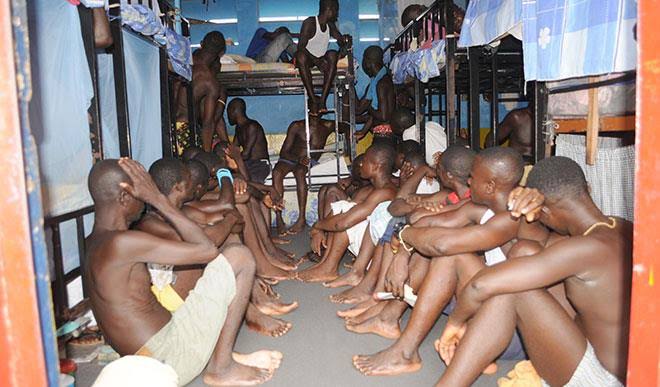
Governor Chukwuma Soludo-led Anambra State Government has upheld and pledged the establishment of schools in correctional centres across the state.
The Anambra State Commissioner for Education, Prof. Ngozi Chuma-Udeh, made the pledge while playing host to the new head of Onitsha Correctional Center, Deputy Comptroller, Micheal Anugwa, who paid her a courtesy visit to the her office at the Jerome Udorji State Secretariate Complex, Awka, Anambra State capital.
According to her, establishing schools at the correctional centers is a wonderful initiative, which will give the inmates opportunities of living a better life when released.
She said the import of education in national development can never be over-emphasized, which, she said is the reason why Governor Soludo’s administration prioritizes and places more premium on education, as he has so far manifested in his giant feats in the educational sector.
Speaking earlier, the Deputy Comptroller, Mr. Anugwa, harped on the need to establish a strong partnership and good working relationship with relevant stakeholders and agencies in the state. He lamented that the correctional center he inherited lacks proper educational facilities and conducive atmosphere for learning, against the law governing correctional centers; hence, the reason he is taking the bold step to transform it into modern correctional facilities, in line with the international best practices.