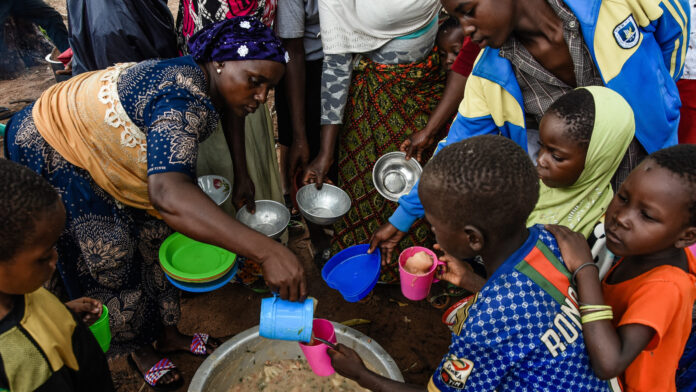

ABUJA, NIGERIA — The United Nations World Food Programme (WFP) has issued a devastating assessment of Nigeria’s domestic stability, warning that cascading conflict and severe donor shortfalls have plunged Northern Nigeria into its most severe hunger crisis in nearly a decade.
The global body disclosed that over 17 million people across nine conflict-affected northern states are currently experiencing crisis, emergency, or catastrophic levels of food insecurity. The disclosure has immediately transformed into a potent political weapon for opposition groups ahead of the 2027 electoral cycle, with critics framing the humanitarian disaster as a technical “vote of no confidence” in President Bola Ahmed Tinubu’s economic and security administration.
The Expanding Geography of Violence
The core of the United Nations’ concern rests on the rapid expansion of armed banditry and insurgent activity out of traditional operational zones.
In an official brief detailing the crisis, the WFP Regional Director for West and Central Africa, Kinday Samba, noted that the geographic spread of the conflict is directly cutting off agrarian communities from their primary livelihoods.
“What concerns us most is how this crisis is expanding,” Samba stated. “For years, insurgent attacks and violence were largely concentrated in parts of northeast Nigeria. Today, they are spreading across a much wider area and forcing people from farmland, driving displacement and restricting humanitarian access, meaning hunger is quick to follow.”
According to the recently concluded Cadre Harmonisé food security analysis, the epicenter remains Borno State, where renewed insurgent raids have left more than 3 million individuals acutely food insecure. Tragically, over 10,000 people within the state have deteriorated into “catastrophic hunger”—a critical threshold often preceding full-blown famine conditions.
A Perfect Storm: Shrinking International Aid
Compounding the security breakdown is an unprecedented funding cliff that has forced international aid agencies to scale back their emergency interventions. The WFP revealed that while 6.2 million people across the core frontline states of Borno, Adamawa, and Yobe urgently require nutritional lifelines, current operational resources can only sustain assistance for roughly 740,000 individuals.
This leaves a staggering 5.5 million vulnerable citizens—primarily women and children—entirely cut off from life-saving food support. This drop represents a sharp decline from the 1.3 million people the agency managed to support during the peak of the 2025 lean season.
Humanitarian coordinators warn that the withdrawal of food aid is driving displaced populations toward desperate survival strategies, including reports of vulnerable youths joining local armed factions simply to secure food or daily income.
“When people lose access to food, the risks of displacement, exploitation, and instability increase,” Samba warned, pleading for an urgent $89 million injection over the next six months to stabilize regional logistics. “Yet resources are at their lowest at the time they are needed most.”
WFP
The 2027 Political Flashpoint
While the United Nations maintains a strictly neutral, humanitarian framing focused on resource mobilization and conflict mitigation, domestic political actors have wasted no time in linking the data directly to Aso Rock’s macroeconomic policies.
Commentators across the northern region argue that the combination of unchecked agrarian insecurity, the removal of fuel subsidies, and galloping food inflation has effectively dismantled the purchasing power of the rural poor.
With the overall nationwide food insecurity figure now projected to encompass 36.2 million Nigerians, the Tinubu administration faces an uphill battle. As political alignments shift in anticipation of the 2027 general elections, the presidency’s ability to restore security to the northern food belt and rein in soaring staple costs will undoubtedly serve as the primary metric by which millions of voters judge the viability of the “Renewed Hope” agenda.