
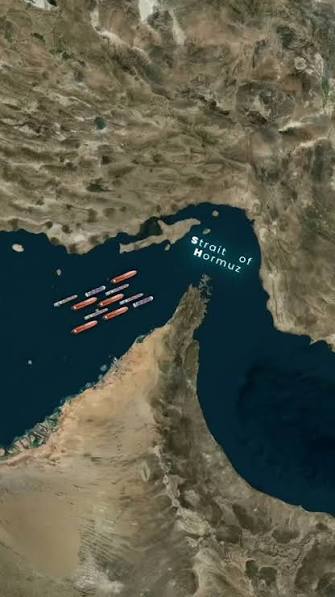


Several oil-exporting nations in the Persian Gulf are secretly transporting fossil fuels through the strategic Strait of Hormuz, according to a report by Bloomberg.
The report indicates that oil tankers originating from Kuwait, Qatar, and the United Arab Emirates (UAE) have been navigating the narrow waterway with their automatic identification systems (AIS) and transponders turned off for several months.
Industry analysts suggest that this covert movement of crude and refined products is playing a role in keeping global energy prices stabilized despite regional tensions.

Disrupted Tracking and High Risks
Because these vessels are traveling without active tracking signals, accurately estimating the exact volume of oil currently moving through the strait has become increasingly difficult.
However, maritime experts and the Bloomberg report emphasize that navigating the route under current conditions carries significant physical risks:
- Rising Vessel Attacks: Since the onset of recent regional conflicts, at least 23 vessels associated with the Abu Dhabi National Oil Company (ADNOC) have been targeted or attacked along maritime routes.
- Human Toll: The reported incidents have led to at least one fatality and left 20 crew members injured.
A Crucial Maritime Bottleneck
The Strait of Hormuz remains one of the world’s most critical energy chokepoints, handling roughly a fifth of global petroleum consumption.
While turning off transponders—a practice often referred to as “going dark”—is used by vessel operators to avoid detection and minimize the threat of targeted attacks, maritime safety organizations warn that it significantly increases the risk of collisions and complicates search-and-rescue operations in high-traffic international waters.