


.
.
.
By: Aminu Salisu Dwolf
Calls have intensified for the release of Kano-based blogger, Maryam Shehu, who is reportedly being detained by the Economic and Financial Crimes Commission (EFCC) in Abuja for more than 30 days.
Shehu was reportedly arrested in Kano and subsequently taken to Abuja after allegedly raising corruption concerns involving officials of the anti-graft agency.
According to information made available by her supporters and those working on her case, Shehu has not been accused of stealing, fraud, money laundering or any other economic or financial crime.
Her case has raised concerns among human-rights advocates, particularly over the circumstances surrounding her arrest and continued detention.
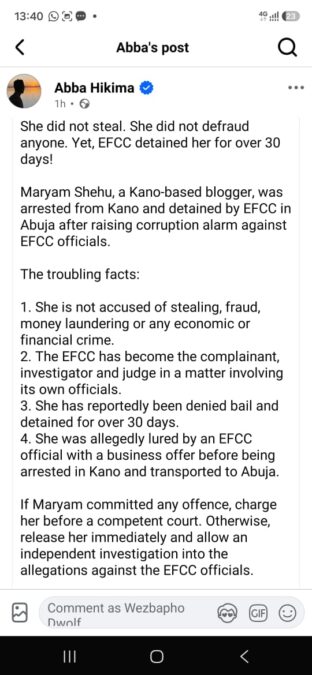
It was also alleged that an EFCC official lured Shehu with a business proposal before she was arrested in Kano and transported to Abuja. The allegation, however, has not been independently established.
Another major concern raised by her supporters is the claim that the EFCC is simultaneously the subject of the allegations, the investigating agency and the authority detaining Shehu.
They argue that where allegations have been made against officials of an agency, an independent investigation would be necessary to ensure transparency and public confidence.
The campaigners are therefore calling on the EFCC either to charge Shehu before a competent court if there is evidence that she committed an offence, or release her if there is no lawful basis for her continued detention.
They have also appealed to human-rights organisations to intervene in the matter, saying that investigation should not become a form of punishment.
“Investigation is not punishment. Release Maryam Shehu or charge her to court,” the campaigners said, while using the hashtag #FreeMaryamShehu to draw attention to the case.
Those working on Shehu’s case said court papers were being prepared as they seek judicial intervention over her continued detention.
The allegations surrounding Shehu’s arrest and detention could not be independently verified at the time of filing this report. The EFCC’s response to the allegations was also not included in the information available for this report.