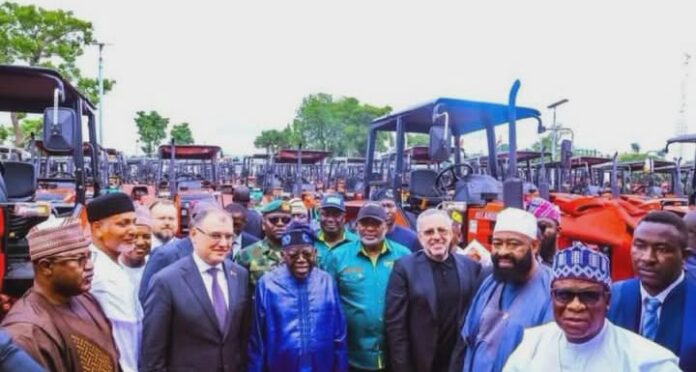


ABUJA, NIGERIA — Severe public backlash has hit the administration of President Bola Tinubu following revelations that billions of Naira worth of newly imported tractors have been left sitting in storage facilities to rust, rather than being distributed to desperate farmers amidst a worsening national food crisis.
The prolonged delay in deploying the critical machinery has sparked fierce allegations that the government is intentionally mismanaging agricultural resources.
Undistributed Machinery Left to the Elements
The massive fleet of tractors was originally imported under a state-led mechanisation initiative to boost local food production and drive down the soaring cost of food. However, nearly a year after their arrival, the vast majority of the vehicles remain parked in open-air holding yards, completely unassigned to the agricultural sector. [1]
Witness reports and social commentators, including Shehu Gazali Sadiq, have raised the alarm over the visible deterioration of the equipment. Critics argue that allowing essential farming assets to rot away while millions of citizens face severe inflation and hunger represents a catastrophic failure of governance under the current administration.
Allegations of Political Manipulation for 2027
The tractor scandal has rapidly escalated into a major political controversy. Opponents and civil rights advocates are publicly accusing the Tinubu administration of using economic hardship as a deliberate tool for political leverage.
The core of the allegation suggests that the government is intentionally withholding agricultural relief to keep the population vulnerable. Critics claim the ultimate goal is to weaponize poverty, leaving citizens starving and desperate enough to scramble for basic food rations and small cash handouts during the upcoming 2027 general election cycle.
Rising Call for Accountability
As the food crisis intensifies, agricultural groups, cooperative societies, and local farmers are demanding the immediate, unconditional release of the tractors to rural communities. Stakeholders warn that every season the machinery sits idle further cripples Nigeria’s food security, turning what should have been a landmark agricultural breakthrough into a symbol of institutional neglect.