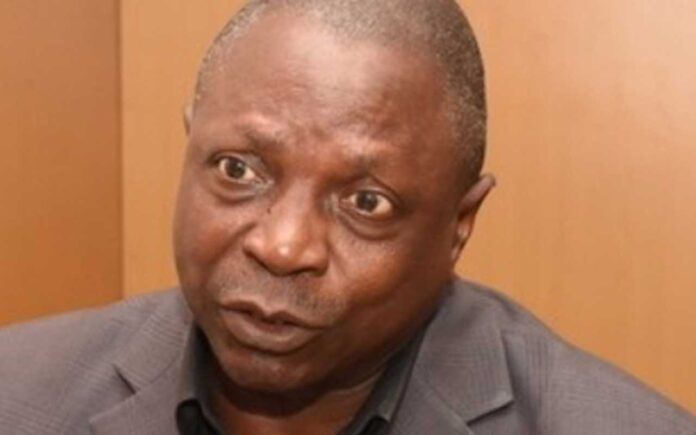

LAGOS, NIGERIA — Dr. Adetokunbo Pearse, a prominent public affairs analyst and chieftain of the Peoples Democratic Party (PDP), has launched a scathing attack on the Independent National Electoral Commission (INEC), declaring it a fundamentally corrupt institution that actively subverts the democratic will of the Nigerian people.
The public indictment comes amid growing national calls from civil society organizations and opposition movements demanding a complete overhauling of the country’s central electoral umpire ahead of future polls.
The Accusation: Institutionalized Rigging and Manipulation
Speaking during a live broadcast panel on News Central TV, Pearse, who also serves as the convener of the Reset Lagos PDP group, stated that the outcomes of recent election cycles, particularly the 2023 general elections, were marred by blatant systemic manipulation. He alleged that INEC abandoned its role as a neutral arbiter to operate as an extension of the ruling All Progressives Congress (APC).
“INEC has proven itself to be a fraudulent organization,” Pearse asserted during the media briefing. “The system was deliberately manipulated to favor President Bola Tinubu and his allies, resulting in the declaration of individuals who were completely unqualified or who did not legitimately win their contests, such as Senate President Godswill Akpabio.”
Pearse argued that the persistent refusal of the commission to strictly enforce the direct, real-time upload of polling unit results via technological platforms is clear evidence of a coordinated insider effort to alter figures during manual local government collation.
The Core Grievance: Lack of Structural Independence
Expanding on his critique, Pearse emphasized that the fraudulent behavior observed within the commission stems from its flawed constitutional foundation. He outlined two major structural dependencies that prevent the body from operating honestly:
- Executive Appointment Powers: Pearse noted that an electoral umpire can never be truly independent as long as its national chairman and state resident electoral commissioners are directly appointed by an incumbent president who has a vested interest in election outcomes.
- Financial Control: He criticized the commission’s dependency on executive fiscal approvals, stating that tethering INEC’s operational funds to treasury single accounts allows state actors to starve or influence the body at will, which he described as unconstitutional and fraudulent.
Broad Public and Legal Pushback
Pearse’s fierce commentary aligns with a broader wave of legal and institutional challenges hitting the commission. In recent weeks, the Federal Government, through the Nigerian Bar Association (NBA), has had to initiate prosecutions against hundreds of indicted INEC officials and ad-hoc staff for blatant results falsification and electoral malpractices.
Simultaneously, civic action groups have dragged the commission to court, alleging that its administrative departments have manufactured false documentation to aid desperate politicians in ongoing tribunal battles.
While INEC’s national headquarters continues to defend its integrity—attributing delays and administrative glitches to logistical constraints and external cybercriminal attacks—Pearse maintains that the country’s multiparty democracy will completely collapse into a one-party dictatorship unless the National Assembly immediately strips the Presidency of its powers to appoint the electoral leadership.