
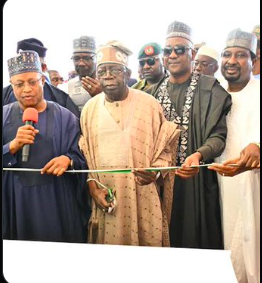

There is a familiar, theatrical ritual in Nigerian governance that has long outlived its utility. A fleet of pristine SUVs arrives at a newly painted structure. A red carpet is unrolled. Dignitaries exchange lavish praises, television cameras roll, and a high-ranking political figure smilingly cuts a silk ribbon to declare a multi-billion-naira project “fully commissioned for the benefit of the people.” The cameras pack up, the politicians fly back to Abuja or the state capital, and then the lights go out. Literally.
The recent uproar surrounding the Bola Ahmed Tinubu Specialist Hospital in Kaduna is a textbook manifestation of this systemic malaise. One year after a grand presidential commissioning, the multi-billion-naira medical complex sits behind locked gates. While independent civic trackers report a deserted monument occupied only by rodents and overgrowth, government officials scramble to produce statistics of thousands of unseen patients treated in a phased rollout. Whether the truth lies in total abandonment or a crippled, sluggish deployment, the core issue remains unchanged: the hospital was commissioned for political optics, not public readiness.
This phenomenon of “ribbon-cutting governance” is a deceptive political illusion. It values the aesthetics of completion over the reality of functionality. Across Nigeria’s 36 states, the landscape is littered with white-elephant projects—diagnostic centres with no medical staff, digital libraries without internet connections, and solar-powered boreholes that stop pumping water forty-eight hours after the local government chairman leaves the venue.
Why does this happen? Because in our current political culture, a project only holds value as campaign material or a legacy statement for an outgoing or incoming administration. Contractors are pressured to finish the external painting and landscape aesthetics just in time for an arbitrary anniversary or a VIP visit. Equipment is often leased or moved from existing facilities just to decorate the rooms for the commissioning day, only to vanish into thin air the following morning.
What politicians deliberately obscure during these media circuses is that building infrastructure is the easiest part of governance. The real challenge lies in the unglamorous, long-term work: recruiting and paying specialized personnel, securing steady power grids, funding recurring maintenance budgets, and establishing sustainable supply chains. Cutting a ribbon on a 320-bed hospital when you have not yet hired the doctors, nurses, and laboratory scientists required to run it is not leadership. It is an executive charade.
Nigeria cannot afford to keep sinking scarce public resources into monuments of political vanity. The National Assembly and state legislatures must introduce strict legislative frameworks that prohibit the formal commissioning of public utilities until they are certified 100% operational by independent professional regulatory bodies.
Until we demand that governance be measured by functional service delivery rather than ceremonial ribbon-cutting, our communities will continue to harvest empty shells instead of development. A hospital is defined by the lives it saves, not the name painted on its gate. It is time to end the theatre and demand real governance.