
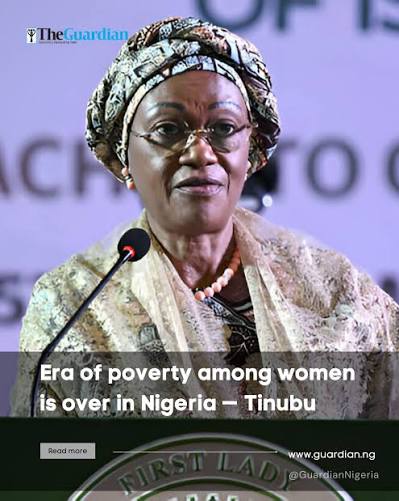


When the First Lady of Nigeria, Senator Oluremi Tinubu, looked at a struggling population and declared that starting an akara, roasted corn, or kuli-kuli business “doesn’t take a lot of money,” she did more than just underestimate market realities. She exposed a profound, systemic disconnect that defines Nigeria’s current ruling class. To suggest subsistence-level roadside petty trading as a viable economic survival strategy in 2026 is an insult to the resilience of the Nigerian people, and a dangerous romanticization of poverty.
The presidency has framed these remarks within the context of grassroots empowerment and micro-grants. But an editorial look at the macroeconomics of the Tinubu administration reveals a jarring hypocrisy. While the federal government commands trillions of naira for elite, capital-intensive infrastructure like the 700km Lagos-Calabar Coastal Highway, the official economic policy being handed down to the masses is to survive on the margins by frying bean cakes and roasting maize by the roadside.
This “let them eat akara” philosophy completely ignores the brutal realities of the modern Nigerian marketplace. Due to the aggressive floating of the naira and the removal of the petrol subsidy, inflation has mutated the cost of doing business. As market data shows, a bag of beans now hovers around ₦90,000, a jerrican of vegetable oil easily crosses ₦65,000, and a standard 12.5kg cooking gas cylinder sits at a crushing average of ₦19,652. The very items needed to start these “low-capital” businesses are out of reach for the target beneficiaries of the First Lady’s micro-grants.
Furthermore, a nation cannot trade its way out of poverty through roadside snacks. Real economic empowerment does not look like handing out micro-grants that are immediately swallowed by hyper-inflation. True governance involves creating an enabling environment—reducing electricity tariffs, stabilizing the currency, cutting transportation logistics costs, and ensuring national security so that farmers can harvest the very corn and groundnuts the First Lady speaks of without being terrorized.

By telling citizens to find solace in kuli-kuli production, the leadership is subtly shifting the burden of economic failure entirely onto the backs of the victims. It suggests that if a Nigerian is starving, it is not because of structural policy failures, but because they lack the initiative to sit by a charcoal grill.
Our Position:
- End the Tokenism: The office of the First Lady and the broader administration must shift away from cosmetic micro-poverty initiatives. The Nigerian public does not need handouts to become roadside vendors; they need policies that lower the cost of living.
- Align Priorities: The presidency cannot continue to demand maximum austerity from the public while funding multi-trillion naira coastal highways and elite administrative comforts. The budget must reflect the immediate, existential survival of the people.
- A Call for Empathy: Nigeria’s political elite must learn to speak to the public with a sense of dignity and economic realism.
The citizens of Nigeria are ambitious, industrious, and deserving of a future that extends beyond the roadside. If the ultimate destination of the administration’s economic “renewed hope” agenda is to turn a nation of educated youths and struggling parents into akara fryers, then the policy has failed. It is time for Aso Rock to stop offering crumbs and start fixing the economy.







