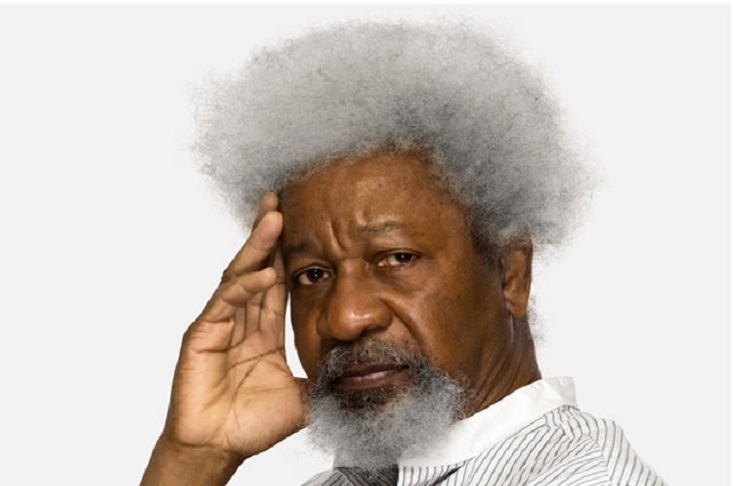

LAGOS, NIGERIA — Nobel Laureate Professor Wole Soyinka has found himself at the center of a raging national controversy, as everyday Nigerians and political commentators openly accuse the legendary writer of selective activism and hypocrisy over his prolonged reluctance to fully condemn the administration of President Bola Ahmed Tinubu.
Critics are pointing out a glaring double standard, contrasting Soyinka’s fiercely confrontational, zero-tolerance posture during the era of former President Goodluck Jonathan (GEJ) with his noticeably measured and protective approach toward the current administration, now in its third year.
The Timetable Controversy: “I Didn’t Swallow An Alarm Clock”
The friction reached a boiling point following public demands for the literary icon to honor his self-imposed timeline. It can be recalled that during a highly publicized Christmas visit to President Tinubu at Aso Rock in December 2023, Soyinka pleaded for a one-year grace period, stating it was his personal policy to evaluate new governments only after their first 12 months in office.
However, when confronted by journalists over his failure to deliver a comprehensive scorecard long after that milestone passed, the Nobel Laureate reacted with uncharacteristic defensiveness.
“People should stop trying to work on my timetable for me,” Soyinka fired back during a television interview. “I had not swallowed an alarm clock. I don’t see why I should put my alarm on and say: ‘One year has passed, now, I must make an assessment’ if there is nothing I feel like talking about.”
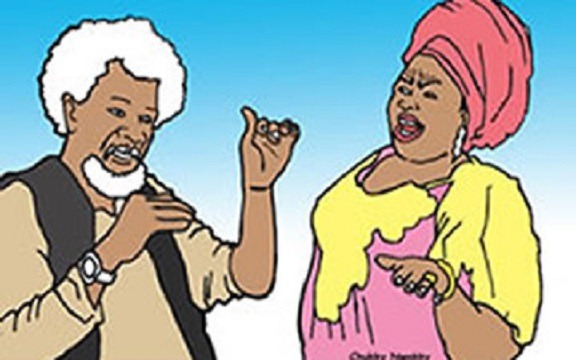
In a subsequent interview, Soyinka further defended his hesitation, arguing that he is taking his time because his public commentaries are routinely twisted by partisan actors.
The GEJ Contrast: From “Patience Jonathan” To Total Silence
For many Nigerians, Soyinka’s pleas for patience and complaints about “misrepresentation” ring hollow when measured against his historical radicalism.
During the Goodluck Jonathan administration, Soyinka did not grant the government a single month of administrative grace, let alone a year. He famously launched blistering verbal attacks against President Jonathan and notably took direct, unsparing swipes at the then-First Lady, Patience Jonathan, whom he famously described as a “domestic potentate” during the height of the Rivers State political crisis.
Today, despite the country grappling with unprecedented economic inflation, massive currency devaluation, and widespread security crises, critics argue that the sharp, anti-establishment wit that defined Soyinka’s legacy has been conspicuously replaced by strategic restraint.
Selective Critique: Chiding The Son But Sparing The Father
While analysts acknowledge that Soyinka has not been entirely silent, his interventions under the current dispensation have been described as “tame and selective.”
For instance, Soyinka recently made headlines when he openly criticized the excessive, multi-vehicle armed security escorts attached to the President’s son, Seyi Tinubu, mocking the deployment as a ridiculous wastage of national security resources. He also voiced subtle concerns over the administration’s controversial decision to deploy Nigerian military troops to the Benin Republic.
However, political watchdogs maintain that these critiques deliberately focus on administrative side-shows while completely avoiding a direct, structural takedown of President Tinubu’s core economic and political policies.
The NADECO Trap: When Friendship Compromises Activism
Behind the public anger lies a deeper, uncomfortable reality regarding Nigeria’s intellectual elite. Political analysts note that Soyinka and President Tinubu share a deep-seated, decades-long friendship forged in the trenches of the National Democratic Coalition (NADECO) during the fight against military dictatorship in the 1990s.
“It is hard for a social critic to dismantle a close friend in power,” a leading political columnist noted. “By fraternizing closely with the ruling political class, anti-establishment icons risk absorbing themselves into the very establishment they spent a lifetime fighting. When your friends run the state, your silence inevitably looks like complicity.”
As Nigeria navigates severe socio-economic turbulences, the debate over Wole Soyinka’s silence serves as a sobering reminder to the electorate: when the moral compasses of a nation choose their battles based on personal alliances, the burden of holding leadership accountable falls squarely on the shoulders of the citizens.
As public discourse intensifies ahead of the 2027 political cycle, 247ureports will continue to track the interventions of Nigeria’s elder statesmen.