
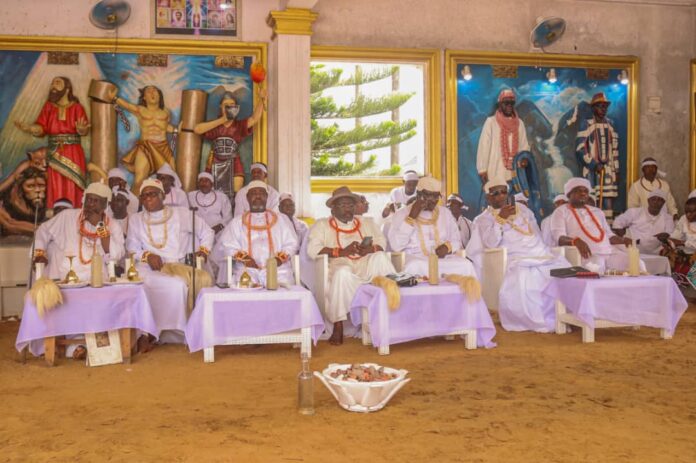


WARRI, DELTA STATE — In a landmark judgment affirming the constitutional protections of traditional African religions, a Federal High Court sitting in Warri has ordered a Christian cleric to pay ₦200 million in damages for the unlawful destruction of a traditional Egbesu shrine.
The presiding judge condemned the actions of Prophet Tamarauebi Elisha Owan—founder of GreatGod Holy Tabernacle—and his congregants, characterizing their actions as “unconstitutional” and a flagrant violation of the fundamental right to freedom of thought, conscience, and religion.
In addition to the severe financial penalties, the court issued a rare mandatory injunction compelling the prophet and his co-respondents to physically rebuild the traditional place of worship they decimated.
The 2024 Invasion and Desecration
The legal battle stems from an incident on December 20, 2024, in Ojobo Community, Delta State. According to court records, Prophet Owan, accompanied by members of his congregation, invaded the Osuopele Beniseide Opu-Oru Temple—a historic worship center dedicated to the Egbesu deity.
The invasion, which the respondents allegedly orchestrated under the pretext of “combating evil spirits,” resulted in extensive structural damage to the temple and the destruction of irreplaceable historical and cultural artifacts.
Following the attack, traditional leaders and custodians of the culture took immediate institutional action. The incident was formally reported to the Chairman of the Izon Cultural Heritage Council (ICHC) and the Apostle of the Woyin Temple in Yenagoa. This coordinated response culminated in an investigation and the subsequent filing of a fundamental rights enforcement lawsuit against the cleric and eight other members of his ministry.
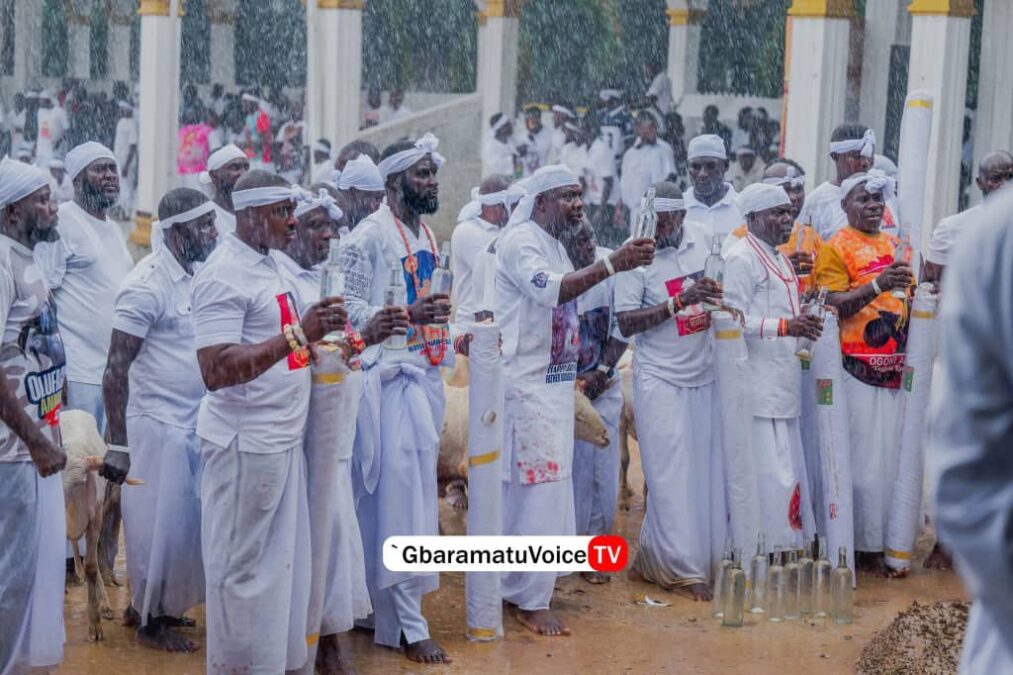
The Judgment: Constitutional Supremacy and Religious Pluralism
Delivering the judgment on June 29, 2026, the court firmly rebuked the notions of religious supremacy that drove the assault. The court declared that the harassment of the traditional worshippers was overtly discriminatory and violated Sections 10 and 38 of the Constitution of the Federal Republic of Nigeria, 1999 (as amended).
Note: Section 10 of the Nigerian Constitution prohibits the State or any entity from adopting a state religion, maintaining Nigeria’s status as a secular state, while Section 38 guarantees the right to freedom of thought, conscience, and religion.
Breakdown of the Court Orders
The federal court issued a comprehensive set of reliefs against the 1st to 9th respondents, enforcing strict punitive and restorative measures:
- Restitution of Worship Space: The respondents are ordered to completely rebuild the Osuopele Beniseide Opu-Oru Temple destroyed during their December 2024 raid in the Ojobo Community.
- Exemplary Damages: The court awarded ₦100 million against the respondents for the unlawful and malicious destruction of the temple and its deities.
- General Damages: An additional ₦100 million was awarded to the applicants as compensation for the gross violation of their constitutional rights and the “untold ridicule and humiliation” suffered by the Egbesu believers.
- Litigation Costs: The respondents must jointly pay ₦5 million to cover the legal and filing costs incurred by the applicants.
- Restraining Order: To ensure the future safety of the traditional worshippers, the court slammed a restrictive injunction ordering the prophet and his followers to maintain a 10-kilometer distance away from the temple and its practitioners.
- Public Apology: The court mandated the respondents to publish a formal public apology in two national daily newspapers circulating across Nigeria.
Legal and Societal Implications
Legal analysts view this ruling as a significant judicial precedent in Nigeria, where friction between mainstream Abrahamic religions and Indigenous African Traditional Religions (ATR) frequently occurs. By invoking Sections 10 and 38, the Federal High Court has signaled that the law protects all citizens equally, regardless of their faith paradigm.
The judgment serves as a stern warning against religious intolerance and vigilantism, reinforcing that theological disagreements cannot bypass the statutory protections of property and human dignity guaranteed under Nigerian law.