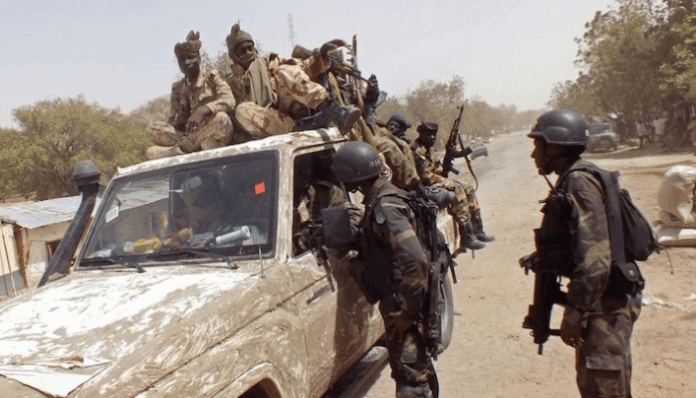

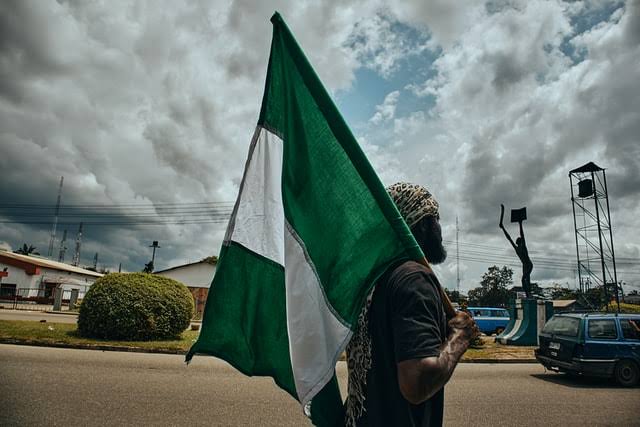
ABUJA, NIGERIA — When President Bola Ahmed Tinubu assumed office on May 29, 2023, his “Renewed Hope” manifesto placed national security at the absolute vanguard of domestic policy. Yet, three years into the administration, a data-driven autopsy of Nigeria’s security architecture reveals a grim and deepening crisis.
Independent data compiled by premier regional intelligence firms, including SBM Intelligence and Beacon Security and Intelligence, alongside international rights watchdogs like Amnesty International, paints a harrowing picture: over 17,000 insecurity-related fatalities have been recorded across the federation under the current administration.
Far from receding, Nigeria’s security crisis is undergoing a structural realignment. It is a reality marked by the geometric expansion of banditry networks, the emergence of raw insurgent factions in the north, and a cascading humanitarian crisis that threatens the nation’s food security and economic stability.
The Anatomy of the Body Count: A Chronological Trajectory
The scale of the carnage is best understood when broken down chronologically, mapping out how different regions have bled under evolving criminal dynamics:
| Strategic Timeline | Estimated Fatalities | Primary Regional Drivers & Key Flashpoints | Major Data Sources |
| The Immediate Shock (June 2023) | 123+ | Immediate post-inauguration volatility. Intense communal and militia-led farmer-herder clashes in Benue and Plateau states (e.g., Mangu region massacres). | Amnesty International |
| Year One (June 2023 – May 2024) | 4,416 | Consolidated tracking by 82 Civil Society Organizations (CSOs). Marked by the devastating Christmas 2023 massacres in Plateau State (160+ killed) and rampant rural highway abductions in Zamfara, Kaduna, and Katsina. | Civil Society Joint Coalition / SBM Intel |
| Year Two & Three (June 2024 – Mid-2026) | ~12,500+ | A catastrophic escalation driven by a 46% surge in ISWAP/Boko Haram activities in the Northeast, severe military base overruns, and the violent sacking of hundreds of agrarian villages. | Beacon Security / National Human Rights Commission (NHRC) |
| CUMULATIVE TOTAL | 17,000+ | Total estimated fatalities from terrorism, banditry, and communal militia conflicts. | Consolidated Security Matrices |
The Three Theaters of Blood: Who is Killing Whom?
To view Nigeria’s insecurity as a singular problem is a diagnostic failure. The data shows that the country is currently battling three distinctly integrated, highly adaptive security threats:
1. The Industrialized Banditry of the Northwest
The Northwest axis—principally Zamfara, Katsina, Sokoto, and Kaduna—has morphed into a dark economy of mass abductions and rural executions. According to tracking metrics from SBM Intelligence, thousands of citizens were kidnapped in this region within a single 12-month window, with Zamfara standing as the epicenter of the crisis.
Entire local economies have been subjugated by bandit syndicates who impose “harvest taxes” on farmers. To make matters worse, the administration has seen the emergence of a dangerous new element: the Lakurawa group, an ideologically driven armed faction infiltrating Sokoto and Kebbi from the Sahelian borders, complicating an already overstretched military response.
2. The Unchecked Massacres of the North-Central
In Benue and Plateau states, the conflict is deeply rooted in cyclical, ethno-religious and farmer-herder tensions. An investigative audit by Amnesty International highlighted a staggering concentration of deaths in these two states alone, noting that hundreds of villages have been entirely sacked and depopulated.
The tragedy of the North-Central is the total absence of post-attack accountability. As human rights monitors observe, while security forces occasionally parry attacks or make cosmetic arrests, substantive trials and convictions of armed herder-allied militias remain virtually non-existent, breeding a culture of retaliatory impunity.
3. The Resurgent Northeast Jihad
In Borno, Yobe, and parts of Adamawa, the Islamic State West Africa Province (ISWAP) and the Jama’atu Ahlis Sunna Lidda’awati wal-Jihad (JAS) faction of Boko Haram have demonstrated a terrifying resilience. Far from being “technically defeated,” these groups have upgraded their asymmetric capabilities. Intelligence reports indicate that ISWAP successfully targeted several military outposts using advanced tech, including armed drones, while continuing to pick off soft civilian targets and rural travelers at will.
NATIONAL SECURITY PATTERN (MAY 2023 - MID-2026)

[Northwest Zone]   --> Driven by Bandits & Lakurawa Group  --> Mass Abductions & Harvest Taxes
[North-Central]    --> Driven by Ethno-Communal Militias    --> Sacked Villages & Land Displacement
[Northeast Zone]   --> Driven by ISWAP & Boko Haram        --> Military Base Raids & Suicide Bombings
The Economic Subtext: Security Meets Hyper-Inflation
The human cost of this 17,000-fatality toll is directly linked to the economic misery compound gripping the nation. The Tinubu administration’s aggressive fiscal reforms—the floating of the naira and the removal of the petrol subsidy—have inadvertently acted as fuel for the insecurity fire.
- The Ransom Economy: With the middle and lower classes squeezed by soaring living costs, kidnapping-for-ransom has become a highly lucrative, desperate alternative economy.
- The Food Security Crisis: Because bandits and militias have killed or displaced millions of rural farmers across Benue, Niger, and Zamfara, food production has plummeted. This has driven food inflation to unprecedented highs, effectively creating a vicious cycle where hunger breeds crime, and crime breeds hunger.
Conclusion: The Failure of Tactical Kinetics
The structural lesson of the last three years is that Nigeria’s defense spending—which commands trillions of naira annually—is yielding diminishing returns. The military remains trapped in a reactive, kinetic loop: chasing bandits after a village is burned, or launching retaliatory airstrikes that occasionally result in tragic civilian collateral damage.
The data proves that without systemic policing reforms (such as the long-delayed transition to state police), rigorous border controls along the Sahelian corridor, and an aggressive judicial framework that prosecutes sponsors of ethnic militias, the body count will continue to climb. For the Tinubu administration, the numbers are no longer just statistics—they are a compounding political liability that could completely overshadow its macroeconomic agenda ahead of the next electoral cycle.