

Special Investigative Report | 247ureports.com
ABUJA, NIGERIA — Nigeria’s catastrophic infrastructure deficit is not an act of nature, nor is it a simple byproduct of global economic recession. It is a harsh mathematical equation where the primary variables are institutional leakage, systemic corruption, and stolen futures. While millions of citizens daily navigate pothole-riddled highways, a collapsing national electricity grid, and dilapidated airports, a staggering sum of public wealth continues to evaporate into the private accounts of public trustees.
A data-driven analysis compiled by 247ureports.com reveals the terrifying opportunity cost of systemic corruption by tracking recent high-profile anti-graft cases initiated by the Economic and Financial Crimes Commission (EFCC). Looking closely at just six prominent former public officials currently facing trials or active investigations over the alleged diversion of public funds, a combined pool of N640.49 billion (approximately $464 million USD) was pulled from the national treasury.
The Arithmetic of the Plunder
To grasp the sheer scale of the capital flight, one must examine the individual allocations currently under judicial scrutiny. These figures do not represent minor bureaucratic anomalies; they represent entire state budgets vanished under the guise of public administration.
| Official Under Investigation / Trial | Former Institutional Role | Alleged Diverted Amount (NGN) |
| Abubakar Malami | Attorney General of the Federation & Minister of Justice | N213 Billion |
| Godwin Emefiele | Governor, Central Bank of Nigeria (CBN) | N154.39 Billion |
| Yahaya Bello | Executive Governor, Kogi State | N110.4 Billion |
| Ahmed Idris | Accountant-General of the Federation | N109.5 Billion |
| Tahwer Mamman | Minister of Education | N33.8 Billion |
| Hadi Sirika | Minister of Aviation | N19.4 Billion |
| TOTAL LOSS POOL | Combined Alleged Diversion | N640.49 Billion (~$464 Million USD) |
A Legal Note on Due Process:
In accordance with Nigerian jurisprudence, all the aforementioned individuals remain under active trial or investigation by anti-graft agencies. They maintain their constitutional presumption of innocence until a competent court of law delivers a definitive guilty verdict. However, the presence of these massive financial gaps inside state ledgers details the extreme vulnerability of the nation’s treasury.
Global Benchmarks: What N640 Billion Builds Elsewhere
To appreciate what this money truly represents, 247ureports.com cross-referenced the $464 million valuation against landmark infrastructure projects executed globally. The contrast exposes a devastating reality: the funds allegedly absorbed by just six individuals could have radically transformed Nigeria’s structural landscape.
- United States — The Alexander Hamilton Bridge Renovation ($400 Million):In New York City, one of the most expensive construction environments in the world, the Department of Transportation completely overhauled, widened, and structurally retrofitted the massive Alexander Hamilton Bridge—a critical multi-lane artery carrying over 300,000 vehicles daily—for $400 million. Nigeria’s missing billions could have completely restored multiple failing bridges across the Niger and Benue rivers.
- China — The Chishi Cable-Stayed Bridge ($300 Million):China’s Hunan Province constructed the Chishi Bridge, an engineering masterpiece stretching across a deep mountain valley with giant structural towers, for $300 million. This world-renowned landmark provides vital commercial transit across mountainous terrain.
- Cambodia — Mekong River Mega-Bridge & National Highway ($112 Million):With a fraction of the missing N640 billion pool, Cambodia constructed a brand-new 1.76-kilometer bridge spanning the wide Mekong River, while simultaneously funding an extensive national highway network upgrade. This single project permanently unlocked economic access for dozens of rural agrarian communities.
- United Kingdom — Manchester Airport Terminal Expansion (~$544 Million):The United Kingdom completely revolutionized Manchester Airport’s Terminal 2, building “The Avenue”—a massive, state-of-the-art expansion complete with global retail, luxury dining hubs, and new business lounges for roughly £440 million ($544 million). In contrast, Nigeria’s aviation sector remains riddled with decaying runways and obsolete terminal infrastructure.
- Iran — Imam Khomeini International Airport T4 Terminal ($500 Million):Iran constructed its massive, 400,000-square-meter Terminal 4 facility, custom-engineered to seamlessly handle 31 million passengers annually, for $500 million.
The Structural Cost of the Deficit
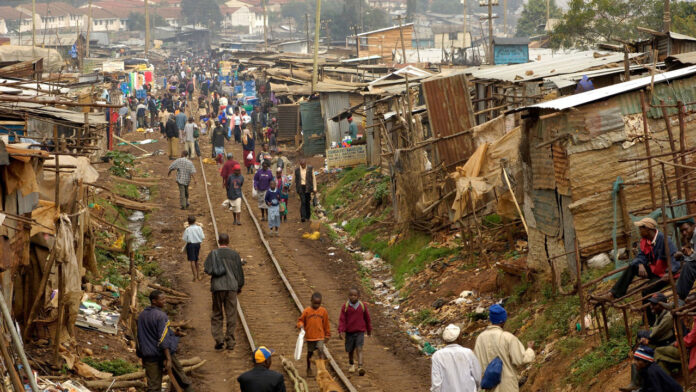
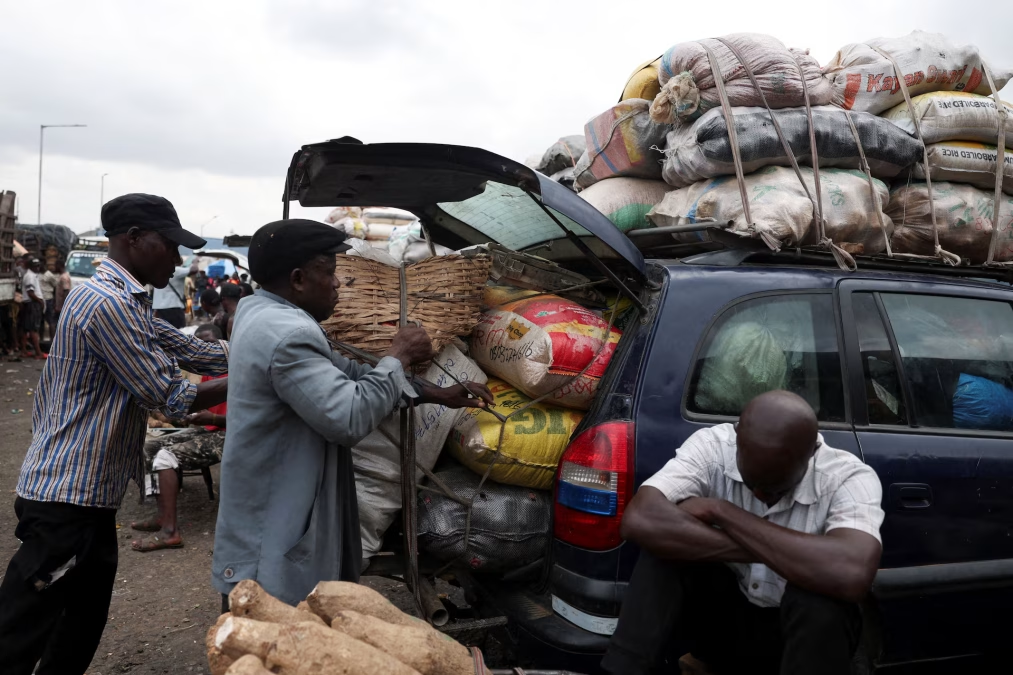
When public resources are drained to this degree, the consequences are felt on the ground. The lack of infrastructure acts as a permanent tax on the local economy. Farmers in the Middle Belt lose half their harvests to spoilage because there are no paved roads to haul produce to southern markets. Small-scale businesses collapse under the weight of buying diesel fuel because the national power grid lacks the capital investment to expand transmission capacity.
Every time a public official walks away with billions, a critical capital project dies. The third mainland bridge repairs stall, medical centers go without basic diagnostic electronics, and schools crumble. The numbers show that the primary obstacle to Nigeria’s growth is not a lack of resources, but the systematic diversion of wealth away from the public good.
The Path Forward: Enforcing Radical Accountability
The ongoing trials of Malami, Emefiele, Bello, Idris, Sirika, and Mamman must not be allowed to follow the historical pattern of elongated, inconclusive judicial theater. The EFCC and the judiciary owe the citizens of Nigeria a rapid, transparent resolution.
If Nigeria is to break free from its chronic infrastructure deficit, the cost of corruption must be made too heavy to bear. Institutional reforms—including automated budget tracking, stricter procurement oversight, and absolute transparency in asset recovery—are no longer optional. They are vital survival mechanisms for a nation whose future is actively being bargained away.