

By 247ureports.com Investigative Bureau
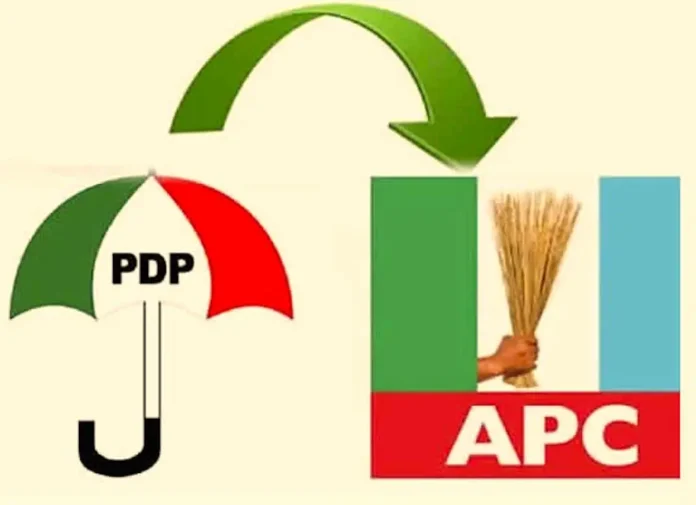
ABUJA, NIGERIA — Comparing the federal administrations of the People’s Democratic Party (PDP, 1999–2015) and the All Progressives Congress (APC, 2015–Present) is one of the most fiercely debated topics in modern Nigerian history. For over two decades, Nigerians have watched power shift, economic experiments unfold, and promises collide with harsh realities.
To understand how Nigeria arrived at its current economic and social crossroads, the 247ureports.com Investigative Bureau has compiled an objective, data-backed, and structured comparative analysis across ten key pillars that define the performance of both political parties at the center.
At a Glance: PDP vs. APC Key Metrics
| Indicator | PDP Era (1999–2015) | APC Era (2015–Present) |
| Average GDP Growth | High (5% to 8% annually) | Low to Moderate (1.5% to 3.5%) |
| Exchange Rate (USD to NGN) | Stable (Moved from ~₦85 to ₦197) | Volatile (Moved from ~₦197 to over ₦1,500+) |
| National Debt Profile | Liquidation (Achieved 2005 Paris Club relief) | Astronomical (Surpassed ₦159 Trillion) |
| Insecurity Profile | Localized (Niger Delta, North-East) | Decentralized & Commercialized (Nationwide) |
| Infrastructure Focus | Privatization, Telecom, Banking | Heavy Physical Builds (Rail, Bridges, Ports) |
1. Security: From Localized Insurgency to Decentralized Terror
- The PDP Era: Insecurity under the PDP was largely regionalized. The initial challenge was the Niger Delta militancy, which threatened oil production until it was successfully mitigated through the historic 2009 Amnesty Programme under President Umaru Musa Yar’Adua. The latter half of the PDP era was defined by the bloody rise of Boko Haram in the North-East under President Goodluck Jonathan. While the North-East suffered immensely, the rest of the country felt relatively secure, and interstate highways were widely traversable.
- The APC Era: Security challenges became decentralized, fragmented, and commercialized nationwide. While Boko Haram lost significant territorial strongholds, they splintered into the deadlier ISWAP. Simultaneously, heavily armed banditry and farmer-herder clashes exploded across the North-West and North-Central zones. In the South-East, secessionist violence (IPOB/ESN) crippled economic activities via mandatory “sit-at-home” orders, while kidnapping for ransom transformed into a highly organized, multi-billion naira enterprise plaguing nearly every state, including the Federal Capital Territory.


2. The Economy: Commodity Boom vs. Structural Volatility
- The PDP Era: The PDP benefited from a prolonged global commodity boom, with oil prices routinely trading above $100 per barrel. This liquidity, combined with landmark reforms like the telecoms revolution (GSM), banking consolidation, and economic liberalization, drove stellar annual GDP growth rates of 5% to 8%. In 2014, Nigeria rebased its GDP to overtake South Africa as Africa’s largest economy. The currency remained highly predictable, moving slowly from ₦85/$1 in 1999 to ₦197/$1 by May 2015, preserving local purchasing power.
- The APC Era: The APC’s tenure was defined by early drops in global oil prices, structural policy missteps, and external shocks like the COVID-19 pandemic, plunging the nation into multiple recessions (2016 and 2020). Average GDP growth slowed to a crawl (1.5% to 3.5%). The economy faced historic volatility following the floating of the Naira under the current administration, driving the official exchange rate past ₦1,500/$1. This massive currency devaluation unleashed historic, multi-decade-high inflation, severely eroding the purchasing power of the middle class and plunging millions into absolute poverty.
3. Corruption & Transparency: Systemic Leakages vs. Institutional Paddin
- The PDP Era: This era was marked by high levels of public sector corruption and massive scandals, such as the fuel subsidy scam of 2012 and the $20 billion “missing” oil money scandal exposed by former CBN Governor Sanusi Lamido Sanusi. However, the PDP’s lasting legacy is that it built the foundational institutions used to fight graft today, creating the Economic and Financial Crimes Commission (EFCC), the Independent Corrupt Practices Commission (ICPC), and initiating the Treasury Single Account (TSA) framework.
- The APC Era: Swept into office on a fierce anti-corruption mantra, the APC successfully scaled the TSA and introduced the Whistleblower Policy. However, critics argue that corruption simply evolved rather than disappeared. The era witnessed unprecedented Central Bank arbitrage and round-tripping scams under previous apex bank leadership, multi-billion naira fraud scandals within the Ministry of Humanitarian Affairs, and massive budget padding. The 2025 budget analysis alone revealed billions siphoned into micro-projects, such as localized boreholes priced at a staggering ₦213 million per unit.
4. Tribalism & National Unity: Geopolitical Zoning vs. Lopsided Nepotism
- The PDP Era: To manage Nigeria’s volatile ethnic and religious diversity, the PDP relied heavily on a pragmatic “zoning” arrangement and strict adherence to the Federal Character principle. While ethnic tensions flared occasionally, the federal government maintained a highly visible geopolitical balance in key appointments—such as rotating the presidency and ensuring key security and financial portfolios were spread across the six geopolitical zones—which acted as an effective safety valve against regional grievances.
- The APC Era: The APC faced intense, unrelenting criticism for institutionalizing “lopsided appointments.” For eight years under President Muhammadu Buhari, the nation’s security architecture and core administrative heads were heavily concentrated in the North. Under the current administration, a matching critique has emerged from opposition groups, highlighting the concentration of top economic, financial, tax, and security roles within the South-West region. This perceived lack of inclusivity has deepened regional distrust and fueled secessionist sentiment.
5. Government Services & Digitization: Privatization vs. Automation
- The PDP Era: The PDP’s philosophy focused on deregulation and the privatization of state assets. While the privatization of the power sector failed to end blackouts, the deregulation of telecommunications and banking fundamentally altered daily life, shifting Nigeria from a stagnant, analogue bureaucracy into a vibrant, private-sector-led financial hub.
- The APC Era: The APC’s strongest suit in governance has been digitization and civic automation. The government aggressively enforced the National Identification Number (NIN)-SIM linkage, automated passport applications through the immigration portal, modernized the Federal Inland Revenue Service (FIRS) tax portals, and deployed digital tools to streamline some bureaucratic bottlenecks—even though physical extortion by civil servants at collection points remains prevalent.
6. Infrastructure Development: The Strategic Shifts
- The PDP Era: Infrastructure under the PDP relied primarily on Public-Private Partnerships (PPPs) and slow-moving capital allocations. While significant investments were made in aviation upgrades and power infrastructure, massive capital projects like national rail networks were heavily discussed but rarely brought to completion on the ground.
- The APC Era: Infrastructure development is widely regarded as the APC’s most tangible achievement. Utilizing a mix of sovereign wealth funds, innovative tax credit schemes for private developers, and bilateral Chinese loans, the party executed major physical projects. These include the completion of the Lagos-Ibadan, Abuja-Kaduna, and Itakpe-Warri rail lines, the construction and commissioning of the iconic Second Niger Bridge, the comprehensive reconstruction of the Lagos-Ibadan Expressway, and the construction of the Lekki Deep Sea Port.
7. Revenue Generation & Public Debt: Liquidation vs. The ₦159T Trap
- The PDP Era: Heavily reliant on oil revenue, the PDP’s fiscal masterpiece occurred in 2005 under President Olusegun Obasanjo and Finance Minister Dr. Ngozi Okonjo-Iweala. Nigeria negotiated a historic $30 billion package with the Paris Club, wiping out $18 billion in debt and liquidating the rest. This left the country with a historically clean balance sheet and a highly sustainable debt-to-GDP ratio of 12% to 15% by 2015.
- The APC Era: Faced with dwindling oil revenues driven by industrial-scale crude theft and pipeline vandalism, the APC aggressively expanded the non-oil tax net through the FIRS. However, to fund the nation’s massive budget deficits, the government turned to unprecedented borrowing. Nigeria’s total public debt ballooned from roughly ₦12.1 trillion in 2015 to over ₦159.28 trillion. Today, the country is caught in a paralyzing debt trap, with debt-servicing costs eating up over 70% to 90% of total federal revenues, starving critical ministries of capital.
8. Careless & Extravagant Spending: Patronage vs. Elitist Luxury
- The PDP Era: Characterized by systemic “political patronage.” Massive sums of unvouched cash, heavily padded security votes, and inflated administrative contracts were routinely shared among political actors to maintain alliances, leading to a highly bloated but well-greased political class.
- The APC Era: Despite promising a lean, cost-efficient government, the APC years saw record-setting budget sizes with heavily skewed recurrent expenditures. Public outrage reached a boiling point over highly controversial spending, including billions allocated for presidential yacht lines, luxury SUVs for lawmakers, multi-billion naira renovations of official quarters, and the ₦17 billion independent solar project to insulate the Aso Rock Presidential Villa from the national grid—all executed in the middle of a historic cost-of-living crisis.
9. Likeability & Public Sentiment: Arrogance vs. Buyer’s Remorse
- The PDP Era: Over 16 years, the PDP gradually lost public favor due to perceived complacency, administrative arrogance (with leaders famously boasting that the party would “rule for 60 years”), and an inability to curb the Boko Haram insurgency. This alienation ultimately culminated in their historic, unprecedented electoral defeat in 2015.
- The APC Era: The APC swept into power in 2015 with astronomical, messianic-level public goodwill. However, that goodwill has severely eroded due to grueling economic realities. The removal of the fuel subsidy, the unification of the forex windows, and the handling of the 2020 EndSARS protests have triggered a massive wave of buyer’s remorse. Millions of citizens who voted for the “Renewed Hope” agenda in 2023 now openly call their vote a “bad mistake,” leading prominent insiders like former APC National Vice Chairman Salihu Lukman to warn that the party has become so unpopular that it can only retain power in 2027 through systemic electoral rigging.
The Verdict: Which Era Was Better?
Ultimately, how a citizen judges both eras depends entirely on what they value most:
The Quality of Life Argument: If a citizen prioritizes economic stability, strong purchasing power, affordable food, and national cohesion, the PDP years are remembered as a golden era. Under the PDP, the average Nigerian was significantly wealthier in dollar terms, and the social fabric was less fragmented.
The Structural Legacy Argument: If a citizen prioritizes physical infrastructure, long-term non-oil revenue reform, digital tracking, and systemic automation, the APC years have made much more permanent headway—though this structural shift has been extracted at an immense, agonizing macroeconomic cost to the everyday consumer.
247ureports.com will continue to analyze these historical shifts as Nigeria edges closer to the definitive political battles of 2027.