
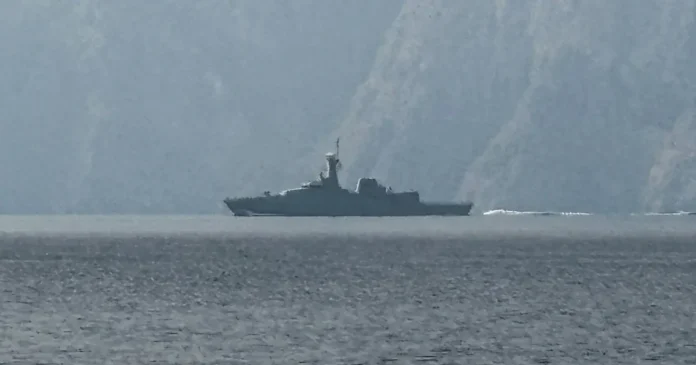


TEHRAN, IRAN — The Iranian Navy announced on Wednesday that its forces identified and targeted a United States Navy destroyer in the Gulf of Oman, claiming the vessel was hosting the “command-and-control center” behind recent American operations against Iranian maritime infrastructure.
The high-stakes maritime confrontation has immediately escalated regional anxieties, though U.S. Central Command (CENTCOM) has forcefully rejected Tehran’s claims, calling the report a total fabrication.
The Iranian Account: Retaliation for Regional Strikes
According to a public statement broadcast by Iranian state media and the Navy’s public relations office, Iranian naval forces locked onto an American destroyer as it allegedly attempted to approach Iranian territorial waters near the strategically volatile Strait of Hormuz.
- The Targeted Asset: Tehran claims it directly struck the “command-and-control facility” aboard the destroyer, which it holds responsible for a string of recent U.S. attacks on Iranian commercial shipping and a telecommunications tower on Qeshm Island.
- The Warning Strategy: Iranian state TV reported that a military helicopter flew over the vessel to deliver a stern warning. Senior Iranian official Mohsen Rezaei warned U.S. forces to back off immediately or risk turning the Gulf of Oman into a “graveyard” for American ships.
Iranian state media did not provide specific details regarding the weapons used in the purported targeting operation, nor did they confirm if the action resulted in any physical damage or casualties aboard the American ship.
Washington Counter-Claims: “Iran is Lying”
The United States military establishment has moved rapidly to neutralize the narrative coming out of Tehran. In an official briefing posted to social platform X, U.S. Central Command flatly denied that any American naval vessel had been hit or compromised.
“Iran is lying,” CENTCOM stated point-blank in its public rebuttal. “U.S. military assets at sea continue to fly, sail, and operate safely and unimpeded.”
Parallel Pentagon reports downplayed the interaction as a routine encounter, characterizing the maritime tracking as a “safe and professional” deployment in international waters that had no impact on the destroyer’s active mission.
A Fragile Ceasefire on the Brink of Collapse
The maritime standoff comes amid a highly volatile security climate in the Middle East following weeks of heavy conflict:
- The US Blockade: Tensions have worsened over a strict U.S. naval blockade on Iranian ports, which Tehran has openly labeled an “act of war.” Just days prior, CENTCOM confirmed it used a Hellfire missile to disable a Gambia-flagged commercial vessel en route to Iran’s Kharg Island oil hub.
- Expanding Battlefield: The latest exchange follows a flurry of parallel strikes, including drone and missile attacks hitting areas near U.S. military infrastructure in Kuwait and Bahrain, threatening to drag neighboring Gulf states directly into the theater of war.
While temporary ceasefire talks and a proposed four-stage diplomatic memorandum of understanding remain on paper between Washington and Tehran, security analysts warn that these frequent close encounters in vital international shipping lanes carry a catastrophic risk of miscalculation.







