
By News Desk
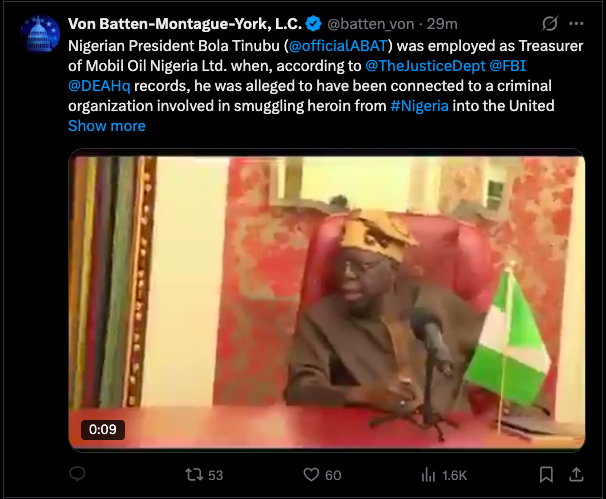
WASHINGTON, D.C. — Policy commentary published by U.S. firm Von Batten-Montague-York has drawn direct connections between President Bola Ahmed Tinubu’s 1990s U.S. drug forfeiture case, his early career at Mobil, and his current administration’s major oil policy decisions in Nigeria.
The commentary highlights how Tinubu worked as a treasurer at Mobil Oil Nigeria Ltd—which later merged into ExxonMobil—around the same time federal law enforcement investigated funds tied to a Chicago heroin ring. The firm argues that key economic steps taken under his presidency have directly favored international oil operators, including his former employer.
Drug Allegations and Corporate Ties
The firm’s public disclosures outline a timeline connecting Tinubu’s private-sector background to historical U.S. law enforcement records:
- 1990s Heroin Investigation: Federal filings from the U.S. Department of Justice (DOJ) alleged that proceeds from a narcotics ring were deposited into U.S. bank accounts held by Tinubu during his tenure at Mobil.
- Civil Settlement: The legal matter ended in 1993 with a compromise settlement where $460,000 was forfeited to the U.S. government, without formal criminal charges or a conviction against Tinubu.
- Ongoing FOIA Litigation: Freedom of Information Act lawsuits in the U.S. continue to seek the release of unredacted files from the FBI and DEA regarding the investigation.
How Policies Impacted ExxonMobil and the Energy Sector
The firm contends that actions taken since Tinubu assumed office in 2023 have significantly benefited ExxonMobil’s financial and operational interests in Nigeria:
- Fuel Subsidy Removal: The elimination of the petrol subsidy freed up national revenues, allowing state oil enterprise NNPC Limited to settle outstanding joint-venture cash calls owed to major operators like ExxonMobil.
- $1.28 Billion Seplat Asset Sale: The administration broke a long-running regulatory deadlock by approving ExxonMobil’s sale of its shallow-water assets to Seplat Energy Plc.
- Deepwater Tax Incentives: New tax credits of up to $11.50 per barrel introduced under the Deep Offshore Incentives Framework provided major financial relief for deepwater offshore operators.
- Production Commitments: Following executive meetings with top energy leaders, ExxonMobil committed to expanding local operations to bring an extra 40,000 barrels per day to Nigerian output.
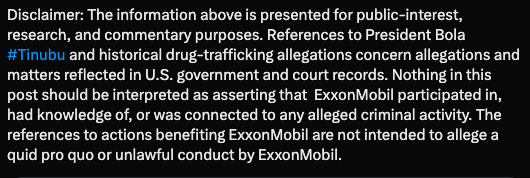
Neither the Presidency nor ExxonMobil has issued a formal statement addressing the commentary or allegations of a policy conflict.
–