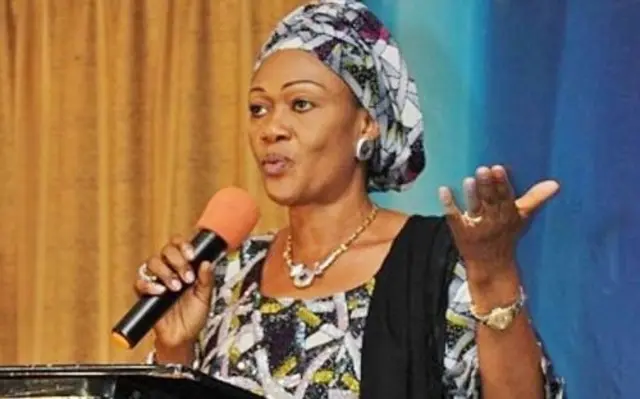


LAGOS — A highly controversial statement made by the First Lady, Senator Oluremi Tinubu, during the 2019 electoral cycle has resurfaced online, triggering intense public criticism regarding her status as an ordained minister of the gospel.
The quote, which was captured on video during a political mobilization event in Lagos, resurfaced as civil society groups and commentators review the historical rhetoric of Nigeria’s current political leaders.
During the 2019 encounter, Mrs. Tinubu was recorded confronting individuals over regional voting patterns, stating: “Record me if you like, we will invoke our Lagos deities to chase you Igbo people out of Lagos. We will inherit all you Igbos in Lagos.”
The Friction Between Traditional Deities and Pastoral Ordination
The re-emergence of the footage has sparked widespread public debate, with critics highlighting the stark theological contradiction between the statement and her formal religious credentials.
Senator Oluremi Tinubu was officially ordained as a Pastor of the Redeemed Christian Church of God (RCCG) in August 2018 during the church’s 66th Annual Convention. Public commentators have pointed out the hypocrisy of a Christian cleric threatening to invoke traditional African deities to execute ethno-nationalist voter suppression, territorial expulsion, and the forced seizure of Igbo properties.
+————————————————————————–+
| TIMELINE OF CLERICAL AND POLITICAL EVENTS |
+————————————+————————————-+
| EVENT / MILESTONE | SIGNIFICANCE / CONTEXT |
+————————————+————————————-+
| RCCG Pastoral Ordination (2018) | Ordained as a Christian minister |
| | during the 66th RCCG Convention. |
+————————————+————————————-+
| Anti-Igbo Threat Statement (2019) | Threatened the invocation of Lagos |
| | deities and inheriting Igbo assets. |
+————————————+————————————-+
| Public Status Re-Evaluation (2026) | Increased scrutiny of political |
| | rhetoric versus clerical vows. |
+————————————+————————————-+
Institutional Silence and the Legacy of Ethno-Political Tension
The deployment of xenophobic rhetoric during Lagos elections has long been a point of friction in Nigerian politics. Critics argue that when high-ranking political figures use divisive language—especially directly threatening to inherit the businesses, land, and properties of citizens based on their ethnicity—it normalizes voter intimidation and fractures communal peace in pluralistic urban centers.
At the time of the initial incident and during its subsequent viral resurfacing, the leadership of the Redeemed Christian Church of God maintained a strict silence, declining to publicly discipline or address the conduct of the First Lady. This institutional silence continues to draw criticism from observers who argue that religious institutions must hold political elites accountable to the same moral standards applied to ordinary congregants.