
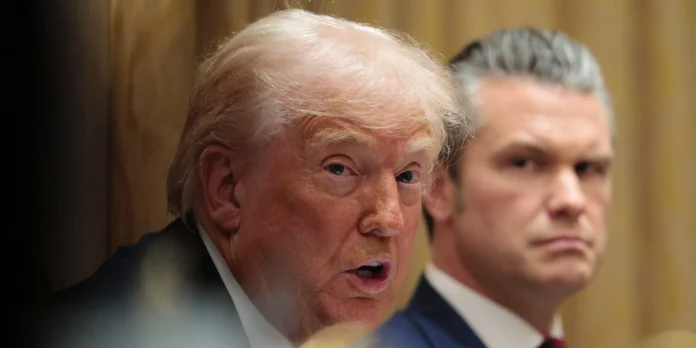


WASHINGTON D.C. – The Pentagon and White House were forced into a rare defensive posture this morning following explosive, though unverified, reports that President Donald Trump demanded access to the nation’s “nuclear secret codes” during a volatile briefing on the Middle East crisis.
The allegations, which have set social media ablaze, claim the President sought to authorize a drastic escalation in the ongoing conflict with Iran, only to be rebuffed by top military brass.
A Breach of Protocol?
The reports center on a supposed confrontation between the Commander-in-Chief and senior generals over the “Nuclear Football”—the briefcase containing the tools for a strategic strike. While the viral narrative suggests a “heroic” intervention by military chiefs to block a launch, experts in nuclear command and control have been quick to point out the procedural impossibilities of such a scenario.
“The President does not ‘request’ the secret codes; he is the sole repository of the authority to use them,” explained a veteran defense analyst. “The military’s role is to verify the identity of the President and ensure the order is legally valid under the laws of war. They are not a constitutional brake on his authority to authorize a strike.”
The Diplomacy Factor
The timing of these rumors has sparked significant suspicion within the intelligence community. They surface just as U.S. and Iranian negotiators are reportedly making headway in Islamabad.
-
The Peace Push: President Trump has spent the last 48 hours publicly touting a “massive deal” to secure the Strait of Hormuz, moving away from the high-kinetic rhetoric of the previous month.
-
The Blockade: The focus of the National Security Council remains on the naval blockade of Iranian oil, not the deployment of tactical or strategic weapons.
Fact vs. Fiction
Intelligence sources suggest the “Nuclear Codes” narrative bears the hallmarks of a disinformation campaign designed to destabilize the current ceasefire negotiations. Senior officials noted that General Randy George, who was featured in the viral imagery accompanying the claims, has been focused on conventional readiness and has not been involved in any “code-related” altercations.
Official Denial
A Department of Defense spokesperson addressed the rumors briefly this afternoon: “The chain of command is secure, operational, and focused entirely on the diplomatic resolution currently underway in Pakistan. We do not comment on fictionalized accounts of classified briefings.”
As the administration prepares to unveil the details of the Islamabad Peace Proposal, the “nuclear secret codes” scandal appears to be the latest chapter in the “terrible confusion” surrounding the most dangerous geopolitical standoff of the decade. Critics and supporters alike are now watching the President’s next move to see if the “transactional peace” he has promised can survive the internal and external pressures threatening to derail it.