

The political trajectory of Femi Gbajabiamila has always been a masterclass in resilience, ambition, and institutional navigation. From his early days as a corporate lawyer in the United States to his tenure as the Speaker of Nigeria’s 9th House of Representatives, and now as the powerful Chief of Staff to President Bola Tinubu, Gbajabiamila has remained at the vortex of Nigerian statecraft. Yet, parallel to his meteoric rise is a persistent trail of legal controversies, ethical infractions, and corruption allegations that continue to test the limits of his political immunity and public trust.
With the recent outbreak of a multi-billion-naira “appointment-for-cash” scandal rocking the inner sanctum of the Presidency, the Chief of Staff once again finds himself forced to defend his integrity against familiar accusations of institutional malfeasance.
The American Genesis: Ethical Rupture in Georgia
To understand the recurring themes in Gbajabiamila’s political vulnerabilities, analysts frequently look back to his foundational career in the United States. Admitted to the State Bar of Georgia in June 2001, Gbajabiamila established a promising legal practice that quickly unraveled due to severe professional misconduct.
In January 2003, Gbajabiamila accepted a $25,000 personal injury settlement on behalf of a client. Rather than disbursing the funds, he deposited the money into his attorney trust account, withdrew it for personal use, closed his practice, and returned to Nigeria to launch his political career.
Though he eventually paid the money back in 2006, the Supreme Court of Georgia issued a unanimous decision in February 2007 suspending his law license for 36 months. While Gbajabiamila’s camp has long dismissed the incident as a civil matter driven by professional negligence rather than criminal intent, the controversy reached its finality on July 1, 2020, when the State Bar of Georgia permanently terminated his law license following years of unresolved dues and administrative non-compliance.
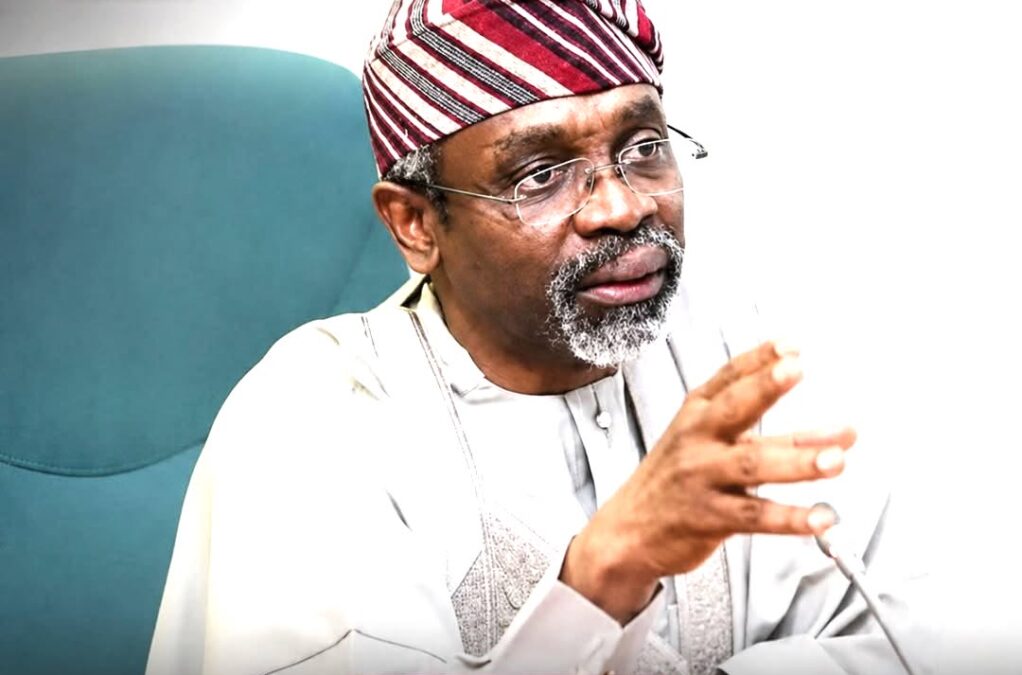
The Legislative Crucible: Navigating the Speakership Scandals
The Georgia infraction followed Gbajabiamila into the hallowed chambers of the National Assembly, weaponized repeatedly by his political adversaries. His bid for the Speakership of the 9th House of Representatives in 2019 was met with a barrage of litigation. Civic groups and opposition politicians approached the Federal High Court, arguing that under Section 66 of the Nigerian Constitution, his disciplinary sanction for “fraud and dishonesty” disqualified him from presiding over the lower house.
Gbajabiamila successfully weathered the judicial storm, asserting that he lacked any criminal conviction, and clinched the speaker’s gavel. However, his legislative legacy would later face further ethical scrutiny. In 2021, investigative reports alleged that top legislative leaders, including the Speaker, received substantial financial inducements from private sector interests to compromise specific provisions of the Petroleum Industry Act (PIA) 2021, allegedly to the detriment of oil-producing host communities.
The 2026 Crisis: The “PFIPC” Bribery and Forgery Conundrum
The most recent, and perhaps most complex, scandal of Gbajabiamila’s career emerged from the shadowy contours of a disputed federal entity: the Presidential Foreign Intervention Promotion Council (PFIPC).
The controversy erupted into the public domain when Prince Adeniyi Matthew Adeyemi, claiming to be the legitimately appointed head of the PFIPC, accused the Chief of Staff of operating a sophisticated “cash-for-appointment” syndicate. Adeyemi alleged that he was forced to remit N400 million through proxies to secure his appointment, was being pressured for an outstanding balance of N200 million, and was coerced into surrendering 48% of a proposed N27.4 billion agency take-off grant to insiders within the Chief of Staff’s circle.
The opposition, led by the Nigeria Democratic Congress (NDC), immediately seized on the narrative. Critics questioned how an allegedly non-existent body could manage to secure line-item budgetary mentions and open official Treasury Single Accounts (TSA) with the Central Bank of Nigeria, demanding Gbajabiamila’s immediate suspension to allow for an unhindered independent probe.
The State House Defense: An Anatomy of a Hoax?
The Presidency, however, has mounted a fierce counter-offensive, framing the entire saga not as a case of high-level corruption, but as an elaborate corporate fraud.
According to official State House communications, the PFIPC is a total fabrication, and Adeyemi is a master impostor. The executive defense reveals that as early as October 2025, Gbajabiamila himself had petitioned the Inspector General of Police and the Department of State Services (DSS) after discovering that Adeyemi was allegedly forging presidential appointments, duplicating State House letterheads, and hosting foreign diplomats under false pretenses.
Adeyemi and his alleged co-conspirators are currently undergoing an eight-count prosecution by the Federal Government for forgery, criminal impersonation, and advanced fee fraud.
The Public Verdict
For Femi Gbajabiamila, the current trial of his accuser provides a legal shield, yet the political optics remain challenging. In a climate where public skepticism of government transparency runs high, the persistent juxtaposition of his name against multi-million-naira controversies ensures that his role as the gatekeeper of the presidency will remain under intense scrutiny.
Whether this latest episode is vindication against a coordinated blackmail campaign or another chapter in a long history of institutional maneuvers, it highlights the high-stakes, hyper-litigious nature of Nigeria’s executive power play.