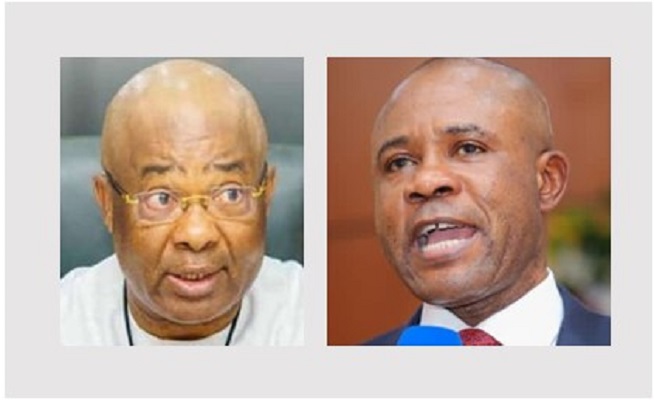


ABUJA– As the dust settles over conflicting reports regarding the leadership of the Progressive Governors Forum (PGF), one thing is clear: the All Progressives Congress (APC) is entering a period of significant internal volatility. What began as whispers of local rivalries has blossomed into a full-scale struggle for the soul of the party, with the high-octane relationship between President Bola Tinubu and FCT Minister Nyesom Wike acting as both a catalyst and a potential “Achilles heel.”
- The “Palace Coup” Rumour: Coordinated reports from major outlets on May 8 alleged that 20 governors met in Abuja to install Mbah—a recent defector from the PDP—as chairman. Although the PGF Secretariat swiftly dismissed these claims as “entirely false,” the coordination of the leak suggests a strategic attempt by internal factions to undermine Uzodimma.
- The Motive: Uzodimma’s insistence on “grassroots loyalty” is increasingly viewed as a challenge to the influence of “political outsiders” like Wike. Uzodimma has reportedly cautioned against ceding party control to those he views as threats to established APC power structures in the South-East and South-South.
- The Resentment: Long-standing loyalists feel marginalized as the President grants significant executive “latitude” to Wike, who technically remains a member of the opposition PDP.
- The Friction: This alliance has effectively created a “party within a party.” Analysts suggest the perceived “external interference” in PGF affairs is a maneuver by the Wike camp to install allies in key leadership positions, securing a foothold for the 2027 and 2031 election cycles.
- The South-East Strategy: While Governor Siminalayi Fubara’s recent defection to the APC—reportedly facilitated by Uzodimma—strengthens the party’s paper weight, it has intensified the proxy war with Wike in Rivers State.
- Leadership Shifts: The recent removal of Uzodimma as Chairman of the APC National Convention Planning Committee in favor of veteran Aminu Bello Masari signals that the Presidency may be opting for “stabilizers” to quieten the rising storm.
The Tinubu-Wike partnership was a masterstroke of political pragmatism in 2023, but by 2027, it may become the party’s greatest liability.
If the President cannot balance the ambitions of his high-profile cabinet members with the expectations of his elected governors, the APC risks heading into the next election cycle as a collection of warring fiefdoms rather than a unified political machine.
The “something cooking” in Abuja isn’t just a change in forum leadership—it’s the sound of the party’s foundation shifting.