
- A viral outcry in LAGOS highlights ethnic profiling and political scapegoating, particularly against the Igbo, while ignoring real threats from armed groups.
- Historical distrust between the Yoruba and Igbo dates back to colonial politics and the Nigerian Civil War, complicating current relations.
- Political elites amplify ethnic rivalries during elections to distract from governance failures, using scapegoating as a strategy.
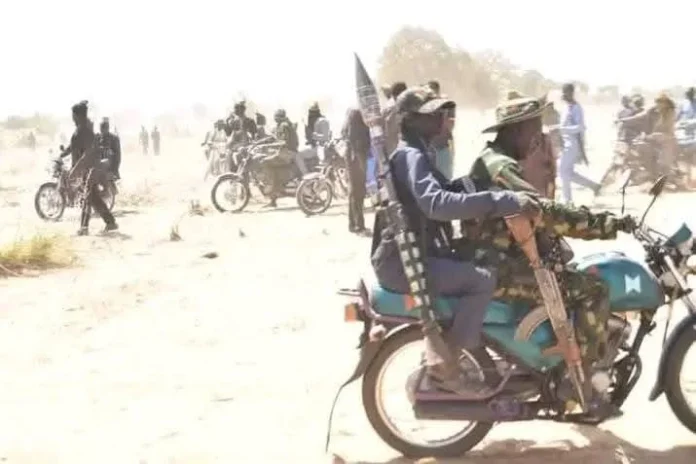
- The primary threat to the Southwest comes from armed herders and bandits, not from the Southeast, affecting local agriculture.
- To address security issues, the region must focus on confronting criminal networks rather than allowing historical grievances to dictate priorities.
LAGOS — A viral public outcry by a Yoruba commentator has reignited a fierce national debate over ethnic profiling, political scapegoating, and the true nature of the security threats facing Southwest Nigeria.
The commentator openly questioned why public hostility is frequently directed toward the Igbo population during political seasons, while immediate physical threats from armed pastoralists and bandit networks continue to devastate local farming communities.
“Fulani terrorists are killing us Yorubas but we are claiming that the Igbos are our problem,” the speaker lamented, striking a nerve across a region currently battling both a severe food crisis and deep-seated political anxieties.
The Weaponisation of History: From Colonial Rivalry to the Civil War
The contemporary friction between the Yoruba and Igbo ethnic groups is not a modern phenomenon; rather, it is rooted in colonial-era competitive politics and the unresolved traumas of post-independence Nigeria.
The Colonial Turf War
In the 1940s and 1950s, the struggle for national leadership between Dr. Nnamdi Azikiwe’s National Council of Nigeria and the Cameroons (NCNC) and Chief Obafemi Awolowo’s Action Group (AG) birthed a intense regional rivalry. The race to control the civil service, commerce, and educational scholarships in the Western Region created an elite-driven competition that filtered down to the grassroots, establishing a long-standing political distrust.
The Civil War Fault Lines
This distrust hardened significantly during the Nigerian Civil War (1967–1970). The decision of the Western Region, led by Awolowo, to align with the Federal Government under General Yakubu Gowon against the secessionist Republic of Biafra remains a major historical grievance.
Decades later, arguments over wartime policies—such as the economic blockade and the controversial twenty-pound currency policy—continue to be weaponized by internet commentators to keep old wounds fresh.
Modern Election Cycles: The Scapegoating Strategy
Despite decades of peaceful coexistence, intermarriage, and massive mutual investments in commercial hubs like Lagos and Ibadan, ethnic animosity is regularly resurrected during election cycles.
Political analysts argue that the Yoruba-Igbo rivalry is deliberately amplified by political elites to divide the southern voting bloc. By creating an artificial narrative of an “Igbo takeover” of ancestral Yoruba lands or businesses, politicians successfully distract the electorate from pressing governance failures, including bad roads, high unemployment, and failing infrastructure.
This systematic scapegoating creates a smoke-screen, allowing the political class to secure regional votes through fear-mongering rather than performance metrics.
The Reality on the Ground: The Agrarian Crisis
While political narratives focus on the urban, commercial rivalry between the South-West and South-East, security reports paint a completely different picture of the actual existential threat facing the Yoruba populace.
The Destruction of the Farmlands
The most critical threat to lives and livelihoods in the Southwest does not originate from the Southeast, but from well-documented attacks by armed herders, highway kidnappers, and rural bandit networks. Forests and agricultural belts across Oyo, Ondo, Ogun, and Ekiti states have faced continuous encroachment, resulting in the destruction of crops, sacking of villages, and the murder of local farmers.
The Economic Fallout
This rural insecurity has driven local farmers completely off their lands, directly feeding the historic food inflation currently choking the country. The shortage of local farm produce has made basic food staples unaffordable for the urban poor in Lagos and Ibadan.
It was the persistent nature of this external security threat that forced Southwest governors to create the regional security network, Amotekun, to patrol highways and forests where federal security agencies had failed to provide protection.
Verdict: A Call for Strategic Realignment
The viral outcry highlights a growing fatigue among ordinary citizens who feel that elite-driven ethnic rivalries are actively endangering regional survival. To many objective observers, the immediate priority for the Southwest must shift away from historical grievances and political scapegoating.
Until the region accurately identifies and confronts the armed criminal networks destroying its agricultural base, no amount of political rhetoric will save its population from hunger and insecurity.