
.
.
Background report — September 2026
The headline fact: he’s still going
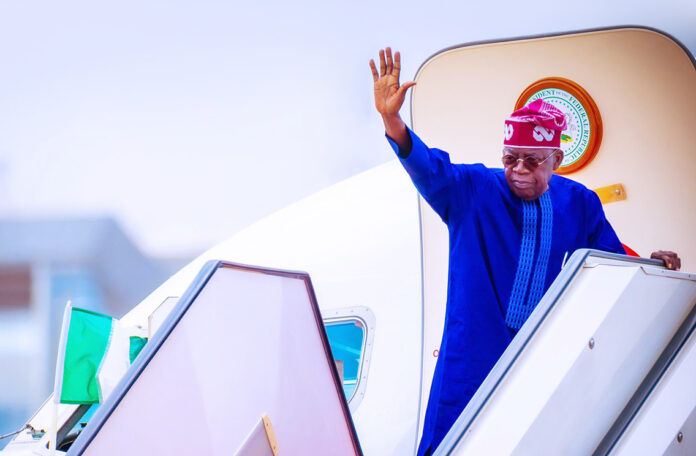
Despite the anxiety circulating in Abuja, President Bola Tinubu’s attendance at the 81st UN General Assembly has been repeatedly and publicly confirmed by Nigeria’s own diplomatic team. Ambassador Jimoh Ibrahim, Nigeria’s Permanent Representative to the UN, has told State House correspondents on multiple occasions since July that the president “gave his word” he would attend this September. The general debate runs September 22–28 in New York, with Tinubu expected to sit in the front row and address the Assembly, participate in side events on climate, sea-level rise and pandemic preparedness, and hold a high-level meeting with outgoing Secretary-General António Guterres.
That confirmed itinerary sits awkwardly alongside a very real, and escalating, legal and political storm — one that has nothing to do with UN protocol and everything to do with a 30-year-old American criminal investigation.
The Chicago case: what it actually is
The underlying matter is a Freedom of Information Act (FOIA) lawsuit, not a criminal charge. Between 2022 and 2023, American transparency activist Aaron Greenspan — founder of the legal-records site PlainSite — filed twelve FOIA requests with six US federal agencies (the FBI, CIA, DEA, IRS, the Executive Office for US Attorneys, and the State Department), seeking investigative records tied to a Chicago heroin-trafficking ring that operated in the early 1990s. The requests named four individuals allegedly associated with that ring: Tinubu, Lee Andrew Edwards, Mueez Abegboyega Akande, and Abiodun Agbele.
Agencies initially responded with “Glomar” refusals — neither confirming nor denying that responsive records existed. In April 2025, US District Judge Beryl Howell ruled that the FBI and DEA had improperly relied on that refusal regarding Tinubu, ordering them to process his file. The CIA’s Glomar response, by contrast, was upheld.
The case has moved forward slowly since. On August 28, 2026, the FBI filed a sworn declaration in federal court confirming that Tinubu had indeed been the subject of a criminal drug-trafficking investigation in the early 1990s — the case bore the internal number 245-IP-71386-UUUUUU. Commentary on the case has noted that this fact — that an investigation existed — is not new information; it has circulated in various forms for years and is distinct from any finding of guilt. The FBI is continuing to withhold significant portions of the underlying records, citing exemptions for personal privacy, confidential sources, and law-enforcement techniques.
Tinubu, who intervened in the case in his personal capacity, has since asked the court to block further release, arguing the records are protected by US privacy law and that public curiosity about a foreign leader’s background doesn’t meet the “public interest” threshold FOIA requires. His legal team has also argued Greenspan’s real goal is obtaining personal information about Tinubu rather than exposing government misconduct. Tinubu has consistently and publicly denied any wrongdoing connected to the allegations.
Why it’s suddenly a Nigerian political story
The FOIA case, on its own, might have stayed a niche American transparency story. What’s changed is that it has been pulled directly into Nigeria’s 2027 election cycle. Von Batten-Montague-York, a Washington-based lobbying firm retained by former Vice President Atiku Abubakar — a likely 2027 presidential candidate — has been actively publicizing the FBI’s court filings, framing the August 28 declaration as confirmation of “alleged heroin trafficking.” The firm has gone further, threatening to run an awareness campaign around UN headquarters during the General Assembly to publicize the allegations to “every New Yorker within a six-mile radius,” and claiming that a planned Trump–Tinubu sideline meeting at UNGA would not go ahead because of the controversy — a claim that has not been independently confirmed by either government.
Nigerian officials, for their part, have pushed back hard, with the presidency’s spokesperson (Bayo Onanuga’s office, referred to in reporting as “Dare”) questioning the lobbying firm’s role and its principal’s motives in the litigation. Independent legal commentary on the case has also pushed back on the framing from both sides, noting that a criminal investigation is not a conviction and a court docket is not a campaign document — while also observing that Tinubu’s team is arguably reframing a criminal investigation as a routine privacy matter. Fact-checkers have already debunked some claims that spun out of the controversy, including a false report that Donald Trump personally called Tinubu a drug trafficker, and an invented figure for the number of pages in the sealed FBI file.
The “hostage” fear and the UNGA question
This is the backdrop against which the Presidency’s reported unease has emerged. A report from The Whistler, citing a single anonymous security source, claimed Tinubu might hand off his UNGA duties to Vice President Kashim Shettima, citing intelligence about a planned protest by Nigerians in New York timed to the General Assembly and linked to the push for release of the Chicago records — allegedly encouraged by opposition-aligned actors. That report has not been corroborated by other outlets, and it directly contradicts the multi-source, on-record confirmations from Nigeria’s own UN mission that Tinubu is attending.
There is no indication in any court filing, US government statement, or credible reporting that the United States plans to detain, arrest, or otherwise “hold hostage” Tinubu during a UNGA visit. Sitting heads of state attending the UN General Assembly in New York also carry diplomatic protections. The “hostage” framing appears to be an amplification of protest and reputational-embarrassment fears — the prospect of demonstrations, hostile press coverage, and further FBI disclosures coinciding with his appearance — rather than any documented legal threat to his person.
Where things stand
- Attendance: Confirmed by Nigeria’s UN mission as of late August; one uncorroborated report suggests internal doubt.
- The FOIA case: Ongoing before Judge Howell in Washington; the FBI has confirmed an investigation existed but continues to withhold most underlying records; Tinubu is actively litigating to keep them sealed.
- The allegations themselves: Remain unproven claims from a decades-old investigation, not a criminal charge or conviction. Tinubu denies wrongdoing.
- The political dimension: Actively being weaponized ahead of Nigeria’s 2027 election by opposition-aligned lobbying efforts, with Nigerian officials disputing the framing and motives involved.
This is a fast-moving story tied to active US litigation, and the coming UNGA week is likely to bring further developments either way.