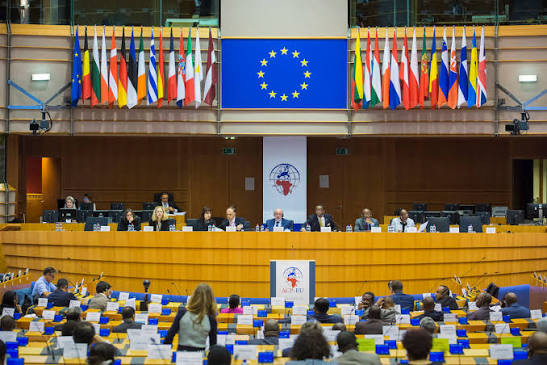


BRUSSELS, BELGIUM — The floor of the European Parliament became a diplomatic battleground for Nigeria’s deteriorating internal security architecture after a prominent European lawmaker forcefully accused international bodies of turning a blind eye to what he termed systematic “Christianophobia” and ethno-religious cleansing in Nigeria’s Middle Belt.
The speech, delivered by Finnish Member of the European Parliament (MEP) Sebastian Tynkkynen representing the European Conservatives and Reformists (ECR) Group, has sparked a massive global digital campaign, with human rights advocates and Nigerian opposition groups moving to mainstream the hashtag #Christianophobia to expose ongoing agrarian massacres.
“Defending Islam Is Trending, Christianophobia Is Not” — MEP Tynkkynen
Speaking during a plenary debate focused on a joint motion for a resolution condemning the relentless slaughter of rural populations in Nigeria—most notably the horrific Kawel village massacre—MEP Tynkkynen heavily criticized his colleagues for what he characterized as a hypocritical approach to international human rights advocacy.
The European lawmaker argued that while the global community and various legislative chambers are quick to mobilize against Islamophobia, there is an institutional reluctance to name and confront the targeted extermination of Christian agrarian communities by heavily armed groups like Boko Haram, ISWAP, and radical Fulani militias.
“We must start talking about one thing: ‘Christianophobia,’” MEP Sebastian Tynkkynen stated on the parliamentary floor. “I know it’s not as trending as defending Islam in this chamber, but for once, could we pay attention to what is happening to Christians in Nigeria?”
Mainstreaming #Christianophobia
The legislative intervention immediately resonated with international and domestic civil society groups who have spent years documenting the high casualty rates in states like Plateau, Benue, Kaduna, and Taraba.
Prominent digital rights activists and anti-persecution campaigns immediately seized on the MEP’s floor statement to launch a massive online movement.
| Institutional Metric | The Growing Scale of Anti-Christian Violence in Nigeria |
| E.U. Legislative Track | Motion RC-B10-0345/2026 formally tables ongoing massacres for European sanctions. |
| Casualty Metrics | Independent trackers note thousands of Christian fatalities annually. |
| Infrastructure Damage | Over 19,000 local churches targeted, burned, or completely leveled since 2009. |
| Primary Perpetrators | Identified by the EU as Boko Haram, ISWAP, and armed Fulani extremist cells. |
Activists are urging citizens and eyewitnesses on the ground across Nigeria’s volatile North-Central zone to utilize the newly minted hashtag to upload video evidence, document destroyed church properties, and detail the identities of victims lost to unprovoked midnight raids.
Total Institutional Failure in Abuja
The European Parliament’s aggressive focus on the Nigerian crisis places intense diplomatic pressure on the administration of President Bola Ahmed Tinubu. International human rights legal groups, such as Alliance Defending Freedom (ADF), noted that the European Union has been forced to repeatedly pass resolutions on Nigeria because the federal government has persistently failed to defend its citizens or bring the well-known perpetrators of these village raids to justice.
Local commentators inside Nigeria note that while the state apparatus often frames these catastrophic events as simple, non-religious “farmers-herders clashes” or generic economic banditry, the deliberate targeting of local pastors, congregations, and indigenous ancestral lands points directly to a deeper, unchecked ideological campaign.
With European lawmakers now openly branding the situation as “Christianophobia,” international observers warn that foreign aid, military collaboration pacts, and trade benefits could soon be tied to how aggressively Abuja stops the carnage and protects vulnerable religious minorities.