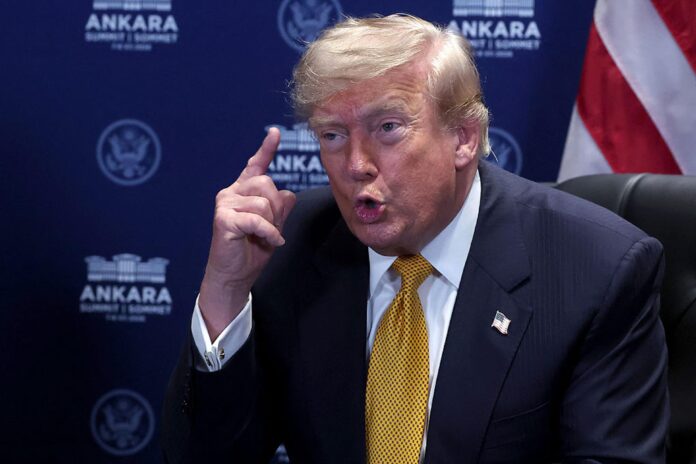


TEHRAN / WASHINGTON — Tensions between Washington and Tehran have escalated sharply following Iran’s direct rejection of claims made by U.S. President Donald Trump that a deal had been struck to end Iran’s nuclear program and reopen the Strait of Hormuz.
Military and diplomatic officials in Tehran, speaking to state-affiliated Mehr News, dismissed President Trump’s announcement as a “complete lie” and a “desperate attempt to manipulate global oil markets”. The denial comes amid growing intelligence and diplomatic reports alleging that the U.S. decision to pause its bombing campaign was heavily influenced by depleted air-defense interceptor stockpiles and resilient Iranian retaliatory capabilities.
The Clash Over the “Pause”: Claims vs. Counter-Claims
The public rift centers on conflicting narratives behind the sudden halt of U.S. airstrikes:
- The White House Account: President Trump publicly declared via social media that he paused planned military operations following requests from Iran and regional partners, claiming both sides had agreed on the “perimeters” of a deal to reopen the Strait of Hormuz and permanently eliminate Iran’s nuclear threat.
- The Iranian Rebuttal: Iranian defense and military representatives flatly denied requesting a halt or agreeing to nuclear concessions, maintaining that military readiness remains at peak levels and accusing the U.S. administration of fabricating diplomatic progress to cover tactical retreats.
Intelligence & Supply Reports: Depleted Stockpiles and Dummy Targets
The breakdown in claims has intensified scrutiny over the readiness of U.S. strike forces and air defense systems:
- Interceptor Stockpile Depletion: Internal U.S. intelligence assessments and congressional warnings reveal that weeks of sustained engagements have severely strained American inventories of advanced interceptors (such as THAAD and Standard Missiles) and precision-guided munitions.
- Impact of Dummy Targets: Independent intelligence assessments suggest that despite intense bombing waves, a significant portion of strikes hit decoy positions or empty launch sites. Leaked assessments indicate Iran retained over 70% of its missile arsenal and quickly restored access to key launch sites along the Strait of Hormuz.
- Precision Retaliation: Iranian asymmetric retaliatory strikes—utilizing low-cost drone swarms and ballistic missiles—have continued to strike key infrastructure and transit routes in the Gulf, enforcing a high-cost attrition strategy against U.S. and allied air defense platforms.
Incident & Strategic Summary
  PRIMARY SITES:       Strait of Hormuz, Persian Gulf Region, Tehran / Washington
  U.S. CLAIM:          Strikes canceled due to pending deal on nuclear program & Hormuz opening
  IRAN CLAIM:          "Complete lie"; no attack halt requested; deterrence remains active
  TACTICAL FACTOR:     Reported depletion of U.S. interceptor missiles and precision munitions
  REGIONAL STATUS:     Ceasefire framework unconfirmed; high military alert persists across the Gulf
Market and Regional Implications
The conflicting statements have sent shockwaves through international energy markets and regional security circles. As regional mediators—including Qatar and Oman—scramble to prevent a complete collapse of informal communications, analysts warn that any failure to establish a verifiable diplomatic framework could lead to an immediate resumption of large-scale military exchanges across the Persian Gulf.