
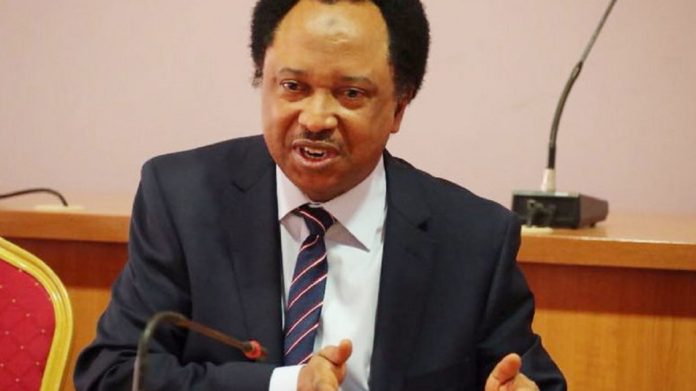

ABUJA — A fierce political debate has erupted over the non-partisan integrity of the Catholic clergy in Nigeria, sparked by comments from former Kaduna Central Senator Shehu Sani defending the clergy against accusations of political bias, alongside resurfaced statements by John Cardinal Onaiyekan regarding the ruling administration.
Responding to critics who accused church leaders of taking partisan sides during high-level visits to the Presidential Villa (Aso Rock), Senator Shehu Sani asserted that Catholic Bishops maintain a time-tested tradition of challenging state authorities objectively, regardless of who holds office.
Shehu Sani Defends Clergy’s Moral Mandate
Defending the historical role of the Catholic Bishops Conference of Nigeria (CBCN), Sani emphasized that pastoral visits to power seats are anchored on civic advocacy rather than partisan allegiance:
“Catholic Bishops have a long-standing tradition of speaking truth to those in authority and have never been partisan.”
— Senator Shehu Sani, Former Kaduna Central Senator
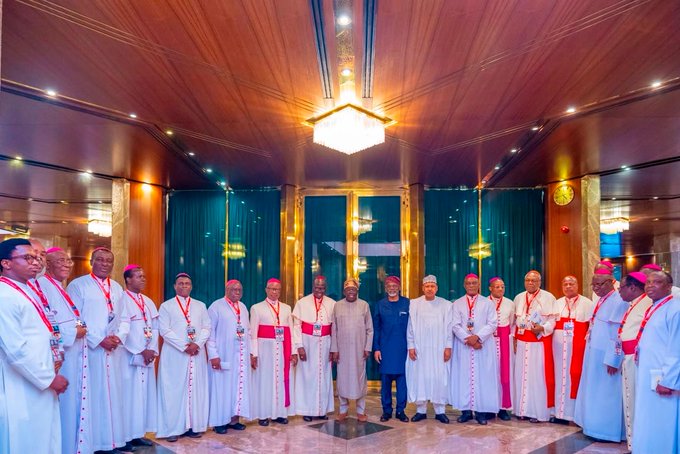
Sani noted that Catholic leadership in Nigeria—from the military era through successive civilian administrations—has consistently raised concerns regarding good governance, election integrity, security, and human rights without aligning with specific political parties.
Resurfaced Headlines and Political Pushback
However, political commentators and government supporters have pointed to past public declarations by John Cardinal Onaiyekan, Archbishop Emeritus of Abuja, to question the neutral posture of the clergy:
- The Muslim-Muslim Ticket Stance: Critics frequently reference Onaiyekan’s explicit opposition to the All Progressives Congress (APC) same-faith Presidential ticket in 2023, where he publicly stated he could not support a Muslim-Muslim configuration on national cohesion grounds.
- Aso Rock Visit Debates: Opponents argue that high-level engagements between cleric delegations and executive leaders are often leveraged to push preference for specific political interests rather than general democratic reform.
- Counter-Arguments: Supporters of the Cardinal maintain that opposing specific electoral setups or raising alarms over religious balance falls squarely within a religious leader’s duty to advocate for social justice, equity, and inclusion.
Summary Matrix: The Debate Over Clerical Neutrality
  DEFENDER / COMMENTATOR:  Senator Shehu Sani
  CLERGY IN FOCUS:         John Cardinal Onaiyekan & Catholic Bishops Conference of Nigeria (CBCN)
  CORE CONTENTION:         Whether clergy visits to Aso Rock represent moral advocacy or partisan politics
  SANI'S POSITION:         Bishops possess an established, non-partisan history of speaking truth to power
  CRITICS' POSITION:       Past public declarations against the APC ticket reflect personal political preferences
The Broader Role of Faith Leaders in Nigerian Democracy
The clash highlights the ongoing tension in Nigerian politics regarding the boundary between prophetic witness and partisan commentary. As civic groups and religious bodies continue to engage the executive arm on policy and national stability, the debate over how faith leaders exercise public advocacy remains a central theme in national discourse.