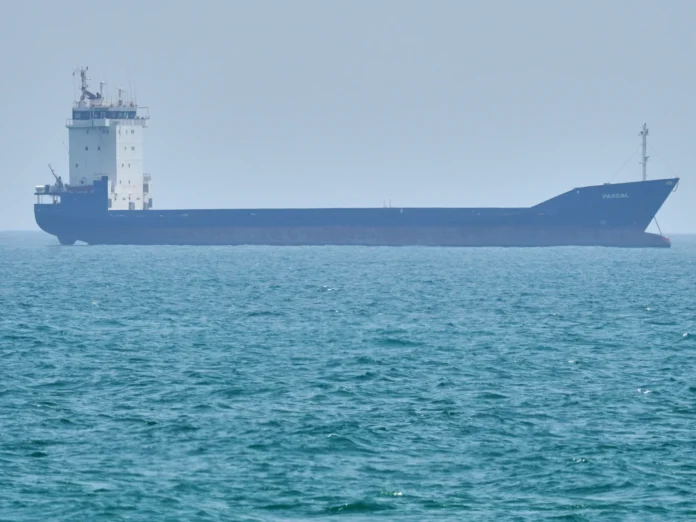


TEHRAN / WASHINGTON — Tensions in the Middle East have escalated after Iran’s Islamic Revolutionary Guard Corps (IRGC) claimed its naval forces struck and brought two “non-compliant” oil tankers to a halt in the strategic Strait of Hormuz.
According to official statements from Tehran, the commercial vessels were intercepted while attempting to navigate what the IRGC described as an “unauthorized route” under the direct air escort of the United States military.
IRGC Statement on the Interception
The IRGC Navy issued a statement confirming the military action, alleging that the vessels ignored direct warnings and attempted to transit the choke point relying on U.S. air cover:
“The non-compliant oil tankers were struck and brought to a halt, while four other oil tankers quickly changed course and returned to their previous positions.”
— Statement by the Islamic Revolutionary Guard Corps (IRGC)
Key Developments Surrounding the Incident
- Air Escort Bypass Attempt: The IRGC claimed the vessels were transiting an “undeclared route” south of the strait under U.S. military cover after being “misled” by U.S. Central Command (CENTCOM) operational assurances.
- Fleet Retreat: Following the strike on the two lead tankers, four accompanying commercial vessels immediately reversed course to avoid engagement.
- CENTCOM Position: U.S. military officials rejected Iranian sovereignty claims over the international shipping lane, maintaining that US naval and air assets continue operations to protect commercial shipping from unlawful IRGC seizures.
- Global Energy Impact: With approximately 20% of global seaborne crude passing through the Strait of Hormuz, the incident has triggered immediate volatility across global energy markets.
Incident Summary
  LOCATION:            Strait of Hormuz (Strategic Maritime Chokepoint)
  OPERATIVE BODY:      Islamic Revolutionary Guard Corps (IRGC) Navy
  TARGETS:             Two "non-compliant" crude oil tankers
  U.S. INVOLVEMENT:    U.S. Military Air Escort / CENTCOM Maritime Operations
  CASUALTY / DAMAGE:   Two tankers struck & halted; four tankers forced to reverse course
  CURRENT STATUS:      High maritime security alert; severe global energy market anxiety
Escalating Maritime Standoff
The confrontation marks a severe breakdown in regional maritime security, following weeks of tit-for-tat military strikes and warnings regarding navigation rights in the Persian Gulf.
While Tehran insists the strategic waterway remains under its territorial jurisdiction and security control, Washington and international allies continue to reject Iran’s enforcement regime, setting the stage for further direct encounters between U.S. escort forces and Iranian naval units.