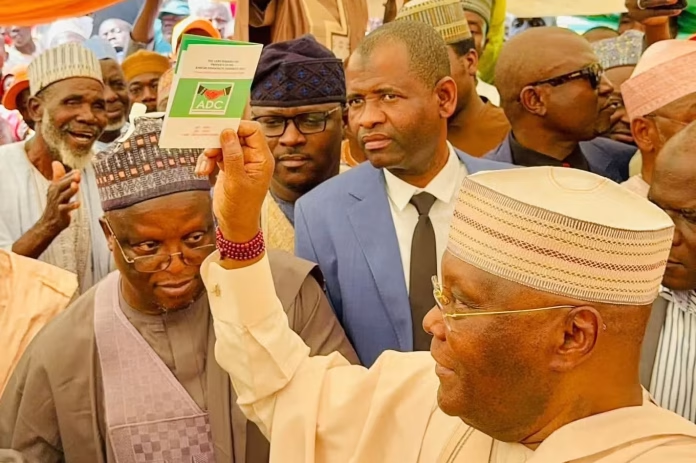


ABUJA — As the political chess pieces for the 2027 general elections begin to realign, former Vice President Atiku Abubakar’s latest institutional maneuvers have reignited a fierce national debate regarding political ambition, desperation, and generational succession in Nigeria’s democratic landscape. For decades, the former Vice President has maintained an unrelenting drive for the nation’s highest office, raising profound questions about what drives his avid determination to contest in a country of over 250 million people.
The Question of Desperation and Generational Succession
For an electorate that remembers his initial foray into presidential politics during the MKO Abiola era of the aborted Third Republic, Atiku’s ongoing centrality in presidential politics is drawing intense scrutiny. Critics and political analysts are increasingly questioning why the former Vice President has not projected or stepped aside for younger, qualified associates who trained and learned the ropes under his political structure.
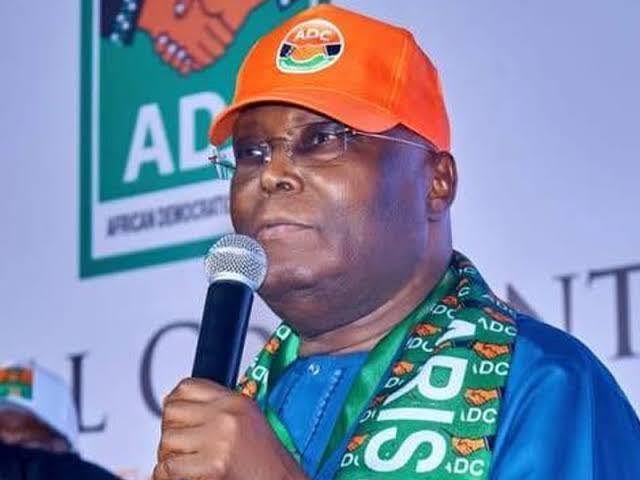
Instead, his critics point to what they characterize as a singular political desperation. This critique is further underscored by a highly fluid political itinerary that spans decades, marked by a succession of major platform migrations—shifting from the People’s Democratic Party (PDP) to the Action Congress (AC), migrating to the All Progressives Congress (APC), returning to the PDP, and now pitching his tent with the African Democratic Congress (ADC). This history of party switching highlights a broader structural phenomenon in Nigerian politics: the willingness to bypass party institutional loyalty in favor of personal executive ambitions.
Opposition Consolidation Fractured by Executive Drive
The immediate institutional fallout of his determination to run has been severe friction among alternative political movements. Reliable political insights indicate that Atiku’s arrival within the ADC effectively led to the “muscling out” of key political blocs, most notably those aligned with former Anambra State Governor Peter Obi and former Kano State Governor Rabiu Kwankwaso.
The displacement of these groups shatters early expectations of a unified third-force coalition capable of challenging the ruling party. Instead of fostering consolidation, his formidable political machinery has triggered internal polarization, leaving the ADC’s institutional stability deeply compromised.
The Zoning Breach and Regional Friction
Compounding the volatility surrounding his ambitions is the fragile alignment between Atiku and his reported running mate, former Minister of Transportation Rotimi Amaechi. The partnership faces an immediate credibility crisis due to previous public declarations by Amaechi, who had vociferously vowed never to accept a vice-presidential slot.
Furthermore, Atiku’s persistence directly collides with the deeply entrenched, gentlemanly agreed “zoning formula”—an informal power-sharing mechanism designed to alternate the presidency between Nigeria’s northern and southern regions:
- The Southern Turn: Under the parameters of the zoning agreement, the 2027 presidential cycle is widely regarded by southern political blocs as the turn of the South region to present a presidential candidate.
- The Overstepped Accord: By insisting on a northern-led ticket, Atiku’s actions are being interpreted by southern stakeholders as a direct violation of a regional consensus that he himself was historically a party to.
An Uncertain Horizon
By disrupting the internal equilibrium of the opposition and alienating key regional and ideological factions, Atiku’s latest bid for power sets up a high-stakes confrontation over the rules of Nigerian political engagement. Whether his unyielding determination will successfully navigate a fractured electorate or permanently alienate crucial voting blocs remains the defining question ahead of the 2027 polls.