
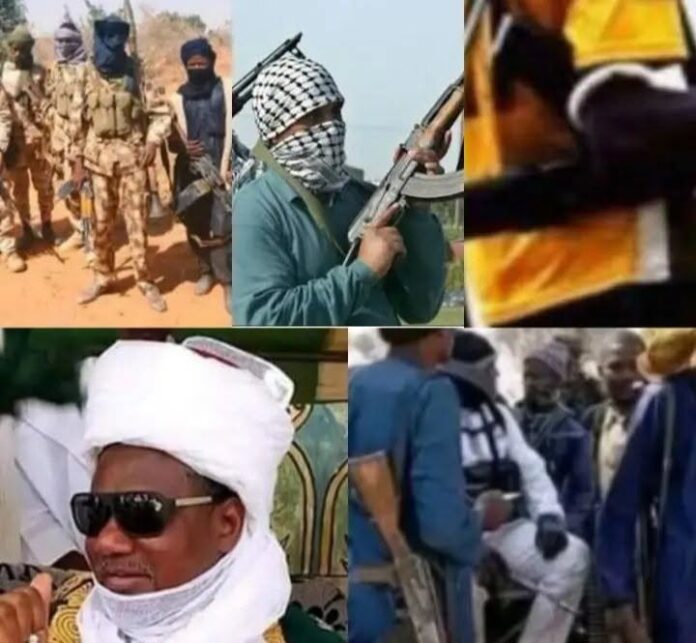


GUSAU, NIGERIA — The Chairman of the Zamfara State Council of Chiefs and Emir of Anka, Alhaji Attahiru Ahmad, has openly rejected long-held mainstream narratives surrounding the security crisis in Northern Nigeria, declaring that the devastating banditry insurgency grew directly out of cyclic revenge killings rather than competition between herders and farmers.
Speaking to top security officials, intelligence directors, and community stakeholders during a high-level peace and reconciliation meeting on Saturday, July 4, 2026, the first-class traditional ruler warned that the federal government’s counter-terrorism strategies will continue to fail as long as planners base their interventions on an incorrect diagnostic of the conflict.
“We Are Looking At The Wrong Problem”
For nearly a decade, local and international observers have predominantly attributed the violence tearing through Northwest Nigeria—characterized by mass abductions, village raids, and highway ambushes—to climate change and resource competition over land and water between nomadic Fulani pastoralists and settled Hausa agrarian communities.
However, the Emir of Anka insisted that this common framing masks a darker, more entrenched societal problem: an escalating cycle of unregulated community blood feuds.
“We are looking at the wrong problem,” the Emir stated flatly before the assembly of security chiefs. “This crisis is not about cows or farmlands. It began when families started killing each other to pay back old blood debts. This is an endless cycle of payback.”
From Grudges to Syndicates
The monarch explained that the security architecture fractured completely when young men across rural enclaves took justice into their own hands, initiating extrajudicial reprisal attacks after their relatives were murdered during minor clashes or local policing sweeps.
According to Alhaji Attahiru Ahmad, these initial revenge cells rapidly metastasized over time, transitioning from uncoordinated vigilante or herder defense squads into highly structured, heavily armed criminal syndicates. These syndicates now leverage sophisticated weapons to terrorize the entire region for multi-million naira ransoms.
| Old Conflict Myth | The Emir’s Reality Blueprint |
| Resource War | Climate-driven fighting over grazing routes and water boundaries. |
| Blood Feuds | Inter-communal retaliatory executions and unbacked ethnic policing. |
| Foreign Actors | Ideological infiltration by external jihadist or cross-border cells. |
| Local Recruits | Marginalized, local rural boys who feel they have nothing left to lose. |
| Military Solution | Heavy kinetic bombardment and troop surges in forest frontiers. |
| Judicial Solution | Specialized traditional justice courts to settle old community grudges. |
The traditional ruler emphasized that many of the frontline bandits are not foreign mercenaries but local youth who have been completely alienated by years of internal conflict, developing a mindset that makes them immune to standard military deterrents.
A Call for Alternative Justice Systems
While acknowledging the ongoing air and ground operations by the military’s joint task forces across forest hideouts, the Emir warned that deploying more infantry battalions will not yield lasting peace without structural community mediation.
He urged the Federal Government to establish specialized community reconciliation panels and traditional justice courts tasked explicitly with auditing, hearing, and legally resolving old, unaddressed inter-communal grudges.
Security experts and regional analysts are reportedly examining the Emir’s blunt remarks, which come amid renewed pressure on the presidency to look beyond purely kinetic solutions and deploy deep-rooted traditional diplomacy to halt the region’s collapse.







