
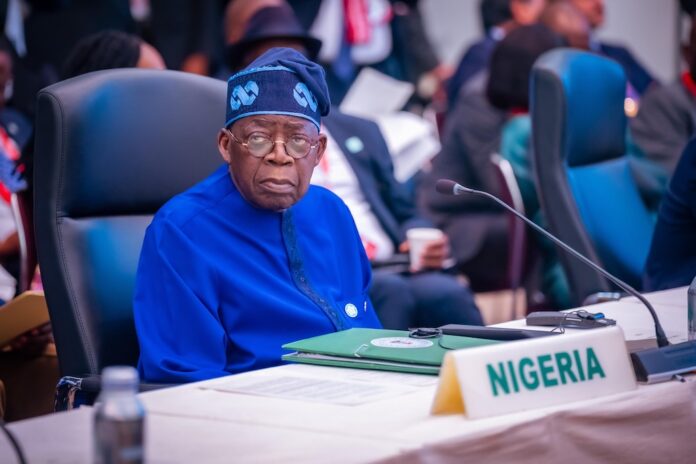


ABUJA — President Bola Ahmed Tinubu has declared that his administration generated a staggering ₦61.58 billion in fiscal savings in 2026 alone through the Presidential Fertiliser Initiative (PFI), claiming his foundational promise of food security to Nigerians is actively being kept.
In a polished policy document and media address rolled out on Friday, the President detailed a massive logistical effort that has reportedly secured 449,000 metric tonnes of raw fertilizer inputs—equivalent to 9 million bags—while positioning Nigeria as Sub-Saharan Africa’s largest blending hub with over 90 active plants. Under the Renewed Hope Farm Input Support Programme (RH-FISP), the administration further claims it is distributing 515,720 bags of locally blended fertilizer directly to 128,930 smallholder farmers across 25 states and the Federal Capital Territory.
However, beneath the glossy statistics and triumphant rhetoric lies a far more grim and unyielding reality for ordinary citizens. For the millions of Nigerians currently facing unprecedented starvation, food security remains a distant mirage to be pursued rather than a milestone attained.
Sacked Food Baskets and Executive Silence
Agricultural experts and civil society monitors have swiftly punched holes in the presidency’s celebratory announcement, pointing out that piling up millions of bags of fertilizer is entirely useless when farmers cannot step onto their lands without being slaughtered.
The administration has failed woefully to secure the nation’s primary agrarian food baskets across the North-West, North-East, and North-Central regions, where armed bandits and terrorist networks hold absolute dominion over the fields. From Kaduna and Zamfara to Benue and Plateau, rural farming communities have been permanently sacked, turned into deserted ghost towns, or forced to pay exorbitant protection taxes to criminal cartels just to harvest.
Compounding this failure is President Tinubu’s continuing inability—or stubborn reluctance—to directly and publicly address these severe security breaches, including the recent tragic death of a kidnapped military general in bandit custody. This persistent executive numbness in the face of mass abductions and rural slaughter portrays the President to a cynical public as deeply insensitive to the desperate plight of the people he governs.
The Corruption Drain and Paper Budgets
The administration’s claims of generating billions in agricultural savings are also being met with deep skepticism due to systemic corruption festering within the federal executive architecture.
While lawmakers routinely pass massive annual budgets designed to stimulate rural infrastructure and agricultural development, independent fiscal trackers reveal a recurring failure to properly execute these budgets as passed. Instead of manifesting as real tractors, accessible rural roads, and secure fields on the ground, critical capital allocations are systematically siphoned through bureaucratic bottlenecks, inflated procurement contracts, and deep-seated administrative graft.
The reality on the dinner tables of everyday Nigerians heavily contradicts the presidency’s scorecard. With food inflation continuing its vertical climb and millions of families forced to skip meals, critics emphasize that no amount of international public relations or state-sponsored statistics can mask the structural paralysis of a government that has effectively prioritized 2027 campaign planning over the immediate survival of its populace.







