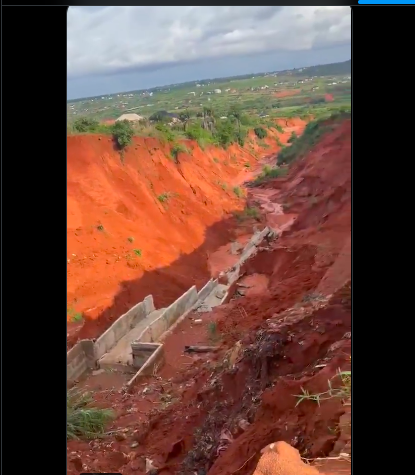


OBOSI, NIGERIA — A severe infrastructure crisis has gripped the Ugamuma village development hub in Obosi, Idemili North Local Government Area, sparking intense communal anger over the total abandonment of public roads behind the Union Secondary School axis. Despite the strategic location yielding tens of millions of Naira in compulsory “development levies” collected by local Obosi youths from developers, the area lacks basic government presence.
In a stark display of self-preservation, the local Landlords’ Association was forced to pull resources together to execute emergency palliative construction on the completely degraded road network—marking a double taxation burden on residents who already paid massive statutory fees to native community unions.
+—————————————————————–+
| COMMUNITY INFRASTRUCTURE BREACH: OBOSI |
+——————-+———————————————+
| Specific Location | Ugamuma Village (Behind Union Sec. School) |
| Primary Grievance | Total neglect despite multi-million levies |
| Funding Source | Private Landlord Association contributions |
| Leadership Focus | Silent local elites and symbolic titles |
+——————-+———————————————+
High-Profile Native Elites and the Failure of Representation
What has worsened the frustration among Ugamuma residents is the absolute silence of high-profile Obosi indigenes who have held powerful administrative positions. Disappointed homeowners point out that a former Anambra State Commissioner for Works hails directly from the Obosi community, yet failed to secure critical infrastructure interventions for his own immediate backyard before exiting office.
Residents complain that the systemic failure of native political influencers to attract state budgetary allocations to Idemili North has left expanding residential clusters completely cut off, turning critical access roads into swampy, impassable terrains during the heavy rainy seasons.
The Million-Naira Development Levy Scandal
The financial exploitation of developers by localized youth factions has become a central point of conflict. Under the guise of town development, various youth groups in Obosi aggressively enforce the collection of millions of Naira in cash and bank transfers from individuals building homes or setting up businesses behind the Union Secondary School axis.
“They collect these massive sums by force, yet there is absolutely nothing to show for it on the ground,” a frustrated property owner stated regarding the extraction of funds. The complete absence of accountability regarding how these millions are utilized by youth leaders has left the Landlords’ Association with no choice but to tax themselves a second time to buy gravel, grade the failing roads, and clear blocked drainage channels.
The Palace and the Governor: Symbolic Titles vs. Grassroots Progress
Public criticism has additionally targeted the traditional institution, specifically focusing on the palace of the Igwe of Obosi. While the traditional ruler maintains a close working relationship with the state administration, community stakeholders argue that this alignment has failed to translate into tangible infrastructure benefits for the ordinary citizens of Obosi.
Critics note that while the palace has been quick to confer high-profile chieftaincy titles upon top executive officials, it has been unable to leverage those same political alliances to secure road rehabilitation contracts for broken enclaves like Ugamuma.
The Heavy Toll on Ordinary Citizens
With state intervention unlikely to happen anytime soon due to shifting bureaucratic priorities, the economic and physical burden of this institutional neglect falls entirely on the residents. Property values in the affected sectors are dropping rapidly, transport operators are avoiding the route entirely, and small businesses are counting massive losses.
As the landlord unions continue to empty their private savings to fund critical public utilities, demands are growing for a full audit of all community development levies collected by youth groups. Homeowners are calling on the state government to look beyond symbolic relationships with traditional elites and deploy investigative panels to address the double taxation and infrastructure decay crippling the Ugamuma-Obosi corridor.