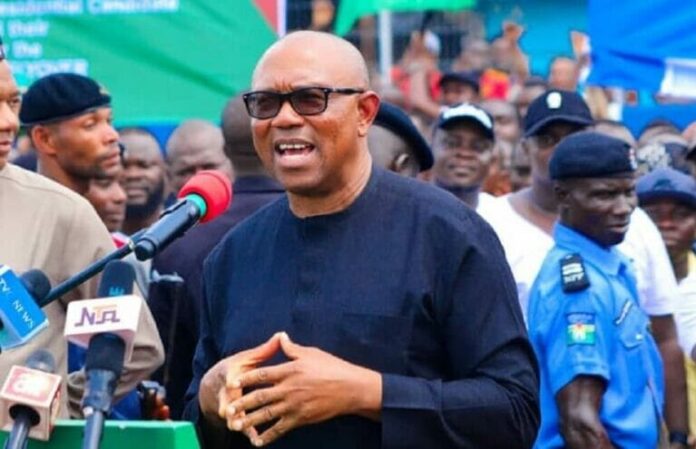

AWKA, NIGERIA — The presidential candidate of the Labour Party in the 2023 elections, Peter Obi, has issued a bold public challenge regarding his personal integrity and asset ownership, declaring that his only self-built residential property in Nigeria is located in Onitsha, Anambra State.
The former governor openly invited the public and anti-graft agencies to seize any other residential asset found linked to his name across the country, while reflecting on how he successfully managed a state without executive corruption despite facing a completely hostile legislature.
The Onitsha Property Challenge
Obi made the remarks while addressing political stakeholders on governance, transparency, and the high cost of public administration in Nigeria.
“The only place I have a house today in Nigeria that is built by me is Onitsha,” Obi stated. “If you see any other one, confiscate it.”
The asset challenge is central to Obi’s political brand, which emphasizes personal prudence and anti-corruption. Unlike many former governors and top political figures who acquire massive real estate portfolios in luxury districts of Abuja, Lagos, and foreign capitals, Obi maintained that his lifestyle remains entirely modest and detached from the typical extravagance of the political class.
Governing Against All Odds
To counter assertions that a president requires absolute control over the legislature to deliver good governance, Obi recalled his turbulent first term as Governor of Anambra State.
He noted that he successfully ran the state infrastructure and economic blueprints despite not having a single member of his political party, the All Progressives Grand Alliance (APGA), in the state parliament.
“I was a Governor with 30 members of my assembly from different parties,” Obi revealed. “Not one from my party.”
When Obi assumed office following a prolonged legal battle over the 2003 election, the Anambra State House of Assembly was completely dominated by the Peoples Democratic Party (PDP). Despite the legislature orchestrating a temporary, highly controversial impeachment against him in late 2006, Obi maintained that he refused to compromise public funds, inflate contracts, or offer financial bribes to lawmakers to pass state budgets.
Lessons for the 2027 Political Landscape
Political analysts note that Obi’s reflections carry significant weight as opposition parties engage in strategic realignments ahead of the 2027 general elections.
His supporters frequently cite his fiscal track record in Anambra—where he cleared backlogs of civil service pensions, transformed the education sector, and left over ₦75 billion in the state coffers at the end of his tenure—as a practical model for rescuing Nigeria from its current debt crisis.
By tying his personal lifestyle to his broader policy narrative, Obi continues to champion a complete shift from a consumption-driven government to a production-centered economy, starting with individual accountability from the nation’s leadership.