

ABUJA — The ambitious plan to unseat the incumbent administration in 2027 is facing a severe internal crisis as the African Democratic Congress (ADC)—the primary platform for a proposed opposition merger—struggles to contain the competing interests of its heavyweights.
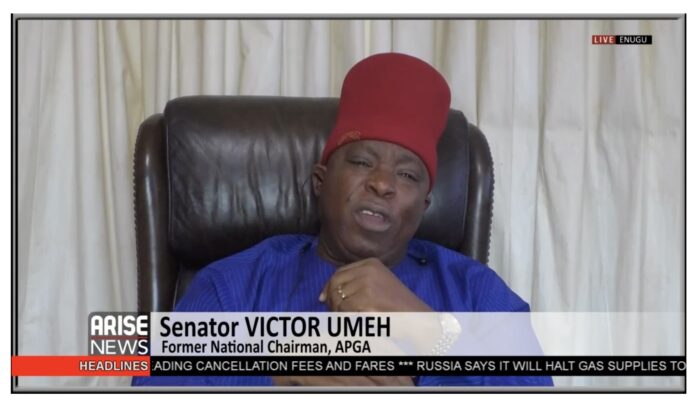
Senator Victor Umeh has sounded a clear warning that the party is on a “suicidal” path due to the refusal of aspirants, most notably former Vice President Atiku Abubakar, to embrace a consensus arrangement.
The Atiku Ambition and Northern Dominance
The core of the friction lies in the recent declaration by Atiku Abubakar that he will contest the 2027 presidency for what he terms his “last outing.” While Atiku’s supporters argue that he remains the most prepared candidate, critics view his insistence as a sign of a deepening Northern entitlement.
Senator Umeh, speaking on the deadlock, expressed profound disappointment in the veteran politician’s stance. “I was thinking that Atiku would leave the stage for younger people, but he said he is contesting,” Umeh noted. “He is supposed to be a father at this stage and at his age.”
Within the party’s Southern caucus, there is growing resentment over what is perceived as a pro-Northern and religious bias. Many believe Atiku’s refusal to step aside is a deliberate attempt to keep the presidency within a specific Northern Muslim bloc, effectively ignoring the national cry for a rotation of power and generational shift.
Internal Power Play: “Nobody is Ready to Concede”
The ADC is currently playing host to a high-stakes standoff between Atiku, Peter Obi, and Rotimi Amaechi. While Umeh described Obi’s recent visit to Amaechi as a “noble” effort to find common ground, he admitted that the talks have yielded little.
“If everybody is insisting on direct primary instead of a consensus, then they are preparing to kill the party,” Umeh stated. The fear is that a direct primary will devolve into a regional and religious contest, leaving the winner with a “bloody nose” and the party too fractured to compete in the general election.
The ADC at a Crossroads
The leadership of the ADC is now caught between the “old guard” represented by Atiku and a younger, Southern-based movement pushing for a new direction. The current stalemate has exposed deep cracks:
- Regional Friction: Southern leaders fear the party is being hijacked by a Northern agenda that prioritises regional dominance over national unity.
- Religious Posturing: There are concerns that the primary will be weaponized using religious sentiments to mobilise votes, further alienating the Middle Belt and Southern Christians.
- Organizational Crisis: Several state chairmen have already begun to take sides, with some threatening to defect if their regional interests are not protected in the final consensus.
As the 2027 cycle draws closer, the ADC faces a grim choice: force a consensus that satisfies all regional blocs or face a primary that could lead to the total disintegration of the opposition coalition.