

.
.
September 2026
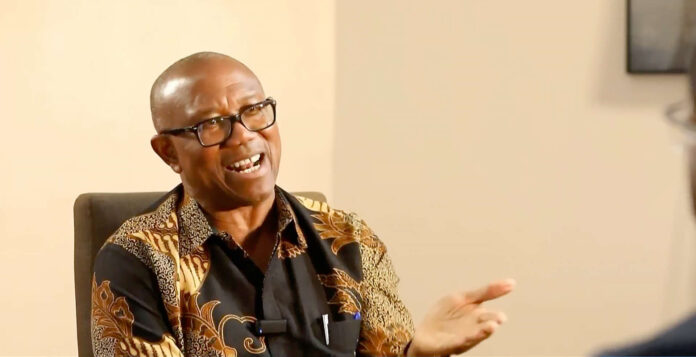
NDC presidential candidate Peter Obi has issued his latest and most sweeping challenge yet to critics disputing his record as Anambra State governor, daring anyone to trace even a fraction of the funds his administration handled to alleged misappropriation.
“I was Governor of Anambra State for eight years and received about half a trillion naira. If you can trace where 1% of it was misappropriated, I will stop campaigning. I won’t say anything again concerning the 2027 presidential election,” Obi said.
Part of an escalating dispute
The remark is the latest escalation in a running battle over Obi’s financial record as governor (2006–2014), which has intensified sharply this month. The current Anambra State Government, under Governor Charles Soludo, has disputed Obi’s account on multiple fronts: Commissioner for Information and Value Reformation Dr. Law Mefor said Obi spent roughly $4.05 billion (about ₦5.4 trillion at current rates) over his tenure, left eight external loans with an outstanding balance of ₦127.4 billion as of June 2026, and — most pointedly — disputed Obi’s claim of leaving a ₦2.13 billion ecological fund balance in a specific First Bank account, saying certified bank records show no such amount ever appeared there.
Obi has firmly rejected the government’s claims as “completely false,” saying his administration systematically cleared more than ₦35 billion in historical gratuities and arrears predating his time in office, and that he left no outstanding salaries, pensions, gratuities, or contractor debts at handover. He has repeatedly framed his challenge in similar terms throughout the dispute — previously telling reporters, “If anybody can establish anything to the contrary, I will stop campaigning” — with the half-a-trillion-naira, 1% framing representing his broadest version of that dare yet.
This is not the first time Obi’s handling of Anambra state funds has faced public scrutiny. His predecessor as governor, Willie Obiano, first disputed Obi’s account of what he left behind back in November 2015, and the current Soludo administration’s claims mark the second successive administration to publicly challenge Obi’s figures.
The 2009 Apapa cash interception
Obi’s financial record has also faced scrutiny stemming from an incident during his governorship itself. On Sunday, June 1, 2009, Lagos police intercepted a government vehicle convoy — reportedly escorted by mobile police officers attached to the Anambra State Government House — after it transported approximately ₦250 million in cash by road from Awka to No. 7 Aerodrome Road, Apapa, Lagos, the headquarters of Next International Limited, a private company associated with Obi. Reports at the time cited varying figures, with some accounts putting the sum as high as ₦2.5 billion or referencing amounts in U.S. dollars, though ₦250 million became the most widely reported figure.
Obi’s media assistant at the time, Valentine Obienyem, who was present during the interception, initially attributed the funds to a contractor and Obi in-law, Ejike Onwusogbulu, saying the money was payment for the purchase of vehicles — including Ford Ranger pickups for local police formations and Kia sedans for local government officials — under a state transport programme. The explanation shifted over subsequent statements: an initial account said the funds were paid in cash to secure wharf discounts from vehicle dealers, before a revised version said the money was in fact disbursed via cheques rather than cash. Onwusogbulu was reported to have subsequently left the country for the United Kingdom following the incident, and the matter drew formal petitions to the Economic and Financial Crimes Commission (EFCC) from civil society groups, including Intersociety, calling for a full investigation. It is unclear from available public records whether the EFCC’s investigation resulted in any formal charges or conclusive findings.
The incident has resurfaced periodically in Nigerian political commentary in the years since, including in recent retrospective analyses published amid the current 2027 election cycle, as critics and supporters continue to debate Obi’s broader financial record in office.