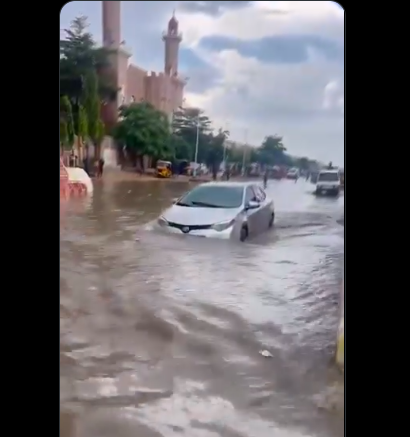

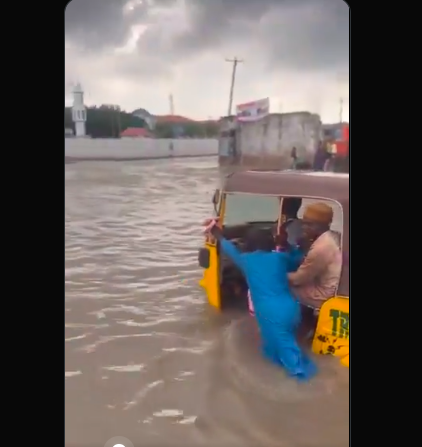
KANO — For residents, business owners, and commuters along the busy Gadon Ƙaya axis in Gwale Local Government Area of Kano State, every heavy downpour brings familiar dread. Within minutes of rainfall, major roads, residential compounds, and commercial premises are submerged under murky, fast-moving floodwaters.
The recurring environmental crisis along the vital corridor—which connects key commercial hubs and residential neighborhoods within Kano Metropolis—has disrupted local commerce, damaged physical infrastructure, and raised serious public health concerns.
An investigation into the environmental and infrastructural factors behind the persistent flooding reveals a combination of natural topography, failing drainage infrastructure, unchecked urban encroachment, and municipal waste management lapses.
A Basin Effect: Topography and Runoff Overload
A primary driver of the persistent flooding is the natural geographical profile of the Gadon Ƙaya corridor. Situated in a natural elevation drop, the area functions as a receiving basin for storm runoff flowing down from surrounding higher ground—including the Goron Dutse hill area, BUK Road axis, and parts of neighboring residential layouts.
When downpours hit Kano metropolis, millions of liters of surface water cascade naturally toward Gadon Ƙaya. However, the existing drainage network was never constructed to accommodate the sheer volume of floodwater flowing into the area.
Clogged Drains and Municipal Waste Lapses
The structural deficit is compounded by severe blockages in primary and secondary drainage channels. Decades of poor municipal waste disposal have turned major gutters along Gadon Ƙaya into informal dumping grounds for polythene bags, single-use plastics, and household refuse.
During the dry season, windborne silt and uncollected waste accumulate at the bottom of the open concrete drains. When the rainy season arrives, this un-cleared debris forms dense blockages, reducing the carrying capacity of the drains by more than half. Instead of channeling water away toward regional discharge points, the gutters quickly overflow, spilling sewage-laden water onto the highways and inner streets.
Unchecked Encroachment and Structural Bottlenecks
Rapid, unregulated urban expansion across Kano metropolis has further crippled the area’s natural drainage pathways. Over the years, commercial buildings, informal roadside shops, and perimeter fences have been erected directly over natural water channels and floodplains.
Urban planning experts note that these illegal encroachments constrict the width of waterways, creating extreme physical bottlenecks. Furthermore, the extensive paving of residential yards and commercial compounds with concrete prevents natural soil infiltration, forcing virtually 100 percent of rainwater into overburdened surface gutters.
Additionally, downstream channels connecting Gadon Ƙaya to larger municipal outlets—such as the Jakara/Kofar Mata drainage basin—frequently suffer from water back-ups, forcing floodwaters to remain stagnant in Gadon Ƙaya for hours after storms subside.
Demands for Government Action
Lamenting the continuous economic losses and health hazards posed by stagnant floodwaters, residents and business owners along Gadon Ƙaya have called on the Kano State Government and the Ministry of Environment and Climate Change to initiate comprehensive structural interventions.
Community leaders are urging state authorities to undertake pre-season desilting of major waterways, enforce urban planning laws against illegal structures built on drainage paths, and construct expanded, covered storm-drainage channels capable of handling high-volume runoff.
Until concrete infrastructural upgrades and strict environmental enforcement are carried out, thousands of residents along the Gadon Ƙaya axis remain at the mercy of every gathering raincloud.