

.
.
.
.
By News Desk
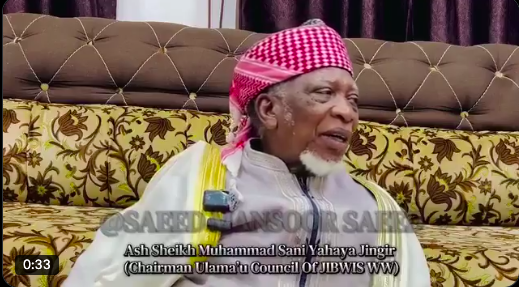
JOS, Nigeria — The Chairman of Jama’atu Izalatil Bid’ah Wa’Iqamatis Sunnah (JIBWIS), Sheikh Sani Yahya Jingir, has responded to public criticism surrounding donations pledged for a proposed Islamic university project.
The controversy follows a viral video showing Ibrahim Masari, Special Adviser on Political Affairs to President Bola Ahmed Tinubu, and Yobe State Governor Mai Mala Buni pledging a combined sum of N600 million toward the university initiative.
Clarification on Pledged Funds and Personal Accounts
Addressing supporters and responding to criticisms across digital platforms, Sheikh Jingir clarified that the monetary contributions were not directed to his personal account:
The Islamic cleric emphasized that not a single kobo entered his private bank accounts, explaining that the funds were pledged strictly as corporate donations toward the establishment of an educational institution designed to serve the broader public. Jingir stressed that the project is intended to broaden access to education for both Muslims and non-Muslims rather than serve as a personal financial venture.
Comparisons with Christian Institutions and Public Backlash
The scholar expressed disappointment over the criticism he faced, pointing out perceived double standards regarding public and political support for faith-based educational projects:
Jingir noted that various Christian leaders and organizations across Nigeria routinely receive billions of naira in state and private donations to construct churches, seminaries, and missionary universities without generating similar public outrage. He voiced particular pain over the fact that fellow Muslims joined in criticizing the institutional project.
Political Endorsements and Rebuttal of Bribery Claims
The controversy escalated as critics linked the N600 million pledge to the cleric’s renewed call for a same-faith executive ticket ahead of the 2027 general elections:
Critics on social media alleged that the financial pledge was tied to his advocacy for the ruling party’s political structure. In response, supporters and associates of the cleric maintained that Jingir has publicly championed Muslim political representation for decades, adding that institutional university pledges should not be conflated with personal political inducements. Furthermore, during a recent national symposium in Jos, Jingir denied accusations of religious hostility, reiterating that Islam commands justice, fairness, and peaceful coexistence with people of all faiths.