
By Okey Maduforo Awka .
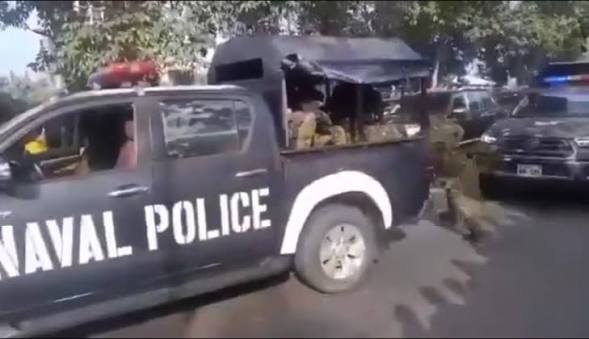
There are growing demands from Nigerian security agencies for the account over 1,844 victims of extrajudicial killings in the South East geopolitical zone of the country by human right Activists in the area .
To them those reportedly killed according to reports by Amnesty international between 2021 and 2023 were those accused of being members of the separatist group popularly known as the Indegenous People Of Biafra( IPOB) .
The Activists have continued to accuse the security operatives of extrajudicial killings of innocent people who are either missing or tortured to death under the guys of fighting insecurity in the area .
Speaking to reporters in Awka the spokesman South East Integrity Forum Comerade Augustine N. Uzoezie lamented that the people of the area deserves justice over the killing of their kit and kin by security operatives.
“The persistent reports of killings, kidnappings, arbitrary arrests, torture, enforced disappearances and other forms of human rights abuse in Nigeria raise a fundamental question: how can a government claim to protect its citizens when so many people continue to live in fear for their lives, their freedom and their future?”
“For many people in the South-East, particularly those who identify with the Biafran cause, the crisis is not merely a question of security. It is also a question of justice, dignity, equality before the law and the right to live without fear of persecution”
“The scale of violence in South-East Nigeria demands urgent attention. In a report published on 13 August 2025, Amnesty International documented widespread human rights violations committed by state and non-state actors in the region”
“The organisation reported that, according to available data, 1,844 people were killed between January 2021 and June 2023”
“In February 2026, Amnesty International published a further investigation into the Nigeria Police’s anti-kidnapping unit known as Tiger Base in Owerri, Imo State”
Uzoezie insisted that the Nigerian government bears a particular responsibility because it exercises public authority, controls security institutions and has a legal duty to uphold fundamental rights.
He noted that allegations of abuse by state agents emerge, official silence, denial without transparent investigation or the failure to prosecute credible cases can deepen public mistrust. Where wrongdoing is established, accountability is necessary not only for the victims but also for the integrity of the state itself.
The body made a six point demand for an independent investigations must be conducted. Every credible allegation of unlawful killing, torture, arbitrary detention, enforced disappearance or destruction of civilian property must be investigated impartially. Investigations must cover state agents and non-state perpetrators alike.
“Second, those responsible must be held accountable. Where sufficient evidence establishes criminal responsibility, suspects must face fair legal proceedings. Public office or membership of a security agency must not confer immunity from justice”
“Third, missing persons must be accounted for. Authorities must disclose information about people in custody, investigate reports of disappearances and provide families with access to effective legal remedies”
“Fourth, civilians must be protected during security operations. Operations must comply with applicable human rights and humanitarian law. Security forces must use lawful, necessary and proportionate measures and must distinguish civilians from individuals lawfully targeted under applicable law”
Fifth, kidnapping and armed violence must be confronted consistently. Authorities must improve intelligence-led policing, investigate ransom kidnappings, protect vulnerable communities and prosecute those who attack, abduct or intimidate civilians.
“Sixth, peaceful political expression must be protected. Political advocacy and peaceful calls for self-determination should not automatically be treated as criminal conduct. Allegations of genuine crimes must be addressed through evidence and due process”
“The international community, including the United Nations, the African Union, international human rights organisations and relevant diplomatic partners, should continue to monitor the human rights situation in Nigeria” it stated .