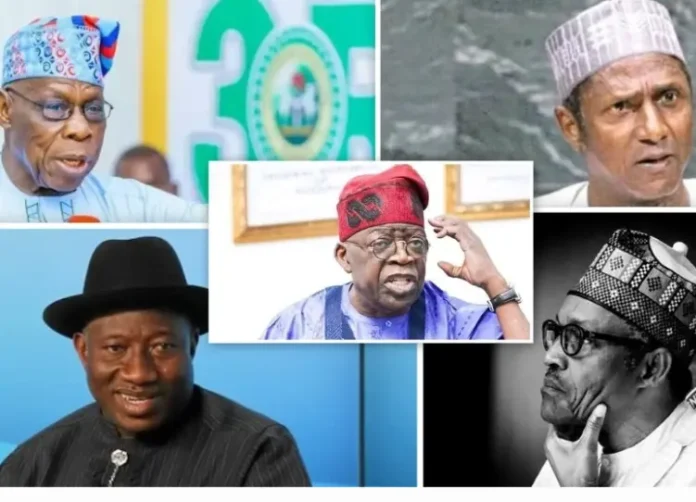

LAGOS — Renowned financial analyst and economic commentator Kalu Aja has sparked widespread discussion online following a viral breakdown summarizing the borrowing patterns and fiscal management strategies of Nigerian heads of state from the First Republic to the present administration.
In a concise historical critique, Aja outlined how successive post-independence regimes transitioned from infrastructure-linked capital financing to structural debt reliance, concluding with a sharp assessment of current fiscal dynamics under President Bola Ahmed Tinubu.
The Evolution of Nigeria’s Fiscal Management (Balewa to Tinubu)
Aja’s summary highlights key economic turning points across Nigeria’s post-colonial trajectory:
- Abubakar Tafawa Balewa (First Republic): Borrowed specifically for targeted national infrastructure investments, most notably the construction of the Kainji Dam.
- General Yakubu Gowon (Post-Civil War / Oil Boom Era): Benefited from foreign exchange inflows during the 1970s oil boom, operating with high revenue reserves rather than external borrowing.
- Shehu Shagari (Second Republic): Marked the beginning of widespread consumer-driven import debts, acquiring loans to finance basic commodities including raw building materials.
- General Ibrahim Babangida (Military Era): Rejected a formal Structural Adjustment Program (SAP) loan from the IMF following a national debate, but implemented SAP policies domestically, leading to the devaluation of the Naira and structural debt accumulation.
- General Sani Abacha (Military Era): Maintained low official foreign borrowing while sequestering vast state funds into private international accounts (the “Abacha Loot”).
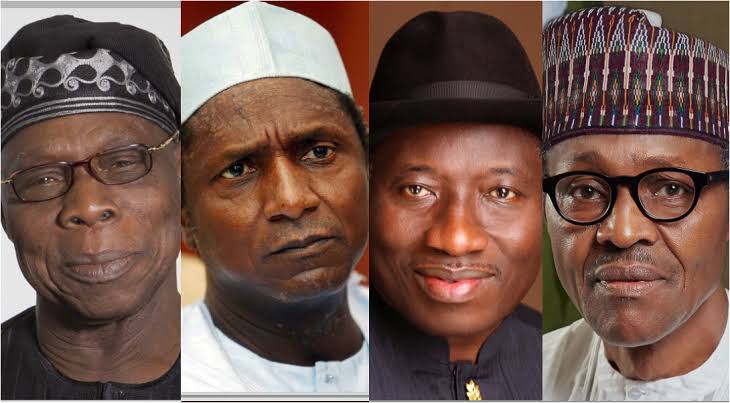
- Olusegun Obasanjo (Fourth Republic): Negotiated the landmark 2005 Paris Club debt relief deal, eliminating $18 billion in bilateral debt and leaving Nigeria with historic low debt levels.
- Umaru Musa Yar’Adua: Maintained fiscal discipline with modest borrowing, though his tenure was cut short.
- Goodluck Jonathan: Expanded foreign debt issuance through eurobonds (e.g., JP Morgan Bond Index inclusion) while depleting the Excess Crude Account (ECA) reserves.
- Muhammadu Buhari: Unprecedented expansion of domestic and foreign debt stock, characterized by heavy reliance on Central Bank Ways and Means advances (money printing) alongside external loans.
- Bola Ahmed Tinubu: Inherited a high-debt deficit and is currently utilizing new borrowings primarily to service existing foreign and domestic debt obligations.
Macroeconomic Snapshot: Presidential Debt Paradigms
  ERA / LEADER:        PRIMARY FISCAL CHARACTERISTIC:
  Tafawa Balewa        Infrastructure-tied loans (Kainji Dam)
  Yakubu Gowon         Oil-boom surplus; zero net external borrowing reliance
  Shehu Shagari        Import-driven debt expansion
  IBB / Abacha         Currency devaluation (SAP) & offshore asset diversion
  Olusegun Obasanjo    Paris Club Debt Relief ($18B debt cancellation)
  Buhari Administration Unprecedented growth via debt accumulation & Ways & Means
  Tinubu Administration Debt refinancing & elevated debt service-to-revenue ratios
Debt Refinancing and Fiscal Realities
Economic analysts note that Aja’s commentary highlights the structural dilemma facing current policy makers. With debt service absorbing a significant portion of federal revenues, recent loan approvals are increasingly structured to roll over existing maturities, underscoring the urgency for revenue diversification and fiscal consolidation.