
ABUJA / WASHINGTON — Senior United States diplomatic officials have intensified public and bilateral scrutiny over Nigeria’s constitutional legal framework, demanding clear commitments on fundamental rights as the Supreme Court of Nigeria faces mounting international criticism for repeated procedural delays in the landmark blasphemy appeal of young Sufi musician Yahaya Sharif-Aminu.
The intervention follows public statements by key U.S. foreign policy representatives at the United Nations and the State Department’s Bureau of African Affairs, raising direct concerns over the ongoing enforcement of capital blasphemy statutes and prolonged pre-trial detentions across northern states.
Re-ignited by global advocacy groups including Alliance Defending Freedom (ADF) International, the legal saga surrounding Sharif-Aminu’s six-year detention has emerged as a major flashpoint in Nigeria’s international human rights and diplomatic relations.
Six Years Behind Bars: The Legal Odyssey of a Sufi Musician
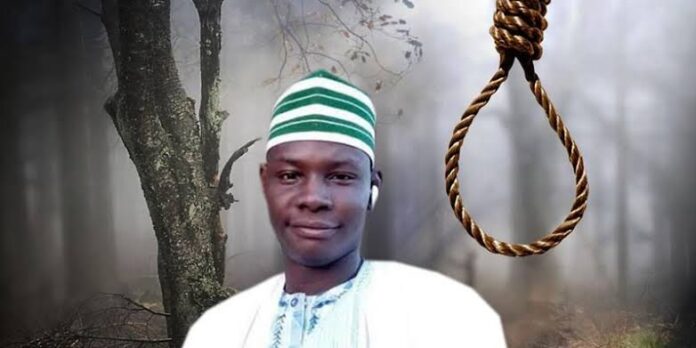
Yahaya Sharif-Aminu, a member of the Sufi Tijaniyyah order in Kano State, was arrested in March 2020 after circulating self-composed audio recordings over WhatsApp praising a local Islamic scholar.
Accused of elevating the scholar above the Prophet Muhammad, his family home was burned down by an angry mob, and he was subsequently convicted without legal representation by an Upper Sharia Court in Kano and sentenced to death by hanging under Section 382(b) of the Kano State Sharia Penal Code Law 2000.
Though the Kano State High Court overturned his conviction in January 2021 citing severe trial irregularities and ordered a retrial, Sharif-Aminu’s legal team—led by human rights attorney Kola Alapinni—appealed to challenge the constitutional validity of capital blasphemy laws altogether.
After the Court of Appeal upheld the retrial order in August 2022, the case was escalated to the Supreme Court of Nigeria in November 2022, seeking a definitive ruling on whether state-level Sharia blasphemy offenses violate the secular guarantees of freedom of expression and religion enshrined in the 1999 Nigerian Constitution.
Supreme Court Hearing Cancellations Spark Outrage
international outrage intensified after a key hearing set for June 25 at the Supreme Court in Abuja was abruptly cancelled.
The hearing, intended to establish the schedule for oral arguments on the constitutionality of northern Nigeria’s blasphemy laws, was struck from the cause list following administrative directives regarding docket prioritization. The cancellation left the appeal stalled indefinitely without a new hearing date, keeping the 25-year-old musician incarcerated under deteriorating health conditions.
“Every delay in Yahaya’s case is another day he must spend behind bars for nothing more than peacefully expressing his faith in song lyrics,” stated Sean Nelson, Senior Counsel for Global Religious Freedom at ADF International. “Every delay is another day that one of the most dangerous blasphemy laws in the world sits on the books and is being enforced.”

International Judgments and U.S. Diplomatic Strategy
The diplomatic pushback from Washington reflects growing international consensus among multilateral human rights bodies:
- ECOWAS Court Ruling: In landmark proceedings, the ECOWAS Community Court of Justice cited Sharif-Aminu’s prolonged detention to hold that Nigeria’s criminal blasphemy provisions violate regional human rights treaties and called for their statutory repeal.
- UN Working Group Determination: The UN Working Group on Arbitrary Detention officially declared Sharif-Aminu’s imprisonment arbitrary and discriminatory, demanding his immediate release and full compensation.
- European Parliament Resolutions: The European Parliament has passed urgency resolutions demanding the unconditional release of the musician and the quashing of his death sentence.
Constitutional Crossroad for Nigeria’s Judiciary
The case poses one of the most profound constitutional tests for Nigeria’s apex court in decades, forcing a direct judicial reconciliation between Section 10 of the Nigerian Constitution—which prohibits the adoption of a state religion—and the enforcement of religious criminal codes across 12 northern states.
As Washington and international rights monitors keep pressure on Abuja, civil society organizations continue to urge the Chief Justice of Nigeria to prioritize the appeal, warning that continued delays undermine public confidence in the judicial protection of fundamental human rights.