



JOS, NIGERIA — A devastating security failure has once again exposed the deep structural rot and perceived complicity within Nigeria’s internal security operations.
Investigative reports and firsthand testimonies from survivors indicate that a heavily armed military unit stationed just “mere feet away” from a vulnerable community failed to intervene during a brutal midnight raid. The deliberate or negligent delay allowed an armed Fulani militia to systematically execute 22 villagers, including a prominent local clergyman.
The “No Fuel” Alibi: A Death Sentence for 22
The disaster unfolded in a rural community targeted during a recent surge of coordinated attacks across Plateau State. According to prominent investigative journalist Masara Kim, the forward operational base of the Special Task Force (STF) Operation Enduring Peace—a hybrid military outfit recently deployed to stabilize the region—was located right on the periphery of the village.
When the first gunshots shattered the night, panicked community leaders immediately dialed the unit commander, pleading for an emergency tactical deployment.
The response they received from the commander was as shocking as it was fatal: The unit could not move because their military trucks and patrol vehicles had no fuel.
“When residents called for help in the first minutes of the invasion, the unit commander… told them his trucks had no fuel and he couldn’t come. He then showed up with all his men, trucks, and motorcycles immediately after the militia had safely retreated to their base. What do we call this?”
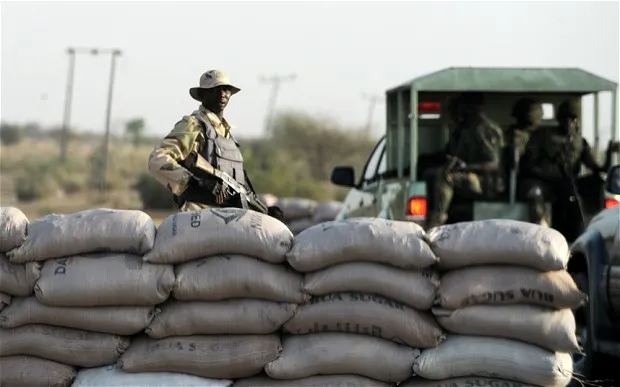
A Coordinated Murder and a Shocking Arrival
Deprived of state protection, the community was left entirely at the mercy of the invaders. For hours, the armed Fulani militia systematically went house to house, killing 22 defenseless residents. Among the dead was a local pastor from the Church of Christ in Nations (COCIN), a denomination that has faced the brunt of the targeted violence in the Middle Belt.
The true scandal, however, occurred after the slaughter ended.
Eyewitnesses confirmed that the moment the militia concluded their operation and safely withdrew toward their known forest strongholds, the military’s “fuel problem” miraculously vanished. The STF commander, flanked by a massive convoy of fully fueled military trucks, armored personnel carriers, and tactical motorcycles, rolled into the village to secure an already cleared perimeter and begin documenting bodies.
Logistical Failure or Deliberate Sabotage?
The “no fuel” excuse has sparked widespread fury across Plateau State, reigniting long-standing allegations of institutional collusion within the armed forces.
Local civil society organizations and youth leaders have openly rejected the military’s logistical alibi, pointing to a highly predictable, recurring pattern:
| The Timeline of Inaction | The Operational Reality |
| 0 – 60 Mins (Attack Begins) | Local distress calls are made; military cites lack of fuel, lack of clearance from superiors, or poor terrain. |
| 1 – 3 Hours (The Slaughter) | Armed militia operates completely unhindered within walking distance of military checkpoints or bases. |
| Post-Attack (The Safe Retreat) | Militia departs with looted livestock; military arrives in full force to clear the scene. |
Security analysts argue that if a front-line tactical unit positioned in a highly volatile conflict zone lacks basic fuel for its vehicles, it represents a catastrophic failure of the defense budget and command logistics. Conversely, if fuel was available, the commander’s refusal to deploy constitutes a criminal abdication of duty and direct complicity in mass murder.
Silence from Defense High Command
Neither the Headquarters of the Special Task Force in Jos nor the Defence Headquarters in Abuja have released an official statement addressing the specific “no fuel” allegation raised by local reporters. Historically, the military high command has dismissed such reports as “unpatriotic narratives” designed to demoralize troops on the front lines.
However, for the families burying 22 people in yet another mass grave, the government’s explanations have run entirely hollow. The continuous failure of nearby troops to protect citizens has forced many Middle Belt communities to completely abandon faith in the national security apparatus, accelerating the dangerous push toward unregulated local self-defense initiatives.