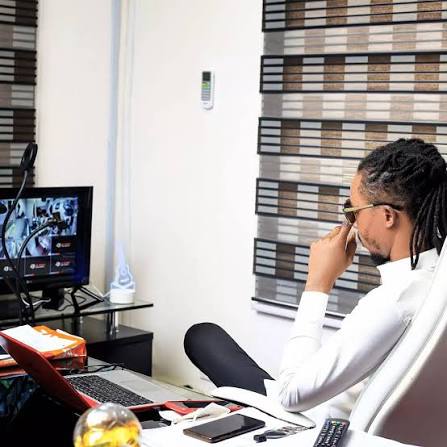


ABUJA, NIGERIA — The National Cybercrime Centre (NCCC) of the Nigeria Police Force has triggered a major press freedom crisis after officially summoning Fejiro Oliver, the prominent publisher and Editor-in-Chief of investigative news platform SecretsReporters, on shocking allegations of “espionage” and computer-related crimes.
The state’s heavy-handed move—widely condemned by media watchdogs—comes in the wake of a highly controversial operation where armed plain-clothes operatives secretly detained one of the outlet’s senior journalists in Abuja for nearly a week.
The Espionage Summons
In an official police letter signed by Olufemi Akinola, the Deputy Director of Operations at the NPF-NCCC, Oliver was directed to present himself at the center’s headquarters in Abuja for an interview regarding a case of espionage, cyberstalking, and computer-related offences.
Reacting publicly to the invitation, Oliver, whose real name is Tega Oghenedoro, flatly rejected the terrorism and spying labels, maintaining that his only “offense” has been deploying raw investigative journalism to expose corruption within high government circles.
The publisher, currently managing operations from asylum in the United States after surviving previous state-sponsored intimidation and assassination attempts, expressed alarm over the extreme escalation of state tactics against the press.
“The Nigerian state is accusing Secrets Reporters and myself of leaking government information and also giving information to foreign governments, an allegation so heavy, which is obviously the first of its type against a journalist in modern days,” Oliver stated. “Our works in SecretsReporters and Network Against Corruption and Trafficking (NACAT) have caused numerous changes in the country and should be given awards rather than being branded espionage.”
The Preceding Hunt: Six Days In Captivity
The espionage charge follows a dramatic week of tracking by federal agents. On Wednesday, July 1, 2026, four armed men in plain clothes driving an unmarked vehicle intercepted and abducted Stanley Ugagbe, a senior reporter with SecretsReporters, from his residence in the Jikwoyi area of Abuja.
The police command initially denied holding the reporter, forcing press freedom groups like the Committee to Protect Journalists (CPJ) and the International Press Institute (IPI) to raise national alarms over an “enforced disappearance”.
| Asset / Person Tracked | Current Operational Status & Police Custody |
| Stanley Ugagbe (Senior Reporter) | Released on bail late Monday after 6 days of incommunicado detention. |
| Journalistic Tools (Laptops & Phones) | Confiscated by the NCCC for ongoing “forensic analysis”. |
| Fejiro Oliver (Publisher) | Formally summoned by NPF-NCCC over allegations of Espionage. |
Media rights groups revealed that the security operation was triggered by an extensive investigative series spearheaded by Ugagbe into massive corruption, institutional abuse, and personal indiscretions involving Emem Usoro, the Deputy Governor for Operations at the Central Bank of Nigeria (CBN).
Ugagbe was finally let go on strict administrative bail late Monday night, but police operatives refused to return his laptops and mobile phones, claiming the devices must undergo digital forensic exploitation.

“Journalism Is Not A Crime”
The Centre for Journalism Innovation and Development (CJID) and the Nigerian Union of Journalists (NUJ) have strongly condemned the weaponization of the Cybercrimes Act to hunt down media figures.
Activists noted that the handling of SecretsReporters directly mirrors the state-sponsored targeting of journalists Segun Olatunji and Daniel Ojukwu, flying directly in the face of public commitments made by Inspector-General of Police, Tunji Disu, to safeguard the civic space.
With Oliver demanding an immediate withdrawal of the espionage letter and an institutional probe into the masterminds of the crackdowns, the standoff has raised significant concerns about the safety of independent investigative networks working to hold public officials accountable.