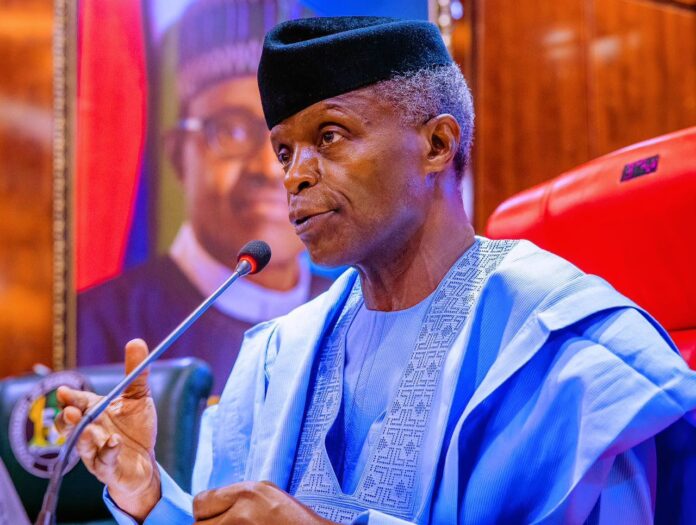


- Lessons in Leadership from Gbaramatu and Adamawa
By Babafemi Ojudu
About two years into the Buhari administration, Nigeria’s economy slipped into recession. A major factor was the sharp decline in crude oil production. Output fell from about two million barrels per day to barely 500,000 and, at certain points, to as low as 300,000 barrels. At the same time, global oil prices hovered between $45 and $50 per barrel, falling even further to about $35 at one point.
The nation was under severe economic strain.
Almost daily, reports emerged of attacks on oil installations across the Niger Delta. Pipelines were blown up, production facilities sabotaged, and critical infrastructure destroyed. Each explosion translated into lost revenue, increased uncertainty, and growing anxiety within government circles.
Panic set in.
Meetings of the Economic Management Team became frequent. Sessions of the Federal Executive Council and the National Security Council followed in rapid succession. Everyone sought answers to a problem that seemed to be spiralling beyond control.
The proposals were predictable.
Some argued for a heavier military response. Increase defence spending. Deploy more troops. Acquire more hardware. Pursue the militants relentlessly and crush the insurgency.
Others proposed a different route: identify influential leaders in the region, offer them substantial financial incentives, and persuade them to rein in the militants.
Amid these competing voices stood a lone perspective.
Vice President Yemi Osinbajo posed a simple question:
“Before we punish people, have we taken the time to understand why they are angry?”
He argued that those in the creeks were not merely security threats; they were Nigerian citizens and human beings. Their actions, however destructive, must have been driven by grievances that deserved to be heard.
He sought and obtained permission from President Muhammadu Buhari to visit the Niger Delta and engage directly with the people.
Many considered the idea reckless.
Some security officials opposed it outright. Others warned that the Vice President was walking into danger. President Buhari himself reportedly joked that if the trip went ahead, Osinbajo might become the first Vice President in history to be kidnapped.
Yet he remained undeterred.
His conviction was simple: one cannot solve a problem one has not taken the trouble to understand.
And so we went.
Our first destination was Gbaramatu, the community associated with Government Ekpemupolo, popularly known as Tompolo, then regarded as one of the most influential figures in the region.
Reaching Gbaramatu was itself an adventure. There were no roads leading into the community. One either travelled by boat through winding waterways or arrived by helicopter.
We chose the latter.
As our helicopter descended, we were greeted by an atmosphere of excitement. The entire community appeared mobilised. Men, women, youths, chiefs, and elders thronged the venue.
Again and again, we heard the same refrain:
“No senior government official has ever come here to see us.”
Our first stop was the palace.
The traditional ruler and his chiefs welcomed us warmly. During the reception, the king explained that their custom required visitors to be honoured with gifts.
To demonstrate this, he personally placed two million naira before the gathering and invited his subjects to add to it.
What followed surprised all of us.
Individuals rose one after another, pledging sums ranging from one million naira to several hundreds of thousands. By the end of the exercise, nearly twenty million naira had been assembled. Additional gifts followed, including cartons of drinks and traditional presentations.
I was asked to receive them on behalf of the Vice President.
Then came the most important part of the visit.
The Vice President rose to speak.
He did not threaten. He did not lecture. He did not accuse.
Instead, he asked questions.
Why were they angry?
What exactly were their grievances?
Why were they destroying a resource that could be used to improve their future?
He then spoke candidly about the changing realities of the global economy. The world, he explained, was moving steadily towards electric vehicles and alternative energy sources. A time would come when charging stations might outnumber petrol stations.
The hall fell silent.
He acknowledged the devastation of their environment. He recognised the neglect they had suffered. He spoke of communities sitting atop immense wealth while remaining trapped in poverty. He did not dismiss their pain. He validated it.
The atmosphere changed.
A representative of the people was invited to present their demands.
Their requests turned out to be remarkably modest.
They wanted a university.
They wanted a maritime institute.
They wanted an end to the destruction of local livelihoods associated with what had become known as bush refineries.
The Vice President listened carefully.
“Is that all?” he asked.
“Yes,” they replied.
We exchanged glances.
Without hesitation, he assured them that the first two requests would receive immediate support. As for the third, he proposed an innovative solution: a partnership involving government, private investors, and local operators to establish modular refineries that could bring economic activity into the formal sector.
The hall erupted in applause.
The king then challenged him.
“Are you prepared to repeat these promises before the people in the town square?”
His answer was immediate.
“Yes.”
And so we proceeded there.
Thousands gathered.
He repeated every commitment publicly.
The crowd responded with enthusiasm and hope.
For perhaps the first time, many felt they had been seen, heard, and treated with dignity.
We returned to Abuja.
The following day, the Vice President briefed President Buhari.
The President was delighted. One aspect of the report particularly amused him: instead of government distributing money, it was the people who had presented gifts to government.
He immediately directed that similar visits be extended across the oil-producing communities of the Niger Delta.
As the engagements continued, a pattern emerged.
The demands were rarely extravagant. Some communities sought appointments. Others wanted development projects. Many simply desired recognition, inclusion, and respect.
Gradually, the atmosphere in the creeks changed.
The bombings subsided.
Oil production recovered.
Government revenues improved.
The economy began to breathe again.
A similar lesson emerged from another crisis.
At one point, violent communal clashes erupted among several ethnic groups in Adamawa State. Villages were attacked. Homes were burned. Lives were lost. Thousands fled their communities.
The reports were alarming.
When we drew the Vice President’s attention to them, his response was immediate:
“We are going there.”
At the time, President Buhari was away receiving medical treatment, allowing quicker decision-making.
Upon arriving in Yola, we paid courtesy visits to the Emir and then to the Government House.
When the Vice President informed the governor of our intention to visit the affected communities, the governor appeared visibly uncomfortable.
“What are you going there for?” he asked.
“The people are violent. I have never been there myself.”
He suggested inviting community leaders to Yola instead.
The Vice President declined.
If the people were hurting, then leadership required going to where the pain was.
And so we went.
We toured the affected communities. We saw the destruction firsthand. We met victims, grieving families, traditional leaders, and representatives of opposing groups.
Even as we moved through the area, smoke could still be seen rising from some buildings.
The Vice President listened. He appealed for peace. He promised support and relief.
The impact was immediate.
Again, we heard a familiar refrain:
“No senior official of either the state or federal government has ever come here.”
What many had interpreted as hostility was, in reality, abandonment.
People who feel forgotten often become angry. People who feel unheard often become disruptive. People who feel invisible sometimes resort to desperate measures to make themselves visible.
The visit restored a sense of recognition and dignity.
Calm gradually returned.
These two stories contain profound lessons for leadership.
The first is that governance is not conducted from conference rooms alone. Nations are not governed by memoranda, intelligence reports, and PowerPoint presentations. A leader must occasionally leave the comfort of official residences and walk among the people.
The second is that listening is often more powerful than coercion. Force has its place, but force alone rarely solves deep-rooted problems. Behind every conflict lies a story, a grievance, a fear, or an aspiration waiting to be understood.
The third is that empathy is not weakness. It is one of the most potent instruments of statecraft. People are more likely to cooperate with leaders who respect their humanity than with those who merely display their authority.
The fourth is that many crises endure not because solutions are unavailable, but because leaders are unwilling to engage sincerely with those affected.
And finally, leadership is not the art of commanding from a distance. It is the courage to move towards discomfort, to enter troubled places, to confront difficult realities, and to search relentlessly for solutions.
No society is beyond redemption.
No conflict is entirely beyond resolution.
Even those we describe as militants, insurgents, agitators, or terrorists are human beings. Understanding them is not surrendering to them. It is often the first step towards defeating the conditions that produced them.
Nigeria’s challenges are immense, but they are not insurmountable.
What is required is not merely more money, more weapons, or more bureaucracy.
What is required is leadership—leadership that listens, leadership that empathises, leadership that engages, and leadership that is willing to leave the comfort of power and walk into the heart of the storm.
History repeatedly teaches the same lesson. Empires have fallen because rulers stopped listening. Nations have prospered because leaders chose engagement over arrogance, empathy over indifference, and understanding over force. The distance between peace and conflict is often the distance between a leader and his people. When leaders leave their palaces, offices, and convoys to walk among those they govern, problems that once appeared impossible suddenly begin to yield. In the end, the strongest bridge between government and the governed is neither money nor might. It is trust. And trust begins with listening.