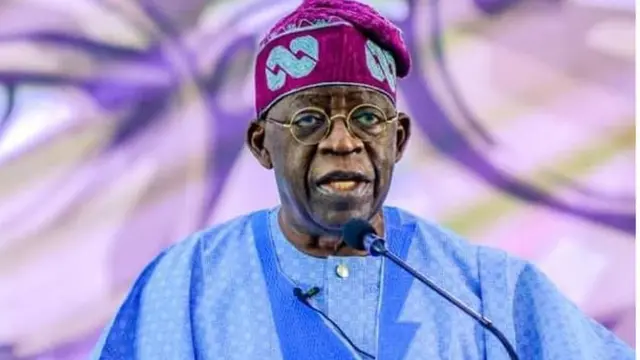


ABUJA, NIGERIA — The Presidency has officially declined an invitation from Arise TV anchor Charles Aniagolu to appear on a live panel evaluating the three-year milestone of the Bola Tinubu administration.
The decision by state officials to skip the broadcast has ignited sharp reactions across the political spectrum, with opposition figures accusing the administration of avoiding media interrogation, while government defenders maintain that the administration prefers direct engagement over selective media platforms.
The Broadcast Incident
During a live performance review program, Arise TV anchor Charles Aniagolu disclosed to viewers that the station formally reached out to the Presidency to provide a representative to discuss its three-year scorecard.
“We did approach the Presidency, given that it’s three years of the administration, to join the panel, but nobody was available to do that,” Aniagolu stated before concluding the segment with independent political analysts.
The absence of a state representative left the floor entirely to civil society leaders and academics, who offered heavily polarized assessments of the administration’s trajectory since May 2023.
Why the Administration Steers Clear of Studio Debates
The refusal to appear on Arise TV aligns with a long-standing media strategy deployed by Tinubu’s communications team since the 2023 presidential campaign cycle.
According to official campaign statements and historical precedents established by the ruling All Progressives Congress (APC), the administration’s media policy is built on several key arguments:
- Rejection of Media Dictated Formats: The Presidency has previously stated that no individual media organization should arrogate to itself the right to “railroad” the president or his officials into a specific agenda or broadcast schedule.
- Direct Citizen Engagement: Government spokespersons argue that the administration prefers communicating its milestones directly to the public through nationwide town halls, sectoral engagements, and official state broadcasts rather than through television studio panels.
- Perceived Media Hostility: Key party stalwarts have frequently accused certain networks, particularly Arise TV, of adversarial framing, asserting that the administration will not subject its performance to platforms they perceive as partisan.
The Two Narratives on Tinubu’s Three-Year Record
The media boycott comes amid a fierce national debate regarding the actual impact of the government’s aggressive economic overhauls over the past 36 months. Two starkly distinct arguments dominate the country:
1. The Government’s Defense: Necessary Economic Stabilization
President Tinubu has strongly defended his structural reforms—most notably the removal of the petrol subsidy and the unification of the foreign exchange market. The administration argues that these painful steps saved Nigeria from an imminent fiscal collapse and have yielded significant macroeconomic gains:
- Surging Revenues: State and local governments are receiving record statutory allocations due to liberated subsidy funds.
- Investor Trust: Improved credit ratings from international agencies like Fitch and Moody’s have revived foreign investment interest.
- Social Safety Infrastructure: The successful rollout of the Nigerian Education Loan Fund (NELFUND) has provided interest-free educational access to over 450,000 students.
2. The Critics’ Case: Worsening Domestic Hardship
Conversely, opposition parties, such as the African Democratic Congress (ADC), and independent research bodies point to a staggering drop in public approval ratings, citing acute economic distress. Critics argue that:
- Inflationary Pressures: The swift devaluation of the Naira and soaring fuel prices have triggered hyper-inflation in food and transportation, pushing millions of citizens into deeper poverty.
- Persistent Insecurity: Despite increased investments in military hardware and surveillance, mass abductions and rural insecurity continue to paralyze agricultural hubs.
- Statistical vs. Human Reality: Analysts maintain that positive macroeconomic indicators and a booming stock market mean very little to ordinary citizens struggling with basic daily survival.
By opting out of the Arise TV panel, the Presidency avoided a direct confrontation on these domestic realities, choosing instead to let its published three-year scorecard and ongoing infrastructure projects speak for themselves.