


By Olalekan Adigun
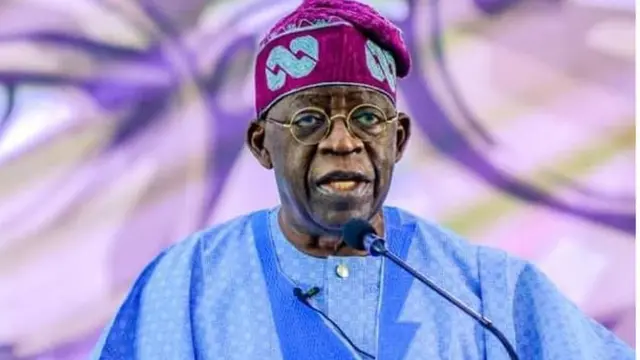
President Bola Tinubu’s Democracy Day address painted a picture of significant progress in Nigeria’s battle against terrorism and insecurity. The President announced an 81% reduction in terrorism-related deaths since 2015, while also revealing that security forces had neutralised more than 13,000 terrorists and facilitated the surrender of over 124,000 fighters in the past year alone.
These figures, if sustained, would represent one of the most remarkable security turnarounds in the country’s recent history.
Yet, beyond the statistics lies a troubling reality that continues to challenge the official narrative: Nigeria is still losing senior military officers and respected security figures to insurgents, bandits and terrorists at an alarming rate.
The deaths of high-ranking military commanders raise fundamental questions about the true state of the nation’s security architecture and whether Nigeria has fully grasped the scale of the conflict confronting it.
For many observers, the question is becoming increasingly urgent: How many more generals have to be killed before Nigeria acknowledges that it is effectively at war?
Since President Tinubu assumed office in May 2023 as Commander-in-Chief of the Armed Forces, several senior military officers have either been killed in active combat or lost their lives under circumstances directly linked to the country’s worsening security challenges.
Among them was Brigadier General Musa Uba, who was killed in November 2025 during an ambush by fighters of the Islamic State West Africa Province (ISWAP) in Borno State. His death sent shockwaves through military circles, highlighting the continuing capability of insurgents to launch sophisticated attacks against Nigerian forces.
Months later, on April 9, 2026, Brigadier General Oseni Omoh Braimah lost his life while commanding the 29 Task Force Brigade during a fierce terrorist assault on a military formation in Benisheikh, Borno State. Reports indicated that the attack involved heavily armed insurgents who overwhelmed security positions in one of the most significant confrontations of the year.
The death of another respected military figure, Major General Rabe Abubakar (retd.), has further deepened concerns about the country’s security crisis.
While no longer in active service, Abubakar remained one of Nigeria’s most visible and trusted military voices. Throughout his career and retirement, he consistently defended the Armed Forces, explained military operations to the public, highlighted operational successes, addressed setbacks and reassured Nigerians that victory against terrorism remained achievable.
Ironically, the man who spent years speaking about the war against terrorism ultimately became one of its victims.
Last week, the former army general reportedly died while in the captivity of bandits, a tragic development that underscored the growing reach and audacity of criminal groups operating across the country.
The loss of military generals is not merely symbolic. Generals are strategic assets whose experience, institutional knowledge and battlefield leadership take decades to develop.
When such officers fall in combat, it often signals the intensity of the threat being faced by troops on the ground.
In conventional military doctrine, the repeated loss of senior commanders usually indicates that forces are engaged in a high-intensity conflict rather than routine security operations.
Nigeria’s security challenges have evolved far beyond isolated incidents of banditry or sporadic insurgent attacks. Large sections of the North-East remain contested by terrorist groups. Bandits continue to raid communities across the North-West and North-Central regions. Kidnappings for ransom have become a thriving criminal enterprise, while communal violence and separatist tensions persist in other parts of the country.
The recent killings, abductions and attacks on military formations suggest that armed groups retain significant operational capacity despite official claims of substantial degradation.
As Commander-in-Chief, President Tinubu bears ultimate responsibility for the nation’s security.
While the administration has invested heavily in military operations, intelligence gathering and procurement of security equipment, the persistence of high-profile attacks raises questions about whether current strategies are sufficient to address the scale of the threat.
Security experts have repeatedly argued that military victories alone cannot end the crisis. Intelligence failures, porous borders, inadequate policing, poverty, youth unemployment and weak local governance continue to provide fertile ground for insurgent recruitment and criminal activities.
The challenge before the President is not only to defeat terrorists on the battlefield but also to create the political, economic and social conditions that make terrorism unsustainable.
Nigeria’s security forces have undoubtedly recorded important gains. Thousands of terrorists have been neutralised, weapons caches destroyed and communities liberated from extremist control.
Yet the deaths of senior military officers tell another story—one that suggests the conflict is far from over.
When generals are killed in ambushes, military bases come under sustained attack, and retired officers fall victim to the same insecurity they once fought against, it becomes difficult to argue that the nation is merely facing isolated security challenges.
The reality confronting Nigeria is that the country remains engaged in a prolonged and evolving conflict against multiple armed threats.
For many Nigerians, the concern is no longer whether progress has been made, but whether the gains being celebrated are enough to match the severity of the crisis.
Until attacks on communities cease, military commanders no longer become casualties of insurgent violence, and citizens can travel without fear of abduction or death, the question will continue to linger:
How many more generals must be lost before Nigeria fully recognises that it is fighting a war that demands an extraordinary national response?
Olalekan Adigun is a researcher and journalist based in Abuja. He can be reached via email: adgorwell@gmail.com or on X @MrLekanAdigun