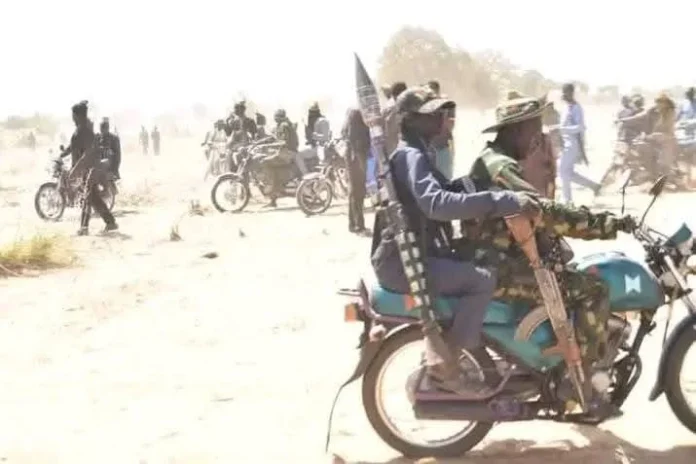


KATSINA, NIGERIA — Governor Dikko Radda has opened up on his decision to allow rural communities in Katsina State to enter into peace negotiations with bandits, stating that the primary objective is to stop the bloodshed and allow residents to return to their normal lives.
Speaking during a television interview on Thursday, May 7, 2026, the Governor explained that while he initially held a hardline stance against negotiating with criminals, the persistent cries for help from embattled villagers forced a change in strategy.
The Push for Results
According to the Governor, the initiative was driven by the communities themselves. Residents in frontline local government areas approached the state government, requesting permission to engage with bandit groups in a bid to secure a ceasefire.
“When the challenges were so much, the communities approached me. They said, ‘Your Excellency, allow us to negotiate with these people if we can find peace,'” Radda recounted. He noted that in several areas where these dialogues took place, the attacks have ceased entirely. “As long as it will give us the result we need, who wants to fight?” he asked, pointing out that some communities have now enjoyed over a year of uninterrupted peace.
Sabotage from Within
Despite the success of these local pacts, Governor Radda raised an alarm over the presence of “moles” within government and security agencies. He alleged that internal informants are sabotaging military operations by leaking sensitive information to bandit kingpins.
The Governor revealed that many operations to capture high-profile criminals have failed because the targets were tipped off in advance. He stressed that while community negotiations are providing temporary relief, the long-term solution to insecurity is hindered by those providing intelligence to the enemy from within the system.
A People-Driven Mandate
Addressing the debate over whether the state should be seen “bowing” to criminals, Radda insisted that as a leader, his first duty is to the safety of his people. He argued that if a community finds a way to stop the killings through dialogue, the government has a responsibility to support that outcome.
“I am a governor based on the people’s mandate,” he said. He emphasised that the “Katsina Model” focuses on encouraging bandits to surrender their arms and seek a dignified existence through reintegration, rather than just paying for a temporary lull in violence.
As the state continues to navigate this complex security landscape, Radda maintains that his administration will remain flexible, supporting any legitimate path that ensures farmers can return to their fields without fear of abduction or death.