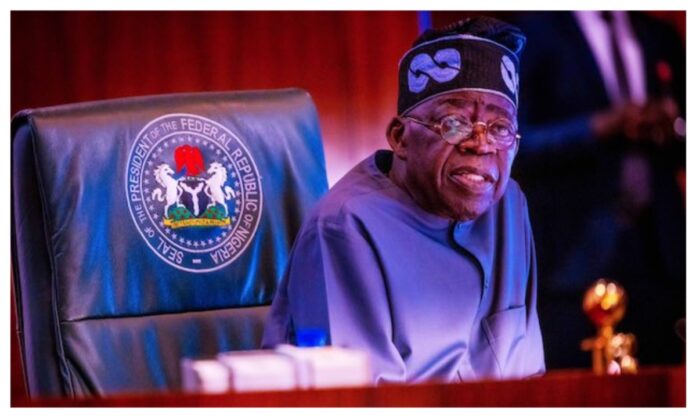


ABUJA — Despite a staggering public debt profile that has now surged to ₦159.28 trillion, the President Bola Tinubu administration is once again knocking on the doors of the World Bank for a fresh $1.25 billion (₦1.70 trillion) loan.
The proposed facility, ironically titled “Nigeria Actions for Investment and Jobs Acceleration,” is expected to face the World Bank board on June 26, 2026. However, for millions of Nigerians currently grappling with the highest inflation rates in decades and a collapsing standard of living, the move feels less like “acceleration” and more like a high-speed descent into a permanent debt trap.
A Cycle of Unseen Progress
Since taking office in May 2023, the current administration has secured approximately $9.35 billion in World Bank approvals alone. This includes multi-billion dollar facilities for the power sector, women’s empowerment, and “economic stabilization”. Yet, on the streets of Lagos, Kano, and Port Harcourt, the “stabilization” is invisible:
- Power: Despite a $750 million loan approved in June 2023 to boost electricity, the national grid remains notoriously fragile, with many businesses still reliant on expensive diesel generators.
- Jobs: While the new $1.25bn loan claims to target “job creation,” the reality in 2026 remains one of mass unemployment and a “Japa” syndrome that continues to drain the country’s best talent.
- Social Safety Nets: Over $1.2 billion has been borrowed specifically for cash transfers to 15 million households, yet critics argue these “palliatives” are often weaponized politically or simply fail to reach the most vulnerable.
Servicing Interest, Not the People
The fiscal math for the 2026 Budget tells a damning story of mismanaged priorities. Total expenditure has ballooned to ₦68.32 trillion, but a record ₦15.8 trillion is dedicated solely to servicing past debts.
To put this in perspective: Nigeria is now spending more on interest payments than it does on Defense (₦5.4tn), Education (₦3.5tn), and Health (₦2.5tn) combined. For every ₦1 spent on building the future, the government pays over ₦1.06 to settle the past.
The Breaking Point
The Nigerian Economic Summit Group (NESG) and other experts have warned that the country’s debt-to-revenue ratio is approaching a catastrophic 100%. Even the World Bank has cautioned that electoral pressures ahead of the 2027 elections could lead the government to squander these fresh funds on political survival rather than meaningful economic growth.
As the administration prepares to add another ₦1.7 trillion to the national ledger, the question from the Nigerian public is no longer “What are you borrowing for?” but rather “What do we have to show for the trillions already taken?”.
Quick Stats: The Debt Reality (May 2026)
- Total Public Debt: ₦159.28 Trillion
- Proposed New Loan: $1.25 Billion (~₦1.70 Trillion)
- Total World Bank Loans (2023–2026): ~$10.6 Billion
- 2026 Debt Service Allocation: ₦15.8 Trillion (Exceeds combined Health & Education budget)