


WUKARI, TARABA — While national headlines remain fixated on economic shifts and political maneuvering in Abuja, a silent humanitarian catastrophe of staggering proportions is unfolding in the hinterlands of Taraba State.
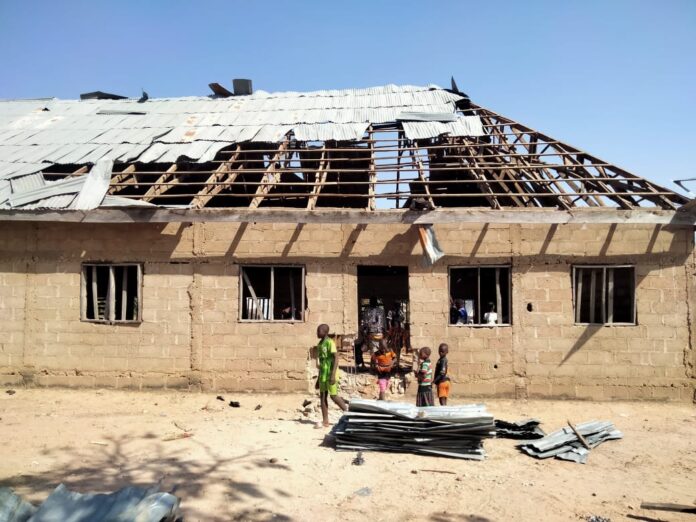
The Catholic Diocese of Wukari has sounded a desperate alarm, revealing that a systematic wave of violence has left over 98,000 people displaced and 217 churches reduced to ashes across Southern Taraba. The figures, contained in a communique signed by the Bishop of Wukari, Most Rev. Mark Nzukwein, at the weekend, paint a portrait of a region where the social fabric is being torn apart by relentless attacks.
A Landscape of Ruin
The crisis, which has intensified since September 2025, has turned once-thriving farming communities in Takum, Ussa, Donga, and the Yangtu Special Development Area into ghost towns. The violence has not spared the clergy; according to the Diocese, 16 priests have been forced to flee their parishes, while eight priests’ residences have been completely leveled.
“This is not just about numbers; it is about an exodus of a people whose lives and livelihoods have been wiped out,” the communique stated. Bishop Nzukwein described a pattern of targeted raids where homes and places of worship are set ablaze in the dead of night or the early hours of the morning, forcing families to flee with nothing but the clothes on their backs.
The Human Cost of Inaction
The humanitarian impact is visible in the makeshift settlements scattered around Donga and other relatively safer hubs. Survivors recount harrowing tales of ancestral farmlands becoming battlegrounds and children being pulled out of schools that are now either burnt or serving as overcrowded refuges for the homeless.
Local residents and church leaders point to a systematic campaign aimed at displacing the indigenous Christian population. “When you destroy 217 churches, you are not just attacking buildings; you are striking at the heart of the people’s hope and their right to exist on their ancestral lands,” a survivor in Donga lamented.
Security Failure and Economic Fallout
The persistent violence in Southern Taraba — once the food basket of the state — carries dire implications for regional food security. With nearly 100,000 farmers displaced, vast hectares of fertile land remain uncultivated, a situation that experts warn will drive food prices even higher across the North-East.
Despite several military operations in the region, the Diocese expressed grave concern over the perceived “silence and inaction” of the authorities. The communique noted that the lack of a permanent security presence in vulnerable hinterland communities like Chanchanji and Ussa has allowed attackers to operate with near-total impunity.
A Cry for Intervention
The Catholic Diocese of Wukari is calling for an immediate and decisive federal intervention to halt the carnage. Their demands are clear:
- Immediate Deployment: A surge of security personnel to the affected “flashpoint” communities to allow farmers to return for the planting season.
- Humanitarian Relief: Urgent mobilization of the National Emergency Management Agency (NEMA) to provide food, medical aid, and shelter.
- Justice: The identification and prosecution of the perpetrators to break the cycle of ethnic and religious violence.
As the rainy season approaches, the window for these displaced thousands to return home and salvage their livelihoods is rapidly closing. For the 98,000 souls currently in limbo, the question remains: How much longer will their cries go unheard?