
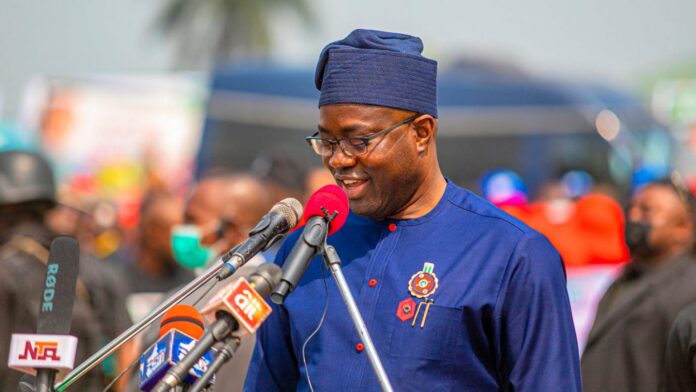


ABUJA, NIGERIA — The official entrance of Oyo State Governor Seyi Makinde into the 2027 presidential race has completely rewritten Nigeria’s electoral math. Political analysts confirm his campaign will split the South-West voting bloc, creating a clear path to victory for the Peter Obi and Rabiu Musa Kwankwaso coalition.
By launching his campaign under the Allied Peoples Movement (APM), Makinde has transformed a traditional two-party race into a highly volatile multi-front contest.
Splitting the South-West Stronghold
President Bola Tinubu’s path to re-election relies heavily on sweeping the South-West geopolitical zone. However, Makinde’s candidacy directly threatens this strategy:
- The Oyo State Fortress: As a highly popular, two-term incumbent governor, Makinde maintains absolute control over Oyo State’s political structures. Analysts predict he will easily deny Tinubu a majority victory in the state.
- Regional Spillover: Makinde’s “Reset Nigeria Movement” has already established deep roots within dissenting factions across Osun, Ondo, and Ekiti states. By offering an alternative to South-West voters, he is set to pull critical numbers away from the ruling All Progressives Congress (APC).
The Strategic Windfall for Peter Obi
While Makinde and Tinubu battle for the South-West, the newly formed Nigeria Democratic Congress (NDC) stands to gain the most from the fragmentation:
- Consolidated Bases: Former Anambra State Governor Peter Obi maintains an ironclad grip on the South-East and South-South geopolitical zones.
- The Northern Surge: Through his alliance with former Kano State Governor Rabiu Musa Kwankwaso, Obi has successfully locked down the densely populated North-West and key parts of the North-Central region.
- The Math of a Fractured Opponent: Nigeria’s electoral laws require a candidate to secure the majority of votes and 25% across two-thirds of the states. With Makinde cutting Tinubu’s South-West numbers in half, the APC can no longer rely on its primary regional firewall to offset the heavy losses it faces in the North and East.
A Isolated Ruling Party
Compounding the crisis for the presidency is the total fragmentation of the opposition, which ironically hurts the incumbent. With Atiku Abubakar running a separate campaign under the African Democratic Congress (ADC) and Makinde leading the APM, anti-APC sentiment is mobilizing aggressively across every single geopolitical zone.
With his base fractured and his opposition consolidated in key voting regions, President Tinubu faces a historic uphill battle to retain power in 2027.







