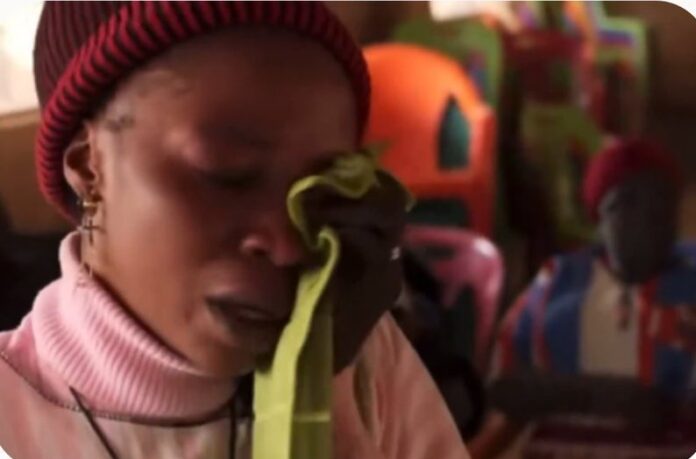


JOS, Nigeria – Lisa Stephen sits in the heavy silence of her home, a woman whose entire world was extinguished in a single night of unimaginable cruelty. In a community in Plateau State now chillingly known as the “Village of Widows,” Lisa’s story has become a haunting symbol of a crisis that has turned the Middle Belt into a landscape of grief.
A Night of Absolute Horror
The attack began when armed men shattered the peace of her home. Lisa was breastfeeding her 10-month-old baby when the assailants tore the infant from her arms. In a display of savagery that defies words, they sliced the child in half with a knife.
The nightmare only intensified as she was forced to watch the execution of the rest of her family. Her husband was shot dead beside her, and her second child was killed when the attackers split the boy’s skull with a machete. Before leaving her for dead amidst the bodies of her loved ones, the attackers amputated Lisa’s hand.
The Face of a Forgotten Crisis
Lisa’s testimony has pierced the veil of silence surrounding the recurring violence in Nigeria’s rural communities. While the government often labels these events as “resource-based clashes” or “banditry,” the survivors in the Village of Widows describe a systematic targeting that has left almost every household without a father or a son.
As of April 23, 2026, the humanitarian toll in these regions has reached a breaking point. International observers have begun to take notice of testimonies like Lisa’s, raising urgent questions about the protection of civilians in the face of such targeted brutality.
Survival Amidst the Ruins
For Lisa, the loss is total. She carries the physical scar of her missing hand, but it is the absence of her husband and the memory of her children’s final moments that define her daily reality. She now lives among dozens of other women who share the same harrowing bond—surviving a massacre that claimed their families.
Despite ongoing military efforts in the forest fringes of Plateau State, the sense of safety remains fragile. For the women of this community, the hope for justice is often overshadowed by the raw, daily struggle to survive in a village that has become a monument to what they have lost.