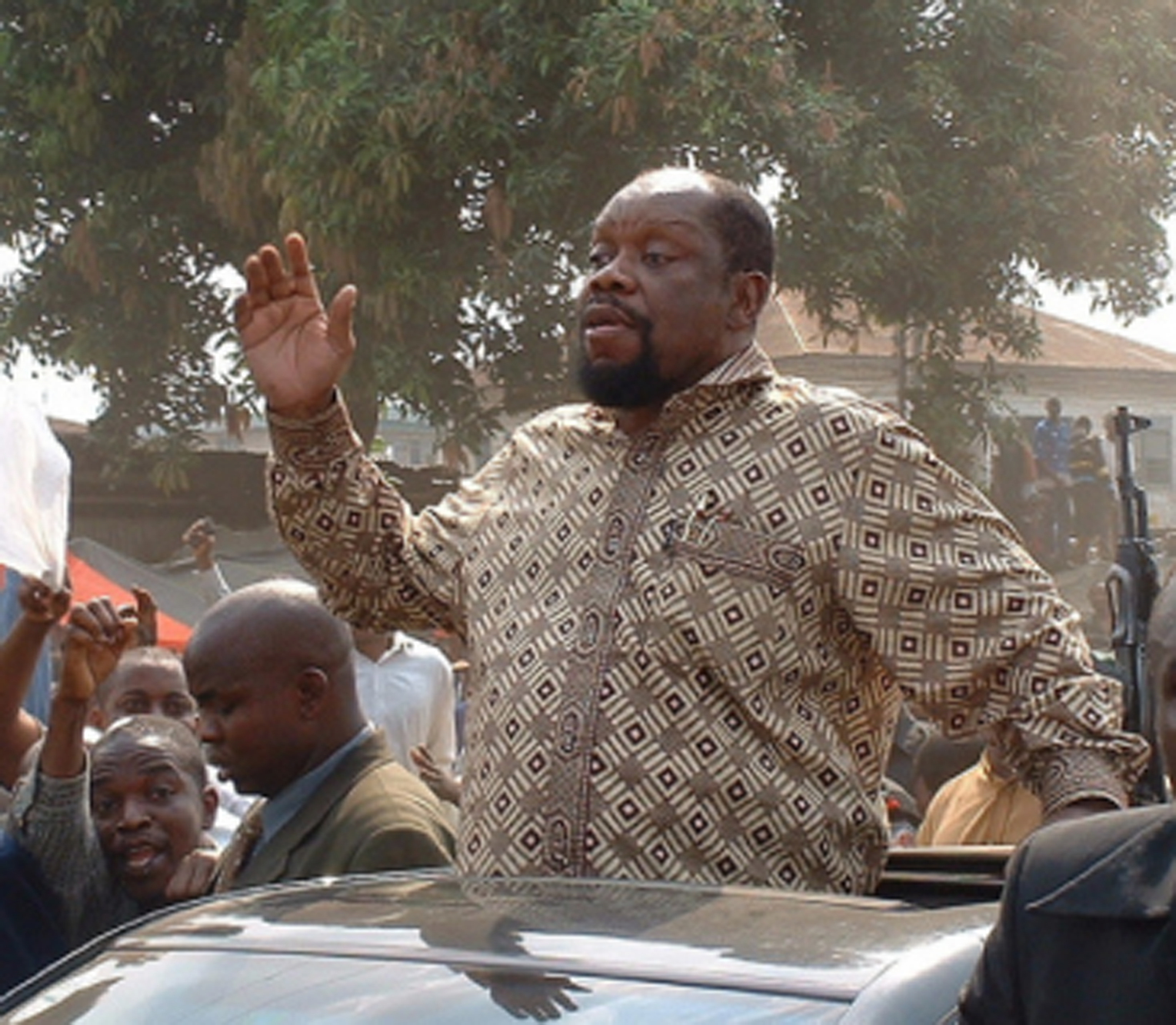


ENUGU, NIGERIA — When Chukwuemeka Odumegwu Ojukwu was born in the northern town of Zungeru on November 4, 1933, few could have anticipated that this child of staggering colonial wealth would one day lead a secessionist movement that would alter the course of West African history.
On this day, November 4, 2026, as prominent figures—including human rights lawyer Aloy Ejimakor—mark his posthumous birthday, Ojukwu’s legacy continues to spark intense debate over federalism, minority rights, and regional equity in modern Nigeria.
To his supporters, he remains the Ikemba Nnewi and Ezeigbo Gburugburu—a visionary leader who stood against the systemic persecution of his people. To his critics, he is a polarizing figure whose declaration of independence plunged a young nation into a devastating civil war. Yet across these divides, historians view his life as a unique study in privilege, principle, and wartime defiance.
From Oxford to the Infantry
Ojukwu did not share the economic struggles that drove many of his military contemporaries into public service. He was the son of Sir Louis Philippe Odumegwu Ojukwu, Nigeria’s first documented billionaire and a prominent transport magnate whose infrastructure network supported the late colonial economy.
Educated at King’s College in Lagos and Epsom College in England, Ojukwu earned a Master’s degree in History from the University of Oxford in 1955. Upon returning to Nigeria, he bypassed his father’s commercial empire and joined the civil service before enlisting in the military in 1957. He became one of the first university graduates to hold an officer’s commission in the Nigerian Army.
His administrative and strategic skills brought quick promotions. By 1966, following a turbulent military coup, he was appointed the Military Governor of the Eastern Region by Major General J.T.U. Aguiyi-Ironsi.
The Aburi Breakdown and the Road to Secession
Ojukwu’s transition from a regional governor to a revolutionary leader was forged during the political crises of late 1966. Following a violent counter-coup, anti-Igbo pogroms erupted across Northern Nigeria, resulting in the mass killing of thousands of Easterners and driving more than a million displaced people back to their ancestral homelands.
In January 1967, seeking to avert a full-scale war, Ojukwu met with the Federal Military Government, led by General Yakubu Gowon, in Aburi, Ghana.
| Governance Issue | The Aburi Accord (Ghana) | The Federal Implementation |
|---|---|---|
| State Structure | Confederation: Highly autonomous regions with a loose central coordinate. | Centralized Federation: Retained strong central control from Lagos. |
| Security Controls | Regional Autonomy: Governors held veto power over local military deployment. | Centralized Command: Supreme Military Council retained final authority. |
| The Outcome | Signed by both parties but stalled over conflicting interpretations. | Modified via federal decree, which Ojukwu rejected as a breach of trust. |
With the breakdown of the Aburi agreements and a growing humanitarian crisis in the East, Ojukwu took a definitive step. On May 30, 1967, he officially declared the Eastern Region an independent state: The Republic of Biafra.
Thirty Months of Conflict
The declaration triggered a 30-month civil war that tested the survival capabilities of the blockaded enclave. Outmanned and cut off from conventional international trade, Biafra relied heavily on local improvisation, establishing clandestine petroleum refineries and creating the Ogbunigwe explosive devices.
The conflict exacted a heavy humanitarian toll. A total land and sea blockade imposed by the Federal Government led to widespread famine, resulting in the deaths of over one million civilians. By January 1970, with the frontline collapsing and resources exhausted, Ojukwu handed over administrative power to his deputy, Philip Effiong, and traveled to Côte d’Ivoire, where he was granted political asylum.
Pardon and Political Rebirth
Ojukwu spent 13 years in exile under the protection of Ivorian President Félix Houphouët-Boigny. In 1982, civilian President Shehu Shagari issued an official state pardon, allowing Ojukwu to return to Nigeria to a massive public reception.
Rather than resuming armed resistance, Ojukwu integrated into civilian politics. He joined the National Party of Nigeria (NPN), ran for the Senate, and later became the presidential candidate and leader of the All Grands Alliance (APGA), a party that established significant political influence in the South East.
An Enduring Legacy
Ojukwu passed away in London on November 26, 2011, at the age of 78. He was buried in his hometown of Nnewi with full military and traditional honors, drawing dignitaries from across the continent.
More than half a century after the conclusion of the civil war, Ojukwu’s life remains a foundational point of reference for debates on structural reform and political inclusion in Nigeria. As annual memorials highlight, his defense of regional autonomy and self-determination continues to influence discussions on minority representation in West Africa.